Serie A returns on 10 October carrying the unusual weight of an international break that has felt less like a pause and more like an unfinished tournament. Four Nations League fixtures were played between 24 September and 6 October, while South American and African internationals have also had long journeys to manage. After only four days back with their clubs, many players will be asked to resume a demanding domestic season.
An interruption without much rest
The three-week break has little precedent in the middle of an Italian campaign. The closest comparison is the Qatar World Cup stoppage, when Serie A halted on 13 November 2022 and did not restart until 4 January. That was a complete competitive shutdown; this time, more than 100 Serie A players, Italian and foreign, have been involved in Nations League duty alone.
There were lengthy winter intervals in earlier eras, but those generally allowed squads to recover. The pause from 28 December 1980 to 18 January 1981 was also exceptional, caused by Italy’s tour of Uruguay, although the circumstances were entirely different: clubs could field only one foreign player and the league arranged a New Year tournament that began in January and was completed six months later.
- National-team players have faced four matches in 13 days, often in unfamiliar systems and alongside different teammates.
- Coaches and fitness staffs must quickly assess fatigue, travel and possible injuries before the league resumes.
- The impact will become clearer only over the coming rounds, particularly for sides whose momentum was interrupted.
Fiorentina and Frosinone face contrasting consequences
For Fiorentina, the stoppage may offer Vanoli a useful window after the change on the bench. Players who remained at the Viola Park have had time to work on fitness and absorb the new coach’s ideas, while the group returns with some encouraging international performances behind it.
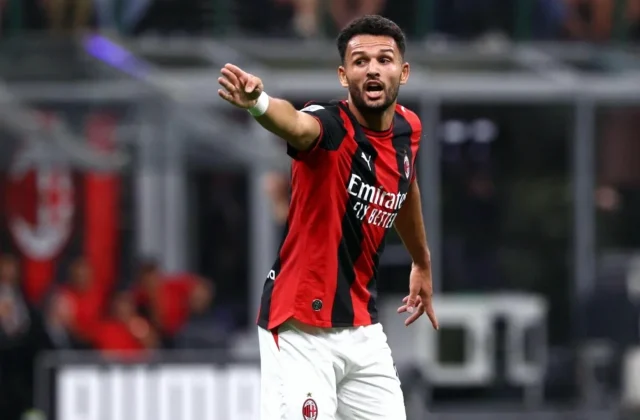
Ndour and Mastantuono both scored during the break, while Fagioli has been brought back into the national-team picture by Mancini. Gonçalo Ramos is also due at Milanello with confidence after becoming a leading figure for Portugal in the period after Cristiano Ronaldo, even if that transition remains open to interpretation.
Frosinone have more reason to fear a loss of rhythm. Alvini’s side had risen to sixth place with 10 points from five games and an energetic, convincing style. Twenty days made up largely of training and rest can alter the edge of a team that had been playing with freedom and momentum.
Injuries and returns reshape the squads
The international programme has produced both setbacks and positives. Allegri will have De Bruyne and Hojlund back available, with Hojlund returning after a prolific spell for Denmark: three goals in four games, one more than he has scored in five appearances in blue. De Bruyne also showed strong form.
However, Allegri has lost Favasuli, Olivera and, most significantly, Vergara. Vergara had impressed on his first start against Turkey before leaving the field while holding the muscle close to his ankle, an early sign that the problem could be serious.
- Palladino will be without Holm for an extended period after the Swede was injured little more than an hour into the opening Nations League match against Romania. Darmian has been signed as his replacement.
- Gattuso has lost Gudmundsson, who suffered a shoulder injury in Iceland’s match against Estonia.
- Gattuso can nevertheless welcome back Denmark defenders Provstgaard and Isaksen in good condition. Provstgaard has become a regular in the Danish back line, while Isaksen contributed a goal, struck the post and won a penalty.
- Fabregas has a concern over Kean.
- Runjaic must deal with Zaniolo’s absence, expected to last around 20 days.
- Sarri has been deprived of Raspadori.
A heavier calendar after the restart
The physical strain comes at a time when matches are becoming longer and more intense. New regulations have added roughly six minutes of effective playing time to each game. Those minutes previously offered players opportunities to catch their breath and, at times, slow the contest down.
There is now less time to reorganise during throw-ins or goal kicks. Teams must run more, but they must also remain mentally sharp for longer; lapses in concentration are becoming harder to repair. Strong physical preparation and constant attention are required in Serie A and across the Nations League cycle alike.
The next stretch leaves little room for recovery. From 10 October until the following international break on 8 November, the seven Italian clubs involved in European competition will play every three days. Six league rounds, including the midweek programme on 28 October, will be combined with three continental fixtures in exactly 30 days.
In a Serie A season already marked by sudden shifts, the management of personnel will become a central part of the championship story. The break may have helped a few clubs reset, but its real cost will be measured in the legs, availability and concentration of squads entering the next month.