Serie A has felt quicker and more continuous since the start of the season, with fewer interruptions and a clearer attempt to keep matches moving. That is a welcome change for a championship whose Sunday afternoons are often shaped as much by rhythm as by technique. Yet the drive towards greater intensity is beginning to raise a different concern: the distinction between sensible tolerance and missed infringements is becoming dangerously blurred.
The refereeing direction associated with Gianluca Rocchi’s predecessor Daniele Orsato has encouraged officials to avoid unnecessary whistles, while IFAB’s new measures have also reduced familiar delays. Goalkeepers are holding the ball for less time, and medical staff are now far less likely to enter the pitch for routine treatment. Taken together, those adjustments have improved the spectacle. Matches are faster, more physical and less fragmented.
But an instruction designed to remove minor stoppages cannot become an invitation to ignore fouls or deny penalties that the laws still require to be given. The value of an official cannot be measured by how rarely he blows his whistle. It lies in recognising the important incidents correctly. Equally, VAR should not be treated as a system to be avoided for the sake of showing confidence in the on-field decision; it exists to correct the errors that the referee has not seen or has assessed wrongly.
More than a question of interpretation
There is room in football for different readings of marginal challenges. A robust tackle, a shoulder-to-shoulder contest or a doubtful contact can be judged with a more permissive approach than in previous years. That is part of refereeing and part of the game’s evolution. What cannot change, however, is the basic application of the laws themselves.
Neither referees, leagues nor federations can simply redefine what constitutes a foul or a penalty through an internal directive. If the laws need changing, that debate belongs with the bodies responsible for writing them. If VAR is thought to be unsuitable, there is a process for challenging its place in football. Until then, both the rules and the video review system must be applied properly.
The unease has been present since the opening round, when Kevin De Bruyne’s contact with Johan Vasquez was not punished before Napoli moved towards victory against Genoa. The decision appeared to rest on a higher threshold for physical contact, but the incident should still have been penalised.
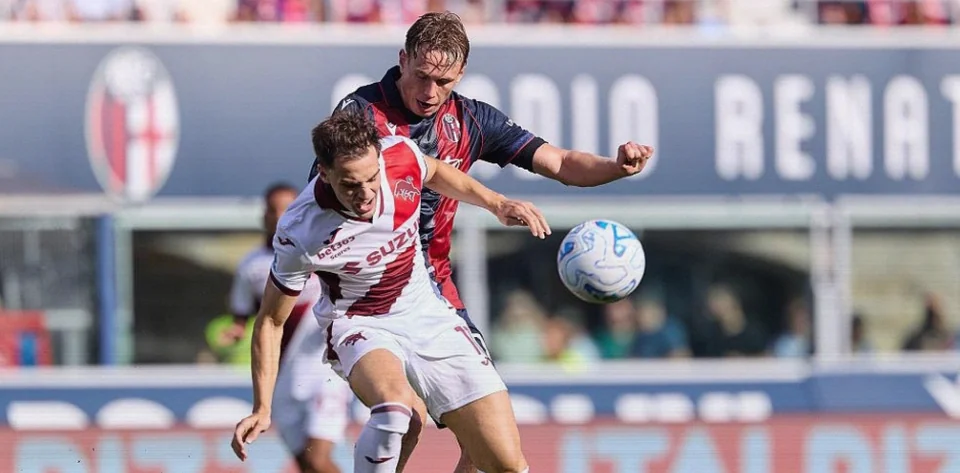
The same issue returned in Bologna’s match with Torino. Jhon Lucumi Heggem’s challenge on Gaetano Oristanio inside the area was a clear foul: Heggem’s foot made contact with Oristanio’s, while the Torino player had a direct route towards goal. There was little reason for Oristanio to go down voluntarily in that situation. Marco Guida did not award a penalty, and VAR official Federico Santoro did not send him to the monitor despite images that quickly showed the contact.
Later that evening, the contrast was stark in Venezia’s area, where Yeboah’s contact with Taylor led to Lazio being correctly awarded a penalty. The two incidents underline the central problem. A league can seek speed and continuity without abandoning consistency. The current approach has made Serie A more lively, but it will lose credibility if clear fouls are treated differently from one match to the next.