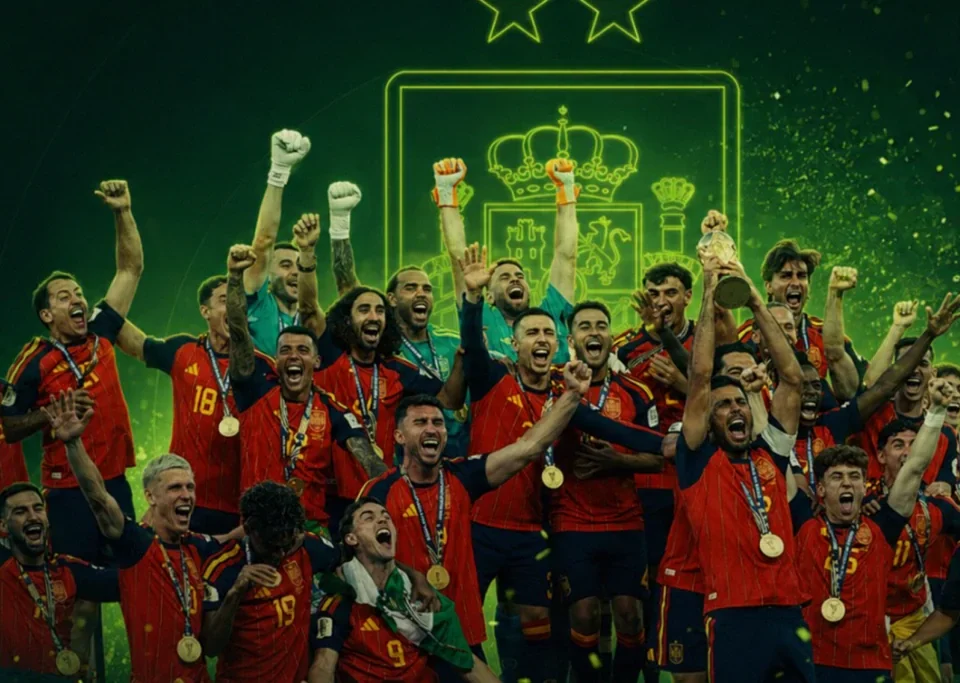
Spain completed an eight-match march to the 2026 World Cup title in New York, defeating Argentina after extra time to secure the country’s second global crown, 16 years after the triumph in Johannesburg.
Spain’s Second Star: New York Ends a Near-Perfect World Cup
SEO Title: Spain win 2026 World Cup after Ferran Torres extra-time goal against Argentina
SEO Description: Spain claimed their second World Cup in 2026, beating Argentina in New York as Ferran Torres struck in extra time. Luis de la Fuente’s side finished with seven wins, one draw and a 14-1 goal record.
Ferran Torres scored in the 106th minute of the final on 19 July to settle a demanding contest with Argentina. Spain had controlled the ball and imposed their rhythm throughout the match, but needed extra time before finding the decisive goal.
The final was the defining image of Luis de la Fuente’s team: Spain remained committed to possession under pressure, refused to abandon their approach and ultimately earned the moment that delivered the second star. Rodri, captain of the 2026 side, lifted the trophy in New York, following Iker Casillas, who had raised Spain’s first World Cup in South Africa in 2010.
An eight-match title run
Spain ended the tournament unbeaten, recording seven victories and one draw. The only match they did not win came in the opening fixture against Cape Verde, a result that did not derail the squad’s confidence. From then on, the team gathered momentum through the competition.
| World Cup record | Spain’s 2026 campaign |
|---|---|
| Matches played | 8 |
| Wins | 7 |
| Draws | 1, against Cape Verde |
| Goals scored | 14 |
| Goals conceded | 1 |
| Final | Spain beat Argentina after extra time |
The knockout phase brought four victories inside 90 minutes before the final extended Spain’s campaign by another half-hour. Across those five elimination ties, Spain scored nine times, conceded once and played 480 minutes.
Belgium were the only opponent to score against the champions during the knockout rounds. Charles De Ketelaere struck in the 40th minute, accounting for Spain’s sole concession across the entire World Cup.
The defensive record was built through control rather than a retreating approach. Spain pressed immediately after losing possession, recovered the ball high and limited the demands on goalkeeper Unai Simón. Possession was both the team’s attacking platform and its principal form of protection.
Argentina final completes a defensive tournament
Spain’s closing win came against an Argentina side that converted its chances at a better rate, needing 4.0 fewer attempts per goal. Yet Spain protected their own penalty area more effectively and finished the competition with seven fewer goals conceded and 61% less expected goals against.
Spain also averaged 18.5 more passes per match. The difference reflected the tournament’s central pattern: opponents struggled to remove De la Fuente’s side from its preferred tempo, including France and Argentina.
Rodri takes the captaincy from one World Cup era to another
Rodri’s lift of the trophy connected two defining Spanish images. Casillas had captained the 2010 winners at Soccer City in Johannesburg after Andrés Iniesta’s extra-time goal; Rodri became only the second Spain captain to raise the World Cup, doing so in New York in 2026.
In midfield, Rodri set the pace for the champions. He provided balance, offered an outlet when matches became difficult and helped Spain decide when to speed up play or retain control. His leadership also extended beyond the ball after taking over the armband from Álvaro Morata following Euro 2024.
After the draw with Cape Verde, Rodri helped steady the group. Spain did not lose their direction, and their captain became the reference point for a side that conceded only once on the way to the trophy.
Decisive changes and wide threats
Lamine Yamal repeatedly turned matches into individual contests, taking on defenders and combining his ability to disrupt a game plan with decisive passes. Across the tournament, he faced 42 such challenges and came out on top in 22.
Mikel Merino also delivered key contributions from the bench. He entered to decide the Portugal tie with the last action of the match, and the same substitution pattern proved decisive again against Belgium four days later.
De la Fuente completes the journey
Spain’s World Cup success added to a national-team record already built across the cycle under De la Fuente. Born in Haro, La Rioja, on 21 June 1961, he had played 254 top-flight matches for Athletic Club and Sevilla as a left-back before developing his coaching career.
His first senior coaching post came with Portugalete in regional football. He later worked in several youth systems before joining the Spanish federation in 2013, progressing through its national youth teams and winning the European Under-21 Championship.
De la Fuente became Spain’s senior coach at the end of 2022. Within six months, he led the team to the 2023 Nations League title against Croatia, Spain’s first major trophy since Euro 2012. The following year, Spain won Euro 2024 without dropping a match, overcoming Germany, France and England along the way.
At the start of his senior tenure, De la Fuente said he wanted to bring back the feeling of 2010. The 2026 campaign completed that ambition: Spain recovered the World Cup through a possession-led identity, an unbeaten record and a final won by Ferran Torres in extra time.
From Johannesburg to New York, Spain now have two World Cup-winning captains, two stars on the shirt and another title shaped by control of the ball.