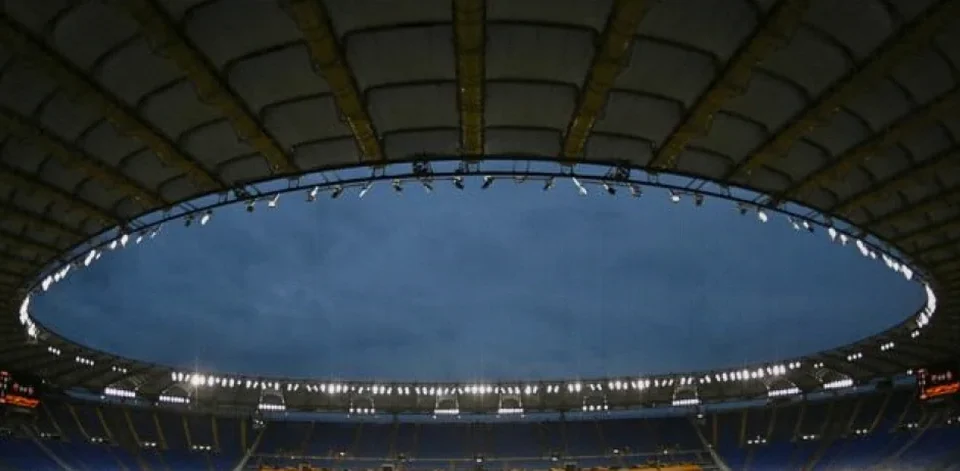
Rome’s Stadio Olimpico is being placed at the centre of Italy’s preparations for Euro 2032, with a €150 million redevelopment intended to raise capacity, modernise facilities and make the historic venue a year-round part of the city’s sporting and cultural life.
Key takeaways
- The Olimpico is planned to expand from just over 60,000 seats to 70,000.
- Construction is scheduled to begin in summer 2027 and finish by 2030.
- The project covers the stadium, its surrounding areas and the Foro Italico park.
- Rome hopes the upgraded ground can host the Euro 2032 final.
- Roma and Lazio will see their long-standing home reshaped alongside plans for Roma’s proposed Pietralata stadium.
A new phase for Rome’s shared stadium
The renovation plan has been presented by Sport e Salute in conjunction with the Italian Football Federation and the government-appointed Euro 2032 commissioner structure. It represents the most substantial overhaul of the Olimpico since the work undertaken for the 1990 World Cup.
The venue has carried a singular place in Italian sport: it staged events at the 1960 Olympic Games and has hosted Roma and Lazio since 1953. Its next chapter is tied to UEFA requirements for the European Championship, but the ambition extends beyond a tournament fortnight.
Plans include a full revision of spectator entry routes, improved views from the stands and stronger accessibility provisions. Parking arrangements and access gates are also due to be upgraded, while the capacity increase is intended to bring the ground to 70,000 seats.
New LED giant screens, hospitality and corporate areas, food and beverage outlets, retail space and merchandising facilities form part of the proposal. The technological infrastructure will be renewed, with systems for energy production from renewable sources also included.
Euro 2032 ambition alongside Pietralata plans
Sport e Salute president Marco Mezzaroma said the project would preserve the Olimpico’s sporting identity while broadening its role for supporters and citizens. He described the stadium as the home of Italy’s national sport and a place associated with emotions beyond football.
Mezzaroma said improved services and public spaces would allow the venue to offer a more complete experience, while a modernised and more open stadium could draw major sporting, music and entertainment occasions. In his view, those events would create economic benefits for Rome, the surrounding area and Italian sport more broadly.
Sport e Salute chief executive Diego Nepi Molineris said the existing Olimpico belongs to an important history that will be renewed rather than erased. He said the objective was to create an international arena that is more contemporary, sustainable and accessible, operating throughout the year.
The project has already been submitted to UEFA and the government’s Euro 2032 commissioner body. Nepi Molineris made clear that Rome’s target is to secure the competition’s final.
The proposed timetable would run alongside the Friedkin family’s plans for Roma’s new stadium in Pietralata. Both venues are among the facilities put forward for Euro 2032, together with 13 other stadiums, including the planned new San Siro. For the capital’s two Serie A clubs, the period ahead points to a changing stadium landscape: Roma pursuing a new home, while the Olimpico prepares for a renovation designed to keep it central to the national game.