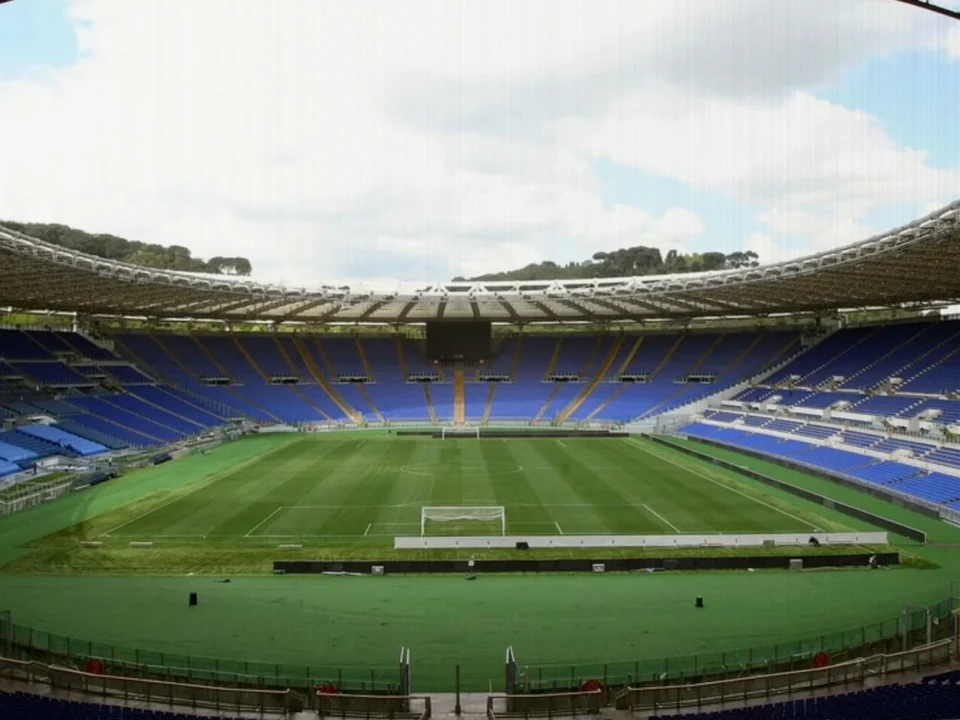
Rome’s Stadio Olimpico is being prepared for a new chapter: not simply a tournament venue, but a stadium intended to serve the city and Italian sport throughout the year. A redevelopment plan worth around €150 million has been drawn up with UEFA EURO 2032 in view, with Rome aiming to host the final.
The coach and the club
In this case, the guiding figures are Sport e Salute, the Italian Football Federation and the government’s commissioner structure established to coordinate EURO 2032 projects. Their shared proposal is to renew the Olimpico without severing its connection to a stadium that has long been a home for Italy’s major sporting occasions.
The plan covers the whole venue, from the areas outside the stadium to the seating bowl, stands, internal rooms and technical systems. Capacity is expected to rise beyond 70,000, while entrances will be reorganised to improve crowd flow, sightlines and accessibility.
New LED giant screens are included, alongside upgraded hospitality and premium sections, corporate facilities, food and beverage outlets, retail areas and merchandising space. The technological infrastructure is also due to be modernised, with renewable-energy production systems forming part of the project.
The intention is to move beyond a venue used only on matchdays. The redeveloped Olimpico is planned as a place that remains active before and after fixtures, and which can also host concerts, entertainment and other major international events.
A timetable built around continuity
Construction is scheduled to begin in summer 2027, with completion targeted for 2030. The programme has been designed to allow the Olimpico to remain in use while the work is carried out.
The submission has already been presented to UEFA and to the government commissioner structure. EURO 2032 is the immediate objective, but the stated ambition is for the investment to provide a longer-term legacy for Rome and the country.
A wider Foro Italico plan
Sport e Salute president Marco Mezzaroma described the redevelopment as an example of sport’s capacity to draw investment and generate value through long-term financial planning. He said a more open and modern stadium could welcome supporters more fully, while bringing economic benefits to Rome, its surrounding area and the wider sporting system.
Mezzaroma also stressed the institutional cooperation behind the plan, arguing that the project would leave the capital with a sustainable, advanced facility rather than merely preparing Italy for one international appointment.
Chief executive Diego Nepi Molineris said the Olimpico’s history would be renewed rather than erased. He envisaged an international arena offering standards of experience comparable with leading venues elsewhere, combining sport, entertainment and large-scale events across all 365 days of the year.
The stadium work is also linked to the proposed sports district at the former Civis site and to the planned extension of Metro Line C towards Farnesina. Together, those measures are intended to support a broader enhancement of the Foro Italico park.
For the championship, the Olimpico will remain a familiar Sunday setting for Roma and Lazio. But the project imagines a different role beyond the fixture list: a stadium designed to carry Italy towards EURO 2032, and to remain one of Rome’s permanent sporting stages long after the final whistle of that tournament.