Bologna and Torino shared a 1-1 draw, but the afternoon also reopened Serie A’s wider argument about the VAR threshold. A late collision involving Torinista Nicolò Oristanio and Bologna defender Torbjørn Heggem went unreviewed, leaving a penalty appeal unresolved at a time when video intervention has become notably rare.
Key takeaways
- Guida did not award Torino a penalty in the 82nd minute after Heggem made contact with Oristanio’s right leg.
- Santoro, on VAR duty with Camplone as assistant VAR, did not recommend an on-field review.
- The same Heggem-Oristanio duel had produced a correct non-penalty decision ten minutes earlier.
- Genoa-Frosinone on 12 September remains the season’s first on-field VAR review, in the fourth round.
- Abate said the unawarded spot-kick “speaks for itself” and declined to add further comment.
A decision that shaped the debate
The first incident came in the 72nd minute. Heggem played the ball through Oristanio’s legs and play continued, correctly, without a penalty. The later episode was different. Oristanio slowed and changed direction, before Heggem’s extended leg moved the Torino attacker’s planted right foot.
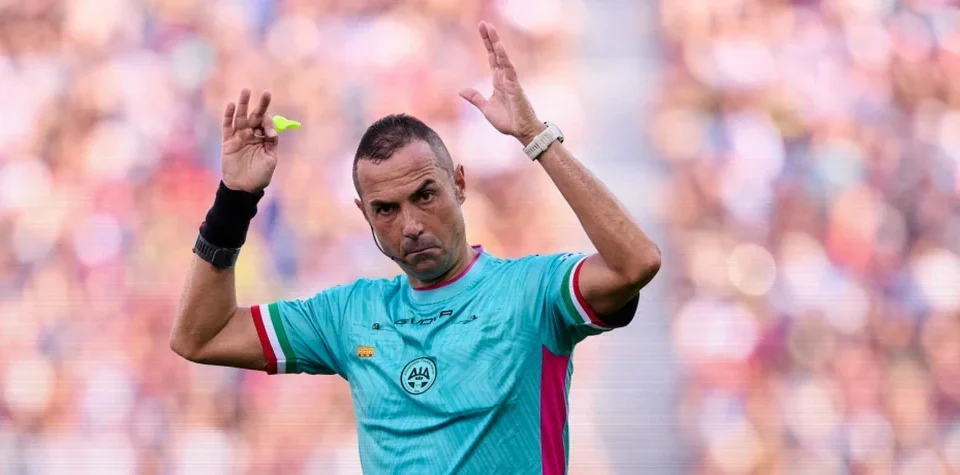
Guida allowed the match to continue. The referee may have judged Oristanio’s eventual fall to have come after the contact and therefore not to have been decisive. Yet the contact itself altered the attacker’s leg and foot, making it a consequential challenge rather than a routine coming together.
That was why the absence of a VAR check drew particular attention. Even if the video officials had not considered the decision a clear and obvious error, an on-field review appeared warranted to allow Guida to assess the sequence again. Santoro did not make that call, and the reasoning was not apparent from the incident.
Abate’s reaction after the final whistle was restrained but pointed: “I will not comment on the penalty that was not given, because it speaks for itself.”
VAR restraint becomes a season theme
The Bologna incident sits within an early-season pattern. After three matchdays there had been neither a penalty awarded nor an on-field review, prompting questions over whether VAR’s intervention bar had risen too far.
The first referee review of the campaign arrived only on 12 September, during Genoa’s meeting with Frosinone in round four. VAR official Camplone advised referee Rapuano to revisit a handball by Cittadini, and the resulting penalty was awarded. It was Rapuano’s 32nd match of the year.
Serie A’s preferred direction has been clear enough: more continuity, fewer stoppages and greater authority for the referee on the pitch. Coaches generally welcome a game in which players stay up more often, duels do not automatically halt play and effective playing time can rise.
Roberto Rosetti has summed up that philosophy by insisting that “this is football, not PlayStation.” The principle does not lessen the need for intervention when a material mistake has been made, however. Referees must retain the confidence to decide, and Guida’s standing as an international official is not in question. But VAR’s purpose is also to prevent an error on the field from becoming the final outcome.
At the Dall’Ara, the balance appeared to tilt too far towards silence. Serie A may want football to flow, but its season-long search for consistency will depend on whether clear consequences in the penalty area are still recognised when they occur.