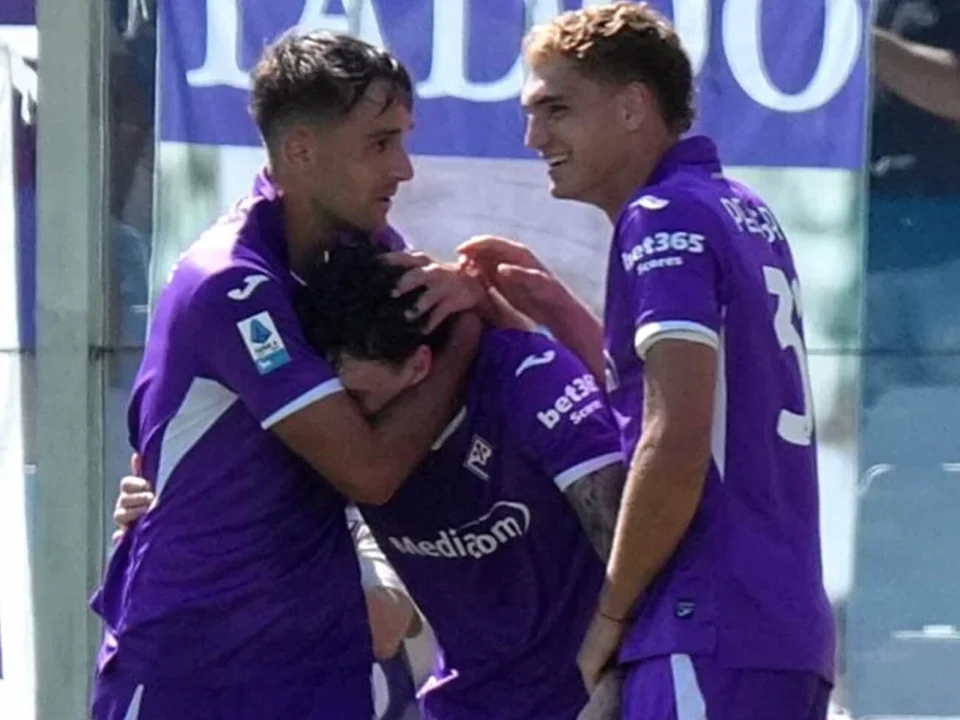
Fiorentina’s draw with Napoli carried more weight than a single point. Coming from behind against opponents who won the Scudetto little more than a year ago, even with several absences, Paolo Vanoli’s side showed the response that had been missing through the darker part of their league season.
Vanoli has been in charge for less than two weeks, yet the first signs of recovery are clear. Fiorentina have played three official matches under their new coach, winning twice and drawing once, while scoring in each outing: four goals at Venezia, three against Pisa and one against Napoli.
The sequence matters after three successive Serie A defeats before the coaching change. Home losses to Frosinone and Torino had left the Viola uneasy and unable to react when matches turned against them. The comeback win in Venice could have been explained as the immediate emotional effect of a new appointment, while the victory over Pisa came against lower-level opposition. Napoli was the more meaningful test.
Fiorentina struck the woodwork twice before Napoli scored, then continued to push rather than allowing the match to drift away. That resilience was the central development of the afternoon. The team now appears more aware of its own qualities, although Vanoli has substantial work to do during the upcoming 20-day league break.
Conditioning becomes the next priority
Eight Fiorentina players will leave the Viola Park training ground for international duty: Radu Dragusin, Cher Ndour, Nicolò Fagioli, Marin Pongracic, Oulai, Beto, Njie and Mastantuono.
Dragusin, Ndour and Fagioli are already in satisfactory condition and can join their national teams without concern. For Pongracic, Oulai, Beto, Njie and Mastantuono, however, the call-ups come at a point when they would have benefited from a more sustained period of work to improve their fitness.
Differences in physical condition across the squad remain visible and can disrupt Fiorentina’s rhythm. Vanoli and his staff must address that issue, particularly with several players unavailable for part of the break. His previous season also began with a renewed focus on athletic and physical preparation.
Atta is one of the players still seeking his best level. He has not yet resembled the midfielder who impressed at Udinese, although he did hit the bar against Napoli. His positioning may be part of the issue: when Fiorentina lost possession, he defended higher than Fagioli and Ndour, while on attacking transitions he was often close to Pellegrino. His run into the box produced the chance, but a player with his abilities may need greater involvement in Fiorentina’s general build-up.
Viery, withdrawn at half-time after a difficult spell against Politano, must settle more fully into a style of football that remains unfamiliar to him. Gonçalves, meanwhile, needs to make a marked improvement in his physical sharpness before he can recover his usual liveliness.
More assurance at the back
The defensive picture was more encouraging. David De Gea, now 36, was decisive against Napoli, moving across his goal with the reflexes of a far younger goalkeeper. His intervention helped Fiorentina stay in the contest long enough to earn their comeback draw.
Dragusin also delivered the version of himself Fiorentina needed. This was not the defender overwhelmed by Malen in Rome, beaten by Raimondo or caught still for Adams’ acrobatic finish. With De Gea behind him and Dragusin returning to form, Vanoli has begun to establish firmer reference points in defence.
The Napoli result does not solve every problem, but it gives Fiorentina a more stable starting point for the next stage of the season. The immediate task is to turn improved belief into a side that can sustain its intensity, fitness and identity beyond the first lift of a managerial change.