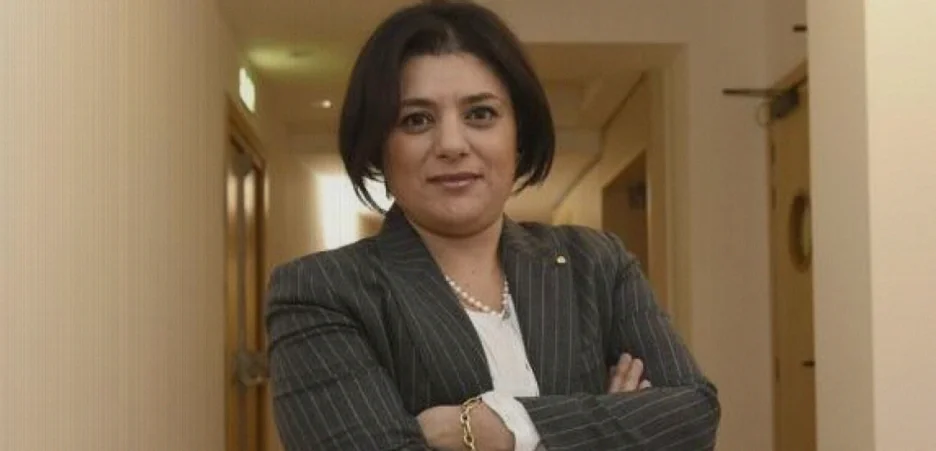
Sassuolo’s meeting with Milan on Sunday carries a private resonance for the Squinzi family, but Veronica Squinzi sees it chiefly as another step in a longer project: a club built through patience, structure and the belief that progress must be sustainable.
Key takeaways
- Veronica Squinzi described Alberto Aquilani as a deliberate appointment, praising his courage and willingness to trust young players.
- Domenico Berardi has extended his Sassuolo contract by four more years, while Nemanja Matic has been highlighted for his leadership within the squad.
- Giovanni Carnevali has concluded a 13-year spell at the club, with Andrea Fabris returning as chief executive and general director.
- Sassuolo’s ownership traces back to 2003, when Giorgio Squinzi chose to invest in the club connected to the ceramic district that had supported Mapei’s growth.
- The club’s target for the season is a united side playing positive football, with academy players given room to establish themselves.
A new era without abandoning the method
Squinzi described the present moment as a change of cycle rather than a break with Sassuolo’s past. Carnevali’s departure closes an important chapter after 13 years in a central executive role, but Carlo Rossi remains president and provides continuity. Marco Squinzi continues as vice-president, while Fabris has returned to the club’s leadership structure.
There is also a clear sporting reference point in Francesco Palmieri, the sporting director whom Squinzi called the club’s guide through a difficult period. She credited him with maintaining balance between younger players and experienced professionals, as well as with the work behind a transfer campaign that included Muharemovic’s sale.
Aquilani’s appointment fits that line of thinking. He was previously a Sassuolo player in 2016-17 and had already been known to the ownership before taking charge. His subsequent work with Fiorentina’s Primavera, Pisa and Catanzaro had been followed closely, particularly his near-miss in the promotion race with Catanzaro.
“When we completed the deal, I immediately felt he was the right man,” Squinzi said. “He is a brave coach, he wants his team to play, and he is willing to give young players opportunities.”
The academy remains one of the clearest sources of satisfaction for the ownership. Squinzi said there is little that compares with seeing a home-grown player make his debut at the Mapei Stadium, naming Cinquegrano as the most recent example after a succession of youth products over the years.
That emphasis also explains the pain attached to relegation two years ago. Squinzi called it a wound felt by the whole family, but insisted that the response must be to begin again with people who genuinely care for the club.
Her summary of Sassuolo’s identity borrowed a phrase used by Fabris: “ambitiously humble.” She added responsibility as a third principle. The club wants to improve, she said, while remembering its origins and avoiding commitments beyond its means. Giorgio Squinzi’s lesson was that football, like business, requires sound accounts, but that people must not be reduced to a balance-sheet item.
Berardi remains the most obvious embodiment of that connection. Squinzi called him Sassuolo’s flag-bearer, a player whose loyalty and ability have become inseparable from the club’s modern identity. Alongside him, Matic has brought a different kind of value: experience, calm and a readiness to help younger teammates despite arriving with the humility of a newcomer.
The visit of Milan therefore arrives with an added family dimension. Giorgio Squinzi and his sister both held affection and respect for the Rossoneri, but Veronica Squinzi expects Sassuolo to approach the occasion with the commitment demanded by a major Serie A fixture.
From cycling values to the Sassuolo project
The club is one part of a wider sporting culture within the Squinzi family and Mapei. Their association with cycling produced 654 victories between 1993 and 2002, rooted in a passion passed down from Veronica Squinzi’s grandfather, who had dreamed of becoming a rider before founding Mapei in 1937.
For the family, cycling brought more than sporting success. It created a language of collective effort, sacrifice and determination which later informed their approach to football and business.
The defining Mapei cycling memory for Squinzi remains the 1996 Paris-Roubaix, when Johan Museeuw, Gianluca Bortolami and Andrea Tafi crossed the line together. Debate followed over whether the finishing order had been arranged, something she rejected. Her mother responded by organising a national newspaper campaign built around the message that victories are shared.
Mapei’s sporting involvement now extends beyond football and cycling. In sailing, the company is backing Ambrogio Beccaria and the IMOCA 60 Mapei project, which has the 2028 Vendée Globe solo round-the-world race as its objective. It also supports rally driver Rachele Somaschini in a fundraising initiative for cystic fibrosis research.
Squinzi said the family does not see such commitments as simple sponsorships. The intention is to take part in a journey and leave something meaningful behind.
That philosophy has shaped Sassuolo since the family took ownership in 2003. The original motivation was to give something back to the Sassuolo ceramic area, a territory closely linked to Mapei’s development. Investment has been guided by planning, consistency, modern facilities and targeted decisions rather than sudden leaps.
At the end of this season, Squinzi said she would be satisfied by a connected group capable of playing courageous, enjoyable football, ideally with young players proving their potential on the pitch. The family’s guiding phrase comes from cycling: never stop pedalling. For Sassuolo, that means there is no fixed finishing point, only the next objective.