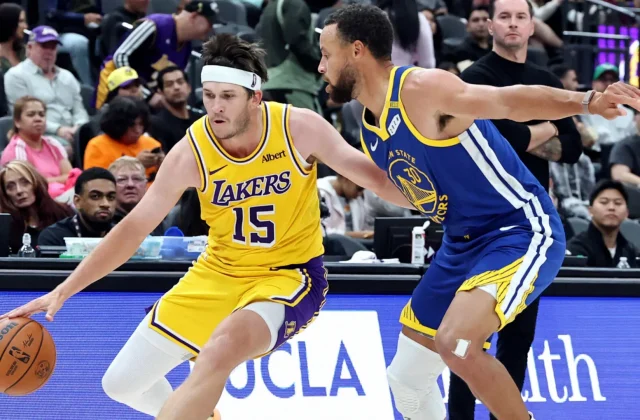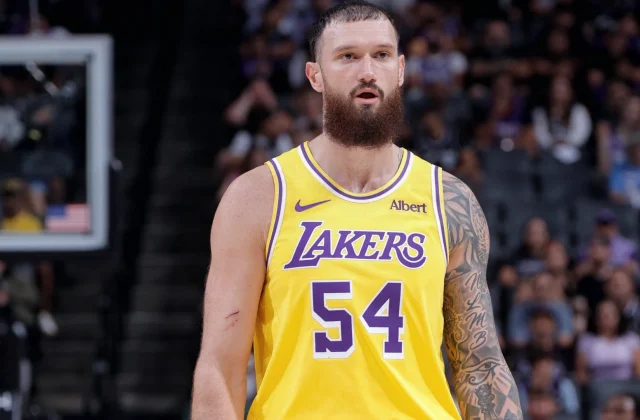
The center board for 2026-27 starts with two franchise-level anchors, then quickly turns into a decision about format, health and opportunity. Victor Wembanyama and Nikola Jokić sit alone at the top, while the next groups offer a mix of established double-double production, new-team upside and frontcourt roles still opening up.
| Tier | Center | Team | Key fantasy case |
|---|---|---|---|
| 1 | Victor Wembanyama | San Antonio Spurs | Elite production on both ends entering Year 4 |
| 1 | Nikola Jokić | Denver Nuggets | Triple-double floor and elite shooting efficiency |
| 2 | Karl-Anthony Towns | New York Knicks | Reliable 20-point scorer with rebounding volume |
| 2 | Alperen Sengun | Houston Rockets | Passing-centered big with room to grow at 24 |
| 2 | Walker Kessler | Los Angeles Lakers | Fresh start beside Luka Dončić after an injury-shortened year |
| 2 | Bam Adebayo | Miami Heat | Top option with 20-and-10 potential |
| 2 | Domantas Sabonis | Sacramento Kings | Broad stat line despite durability and trade uncertainty |
| 3 | Alex Sarr | Washington Wizards | Blocks and offensive range, with category concerns |
| 3 | Jalen Duren | Detroit Pistons | Scoring and rebounding spike in points formats |
| 3 | Donovan Clingan | Portland Trail Blazers | Efficient double-double producer with rim protection |
| 3 | Joel Embiid | Philadelphia 76ers | Ceiling remains massive; availability remains the question |
| 3 | Ivica Zubac | Indiana Pacers | First full Pacers season alongside Tyrese Haliburton |
| 4 | Onyeka Okongwu | Atlanta Hawks | Locked-in starting role and perimeter growth |
| 4 | Rudy Gobert | Minnesota Timberwolves | Stable rebounds-and-defense specialist |
| 4 | Jarrett Allen | Cleveland Cavaliers | Dependable efficiency with occasional eruption games |
| 4 | Nic Claxton | Chicago Bulls | Expanded playmaking entering a new situation |
| 5 | Zach Edey | Memphis Grizzlies | Limited recent sample but major interior potential |
| 5 | Day’Ron Sharpe | Brooklyn Nets | Possible move from reserve minutes into the starting five |
| 5 | Neemias Queta | Boston Celtics | New starter with two-way breakout appeal |
| 5 | Jusuf Nurkić | Utah Jazz | Starter’s volume, tempered by consistency and health |
The first-round center decision
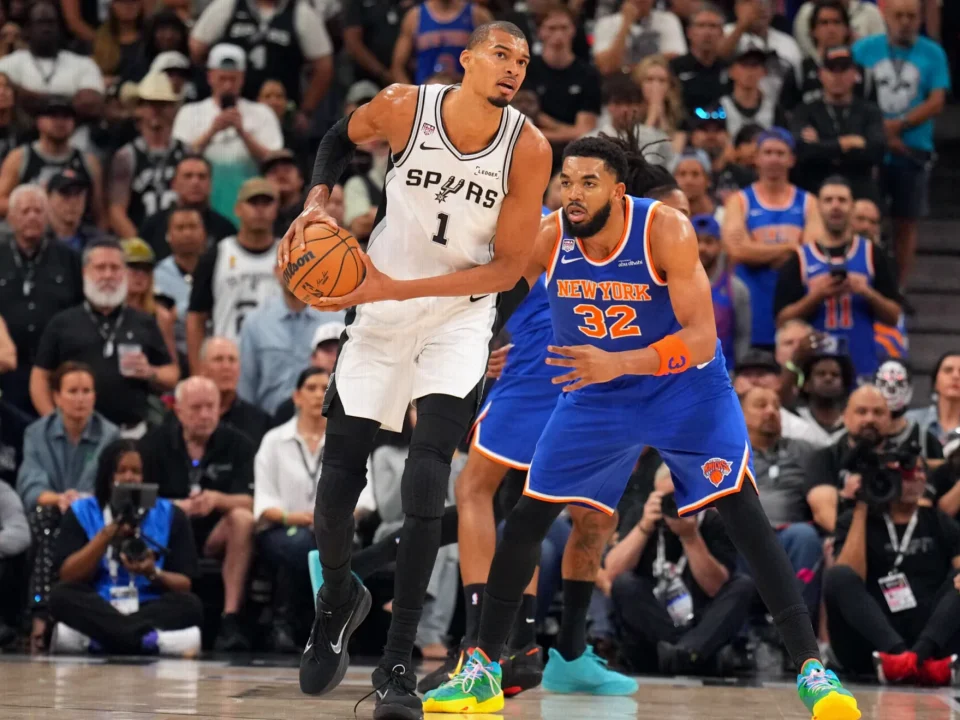
Wembanyama enters his fourth season as the clear positional pacesetter. His combination of length, mobility, scoring range and defensive disruption gives him an advantage in virtually every scoring setup. In a draft room, he should not make it beyond the first two selections.
Jokić is the one center with an equally credible claim to the top overall spot. He has posted triple-double averages in each of the past two seasons. Even in the least active season of his career by games played, he appeared 65 times and extended his run of shooting better than 56.5 percent from the field to six consecutive years. The passing, efficiency and nightly floor work in points and category builds alike.
Tier 2 carries the core starters
Towns has produced more than 20 points per game for 10 straight seasons. He has cleared 10 rebounds per night in seven of those campaigns, including the past two, making him one of the cleanest middle-to-early-round center options regardless of scoring system.
Sengun is only 24 as he enters his sixth NBA year, and the Jokić comparisons stem from his touch and playmaking out of the post. There is still growth available in his game, which makes him a strong fit for both points leagues and category managers needing assists from the center slot.
Kessler’s move to the Lakers puts him next to Dončić, an environment that should create easier finishes around the rim. Kessler was limited to five appearances last season, but a healthy return would bring double-double production, blocks, steals and capable passing. His complete statistical profile plays especially well in category formats.
Adebayo remains one of the few bigs capable of regularly landing near 20 points and 10 rebounds. He can deliver the kind of individual scoring night that swings a weekly high-score matchup, and Miami’s addition of Giannis Antetokounmpo should not change Adebayo’s place as a major offensive option.
Sabonis appeared in only 19 games last season and spent much of the offseason in trade discussion. Defensive questions have affected his market, but his production has long covered multiple categories and remains useful in any fantasy format when he is on the floor.
Upside, risk and new settings in Tier 3
| Player | Sourced production or circumstance |
|---|---|
| Jalen Duren | 19.5 points and 10.5 rebounds per game last season; eight 30-point games |
| Joel Embiid | Load-management and injury history lower the draft floor |
| Ivica Zubac | Begins first complete season in Indiana |
| Alex Sarr | Injuries interrupted his second NBA campaign |
| Donovan Clingan | Double-double average in his sophomore season |
Sarr’s second season was interrupted by injuries, but the Wizards big has shown a versatile offensive package and real shot-blocking instincts. His weaker free-throw and 3-point results, plus modest steals and assists, make him more attractive in high-score leagues than in categories.
Duren’s jump as a scorer was loud: 19.5 points and 10.5 rebounds per game, with eight outings of 30 or more points. His contributions outside of points and boards have not been as dependable, though his field-goal work and respectable foul shooting still give him category utility.
Clingan paired double-double production with good field-goal efficiency and substantial rim protection in his second year. He also displayed comfort taking perimeter shots. Heading into Season 3, that combination points toward further category-league value.
Embiid’s per-game ceiling could place him in the top group, but drafting him requires accepting the injury record and the likelihood of scheduled rest even in a healthier season. That makes him the safer play in high-score formats, where missed games can be easier to absorb.
Zubac has elevated his scoring profile without losing his rebounding base over the past two years. His first full campaign with Indiana gives him a chance to work beside Haliburton, one of the league’s premier creators, and he remains usable across formats.
The dependable middle rounds
Okongwu has control of Atlanta’s starting center assignment entering his seventh season. The 1.9 made 3-pointers per game from last year add a useful category wrinkle to his across-the-board output.
Gobert remains a specialist whose value is easy to map: rebounds, defense and reliable execution of his role. That steadiness makes more sense in category leagues than in high-score setups.
Allen has averaged 15.2 points, 9.9 rebounds and 1.1 blocks over five full seasons in Cleveland. The Cavaliers center offers dependable efficiency and occasional ceiling games, keeping him viable in either scoring format.
Claxton posted two triple-doubles last season while reaching a career-best 3.7 assists per game. The Bulls will give him a fresh setting after that expanded offensive freedom, and his playmaking growth gives him a path to value in both points and category leagues.
Late center swings
Edey played only 11 games last season, yet his limited run hinted at a powerful interior presence. Category managers can chase the rebounding and big-man production, while high-score investors must wait to see whether he can deliver major single-game totals consistently.
Sharpe has primarily worked from the Nets bench to this point, but he is positioned to take the starting job. The available sample suggests he can become a productive category contributor if those minutes arrive.
Queta has won Boston’s opening center role and enters the year with breakout potential. His ability to impact both ends makes him a safer category selection than his draft position may suggest.
Nurkić owns Utah’s starting job and still has the all-around statistical game to fill a box score. The concerns are regularity of production and availability, but the role gives him high-score appeal.
Additional names for the board
- Collin Murray-Boyles, Toronto Raptors
- Wendell Carter Jr., Orlando Magic
- Isaiah Hartenstein, Oklahoma City Thunder
- Jakob Poeltl, Toronto Raptors
- Myles Turner, Milwaukee Bucks
- Daniel Gafford, Dallas Mavericks
- Dereck Lively II, Dallas Mavericks
- Deandre Ayton, Washington Wizards
- Brook Lopez, LA Clippers
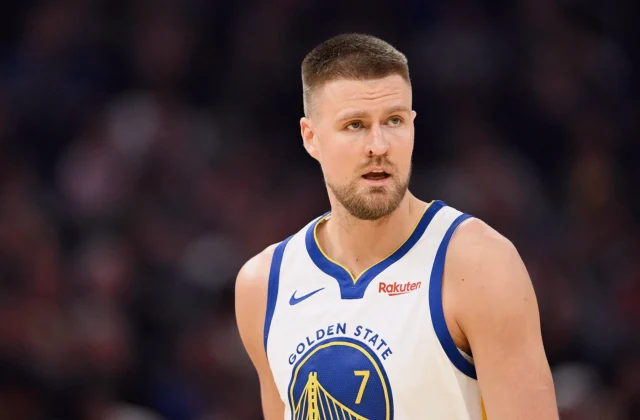
- Kristaps Porzingis, Golden State Warriors
- Isaiah Stewart, Memphis Grizzlies
- Nikola Vučević, Orlando Magic
- Kel’el Ware, Milwaukee Bucks
- Hannes Steinbach, Charlotte Hornets
Deep-league center watch
- Steven Adams, Houston Rockets
- Jaylin Williams, Oklahoma City Thunder
- Andre Drummond, New York Knicks
- Maxime Raynaud, Sacramento Kings
- Yves Missi, New Orleans Pelicans
- Karlo Matković, New Orleans Pelicans
- Khaman Maluach, Phoenix Suns
- Paul Reed, Detroit Pistons
- Luke Kornet, San Antonio Spurs
- Al Horford, Golden State Warriors
- Adem Bona, Philadelphia 76ers
- Mitchell Robinson, Boston Celtics
- Moussa Diabaté, Charlotte Hornets