Vidigal’s Italian years were only one part of a football life shaped first by displacement, then by persistence. Before Napoli, Livorno and Udinese, there was a family fleeing Angola’s civil war, arriving in northern Portugal without contacts and beginning again with help from the state and the Red Cross.
From Angola to a footballing family in Portugal
The civil war in Angola, a conflict that claimed around 500,000 lives, forced Vidigal’s family to leave behind everything it had built. His parents refused to split the children during the escape.
- Vidigal was the eleventh of 13 children.
- Five brothers eventually became professional footballers in Portugal’s top division.
- The family initially relied on public assistance and the Red Cross after reaching Portugal.
- His own route into football began through his eldest brother, the first in the family to become a player.
He did not grow up with the usual childhood declaration that he would become a footballer. The game became a profession gradually, in a household where football offered a path forward after a life had been interrupted by war.
Napoli and the demands of Italian football
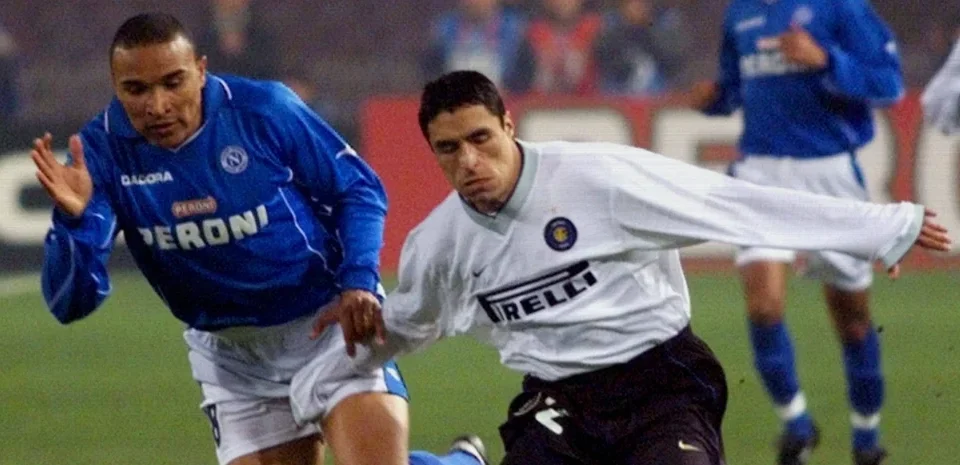
Moving to Napoli represented a major step in Vidigal’s career, but it came at a difficult moment for the club. Napoli had only recently returned to Serie A, their financial position was strained and the squad did not possess great depth or quality.
For Vidigal, the task was not simply to survive in a demanding league. The players also understood the responsibility of preserving the city’s attachment to its club through a hard period.
He contrasted that collective obligation with Edmundo’s troubled spell in Naples. Vidigal believed the Brazilian had the technical ability to make a decisive contribution, but lacked the right mental state for the challenges surrounding that Napoli side. His own view was that a player joins a team to offer something, rather than arriving with demands; in his eyes, that is the mentality which can separate a useful player from an influential one.
Zeman’s uncompromising work
Vidigal also worked under Zdeněk Zeman, whose sessions he recalls as punishing enough that players sometimes struggled to complete them. He described Zeman’s football as intense and proactive, built around seeking out opponents and affecting them throughout the match. He sees elements of that same approach in some of Gian Piero Gasperini’s teams.
At Livorno, another important Italian stop, he shared a dressing room with Igor Protti. Vidigal remembered Protti, who died several months ago, as “the Captain”: a player who continued fighting for his place even late in his career. He felt Protti had endured far more suffering than he deserved and said that image of a true champion would remain with him.
An Olympic scare and memories from Sporting
Portugal’s Olympic campaign in Atlanta in 1996 produced one of Vidigal’s most frightening experiences. Portugal were preparing to meet Brazil, featuring Ronaldo, Rivaldo and Bebeto, in the match for third place.
After a lengthy anti-doping procedure, Vidigal and a team-mate left late. Hungry after the delay, he asked their driver to hurry. Their vehicle was stopped by police and the situation escalated when he got out.
- An officer shone a light at him and reached towards his weapon.
- Vidigal was ordered to stop immediately or face serious consequences.
- He froze in fear, but the incident ended without further harm.
He can now recount the episode with relief, conscious that it might easily have taken a much darker turn.
At Sporting, Vidigal was already part of the first-team environment when Cristiano Ronaldo was in the academy. He has heard that Ronaldo regarded him as a physical example, though he said the pair never discussed it directly and he cannot confirm the story.
His Sporting career also included a disputed UEFA Cup dismissal against Bologna. In a duel with Giuseppe Signori, Vidigal believed the experienced forward had already caused problems for Sporting’s central defender. Vidigal moved to confront him, Signori feinted and came into him, and Vidigal raised his hands to protect himself. They ended up face to face before Signori fell, with the referee interpreting the incident as a strike and showing Vidigal a red card.
More recently, while working in the tunnel area for television during Sporting’s Champions League meeting with Bologna, he was recognised by Vincenzo Italiano. Vidigal did not immediately recognise the Bologna coach, who reminded him that they had played against each other. Vidigal said he was pleased by the encounter, particularly given Italiano’s current work as a coach.
Discipline, food and the Ronaldo-Jorge Jesus dispute
Sporting also brought Vidigal into contact with Giuseppe Materazzi in 1999. Materazzi, father of Marco, took close control of the squad’s diet during training camps.
The change was swift. Rich desserts, generous first courses and substantial main dishes had been available before Materazzi examined the menu and imposed a stricter regime: no desserts and controlled portions. Peter Schmeichel, then in the squad, questioned how he was expected to live on only 100 grams of rice. Vidigal’s response was simple: that was life.
He also addressed the current dispute involving Cristiano Ronaldo and Jorge Jesus. Vidigal felt Jesus had acted as a coach should after Ronaldo flew home, and said he immediately thought Ronaldo would regret leaving. While accepting that Jesus had acknowledged an error, Vidigal argued that Ronaldo’s statement did not excuse everything and that forcing the coach to kneel would be an unacceptable idea.
Across Angola, Portugal and Italy, the thread in Vidigal’s story remains the same: difficult circumstances do not remove responsibility. Whether facing a fragile Napoli, Zeman’s training ground demands, an Olympic misunderstanding or a changing Sporting dressing room, he places value on commitment to the group and the ability to start again.