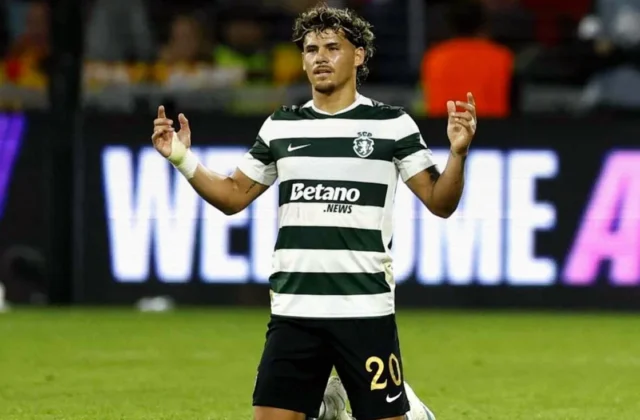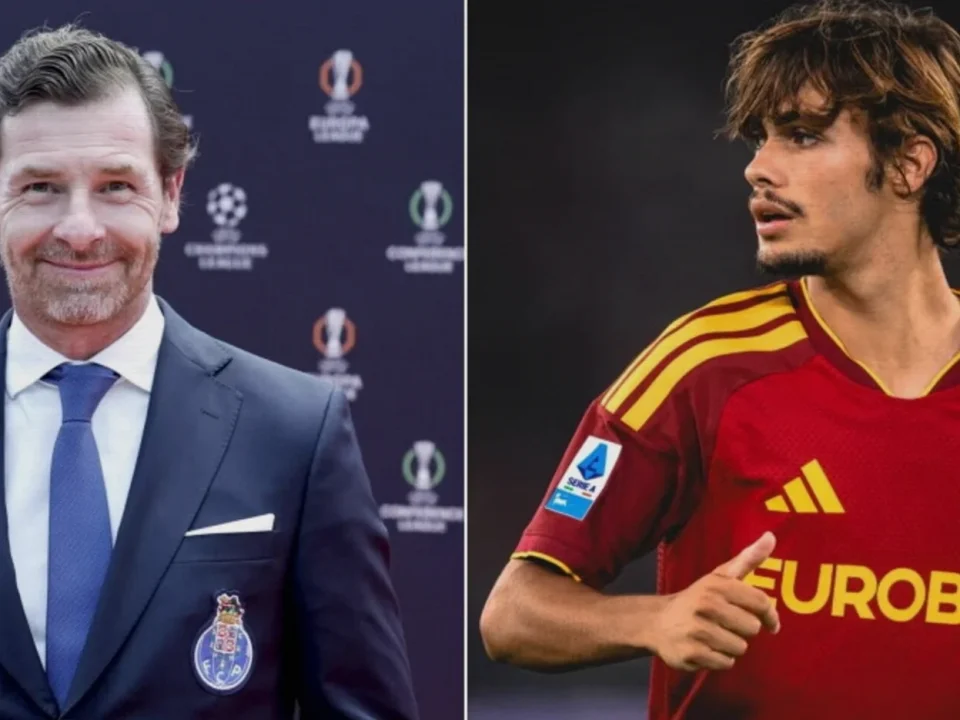
Rodrigo Mora’s move to Roma has left Porto with a substantial return and its supporters with the familiar regret that comes when one of the academy’s brightest prospects departs. André Villas-Boas, now president of the Portuguese champions, believes the 19-year-old has chosen a path that can make him a major figure in Serie A, particularly under Gian Piero Gasperini.
A costly departure, and a clear choice
Roma’s agreement for Mora is worth €50 million: €25 million is paid immediately, with the remaining €25 million due through deferred payments or a future resale arrangement. For Porto, a club long accustomed to developing and selling young talent, it was a significant deal even if it meant parting with a player deeply valued by the fanbase.
Speaking in Copenhagen during the European Football Club assembly, Villas-Boas explained that Mora’s own ambitions helped decide the matter. The player faced considerable competition for places and felt his involvement was not enough.
- Mora was a popular academy product and a favourite among Porto supporters.
- His limited playing time, in his own view, prompted Porto to consider proposals.
- Roma showed the strongest determination to complete the signing.
- The Porto president described the teenager as an exceptional technical talent with a strong desire to build a leading career.
“Rodrigo wanted to leave and there was a great deal of competition in the squad,” Villas-Boas said. “Roma were very determined to take him.”
Gasperini and Rome’s next project
Villas-Boas expects Mora to settle into the capital and provide Roma supporters with plenty to admire. He sees the player’s personality and unusual quality on the ball as central assets, while accepting that the next stage of his progress will be shaped in a different environment.
The former Porto and Zenit coach declined to prescribe how Gasperini should use him, stressing that he now speaks as a president rather than a manager. Still, he was unequivocal about the potential connection between a highly gifted attacker and one of Italy’s most demanding coaches.
“He is among the best technical talents around,” Villas-Boas said. “With the tactical work of a master such as Gasperini, he can become a world-class player.”
He was less interested in framing Mora’s future around physical change. “He cannot become 1.80 metres tall,” he remarked, adding that muscular development was not the priority for a footballer already equipped with such ability at his feet.
Villas-Boas won seven trophies in five years as a coach between Porto and Zenit, including the Europa League, but said the experience of leading a club is a different burden. A coach is tied to emotions and match strategy, he said; a president is left with “only suffering”.
Porto, Portuguese football and an Italian concern
The Porto president also offered strong praise for Francesco Farioli, describing the coach as excellent and saying the club are very happy with his work. He highlighted Farioli’s emphasis on intensity, pressing and speed, and said the coach asks players to push beyond their limits. That commitment, he suggested, is appreciated by supporters.
Villas-Boas also reflected on José Mourinho, his former mentor. He said Mourinho remains one of the finest coaches in the game and now leads what he called the world’s best club, while noting Barcelona as the obvious obstacle. He believes Mourinho has returned to a major post at a favourable moment, much as he did after leaving Inter, and said such challenges suit him.
- Porto’s rivalry with Benfica remains beneficial for Portuguese football, in Villas-Boas’s view.
- He underlined that Porto are the current champions.
- Portugal is due to introduce centralised television-rights sales in 2028.
- He identified infrastructure, technology, VAR resources, camera numbers, referee training and semi-automated offside systems as areas requiring improvement.
- He argued that an 18-team Portuguese top division is too large.
While public debate has focused heavily on the Ronaldo case, Villas-Boas said Portuguese football must look beyond the immediate noise. He compared the league’s position with France, whose clubs have greater financial resources, and set a target of catching up within a decade.
On Italy, he linked the national team’s difficulties to player and coach development. Italy has traditionally produced outstanding managers, he said, but the renewal of that coaching school has slowed in recent years. He pointed to younger Italian coaches such as Farioli and Roberto De Zerbi working abroad, while identifying stadiums as the other major structural issue for the Italian game.