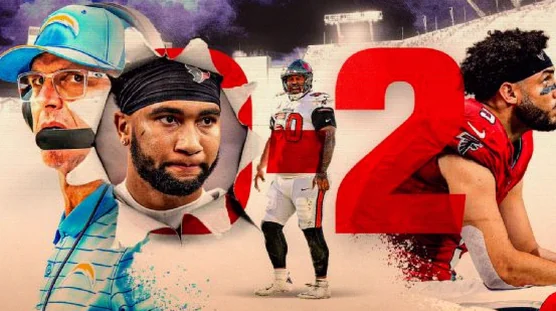
Week 3 brings a critical early-season checkpoint for eight winless NFL teams, with Houston and Indianapolis meeting Sunday in the league’s only 0-2 matchup. The odds are already harsh: since 2002, only four of 102 teams that began 0-3 finished in the playoff picture when seventh-place finishes from the pre-expanded-playoff era are included. That is a 3.9% survival rate.
The Texans were one of the rare clubs to beat those odds last season, recovering from an 0-3 start to go 12-2 the rest of the way and reach the postseason. The Bears and Panthers also climbed out of 0-2 holes in 2025 and won their divisions. But another loss this weekend would leave every team below facing an increasingly narrow path.
Houston Texans: 41.8% playoff chance
Houston has the best playoff outlook of the eight 0-2 teams, but it has not resembled the defense-first contender that recovered so impressively last season. After facing Josh Allen and Joe Burrow, the Texans rank 19th in points allowed per drive and 23rd in EPA allowed per play. Allen threw for 334 yards and accounted for four touchdowns in Buffalo’s Week 1 win, despite Houston having frustrated him in regular-season meetings in 2024 and 2025.
There are reasons to expect improvement. Derek Stingley Jr. has been beaten for spectacular catches by Dalton Kincaid and Ja’Marr Chase in consecutive weeks, and Houston has still not created a takeaway despite forcing two fumbles and seeing Kamari Lassiter drop a potential game-ending interception against Allen. The 2025 Texans had only two takeaway-free games across the regular season and playoffs; this year’s group has already had two.
The larger concern is the running game. General manager Nick Caserio added David Montgomery, retained Ed Ingram and Trent Brown, and brought in Keylan Rutledge, Evan Brown, Wyatt Teller and Braden Smith to rebuild the offensive front. Yet Houston is 28th in rushing success rate, 29th in EPA per designed rush and 30th in yards per carry on designed runs. Montgomery has three touchdowns but is averaging only 2.7 yards per attempt. Ingram missed the Bengals game, while Smith is on injured reserve with a foot injury.
- Houston was stopped on fourth-and-1 in the first half against Cincinnati.
- The Texans then failed on second-and-1 and third-and-1 during a later possession.
- Trailing by at least four, DeMeco Ryans chose a 58-yard field-goal try rather than another fourth-and-short attempt.
- Ka’imi Fairbairn came up short, a decision valued at a 7.4-point loss in win probability.
Houston lost by 14, so that call did not decide the game. Still, the Texans need enough confidence in their ground attack to remain aggressive. They visit Indianapolis next, and a victory would ease concerns. A third straight loss would again require Houston to chase one of the most difficult turnarounds in the league.
Tampa Bay Buccaneers: 16.6% playoff chance
Tampa Bay’s 0-2 start has included bad ball security, shaky quarterback play and a pass rush that has vanished. The Buccaneers lost to Cincinnati after fumbling four times, with the Bengals recovering every one. Tampa Bay did not punt in that game, but two turnovers came in the red zone and two more on its own side of the field helped produce 14 Cincinnati points.
The defense did contain Ja’Marr Chase to 12 receiving yards and held the Bengals below 4.0 yards per carry. Tight ends remain a major issue, however, even after offseason additions Alex Anzalone and Josiah Trotter. Mike Gesicki hurt Tampa Bay in Week 1, and Cleveland added further evidence in Week 2.
Deshaun Watson completed 24 of 30 passes for 238 yards and two touchdowns in the Browns’ win. Rookie Denzel Boston turned a 55-yard reception into a score after breaking tackles by Anzalone and Antoine Winfield Jr. Blake Whiteheart later scored on a 17-yard mesh-route touchdown when Trotter appeared to lose him in coverage.
Todd Bowles is blitzing at the NFL’s third-highest rate, yet Tampa Bay ranks 31st in pressure rate. Its starting defensive linemen have no sacks. Trotter, nose tackle A’Shawn Robinson and reserve edge defender David Walker account for the team’s three sacks, with Walker having entered the year with nine career defensive snaps.
Baker Mayfield has also struggled after signing his extension. He is taking sacks on more than 10% of his dropbacks and averaging 6.4 yards per pass attempt. His decisive fourth-down throw to Chris Godwin Jr. against Cleveland sailed high. The encouraging development is Bucky Irving, who is averaging 5.4 yards per carry behind an offensive line generating 3.2 yards before contact, second in the league. Tampa Bay remains alive largely because the NFC South remains open.
Indianapolis Colts: 25.9% playoff chance
Indianapolis let a winnable game against Kansas City slip away. The Colts led at halftime, reached midfield with 40 seconds left in regulation and needed a third-and-4 conversion to move within potential winning field-goal range. In overtime, Laquon Treadwell’s 48-yard catch set up a fourth-and-8. Shane Steichen elected to kick for the tie after the running game stalled, and Kansas City ultimately prevailed.
The Colts now have injury trouble at wide receiver. Alec Pierce, signed to a four-year, $114 million contract, had five catches over two games before aggravating a calf problem that had lingered through the offseason. He is out indefinitely. Darius Slayton has joined the lineup, but Indianapolis has lost its leading vertical threat.
Daniel Jones has not looked like the quarterback who revived his career in Indianapolis before his Achilles injury last year. He is averaging 6.1 yards per pass attempt, has four carries for 14 yards and is generating 5.5 yards per dropback, 27th among quarterbacks. He is not taking many sacks, with a 3.1% sack rate, but his downfield production has dipped sharply from last season’s 7.3 yards per dropback.
Jonathan Taylor and the rushing attack are still creating explosive gains, but Indianapolis needs more from Jones in a play-action offense. The secondary has been another major weakness. The Colts are allowing an NFL-high 9.1 yards per pass attempt, particularly over the middle against linebackers and slot corner Justin Walley. Walley has allowed a 145.6 passer rating in coverage, while throws to the hashes and seams are gaining more than 12 yards per attempt.
Indianapolis is also the fourth-worst tackling team by per-attempt rate. Charvarius Ward and Sauce Gardner have been adequate, though Ward played only about half the snaps against Kansas City. The Colts have faced the toughest schedule through two games, but their remaining schedule ranks sixth-easiest. The immediate challenge is Houston, followed by four road games in the next five, including a London game against Washington.
Los Angeles Chargers: 7.2% playoff chance
The Chargers have played sloppy football on both sides of the ball, and their upcoming schedule leaves little time for a gradual repair. They fumbled six times against Las Vegas but recovered five before Omarion Hampton’s late fumble stood. Justin Herbert then threw into traffic for an interception on the next possession.
The Arizona loss featured similar breakdowns: a blocked punt inside Los Angeles territory, a Cardinals touchdown, a Herbert interception on a deep attempt, penalties that helped create third-and-30, and a failed fourth-down sequence. The Chargers have struggled badly when momentum turns against them.
- Los Angeles next faces Buffalo.
- The Seahawks follow.
- Then come Denver, Kansas City, the Rams, Houston and Baltimore.
- The projection for that seven-game stretch is roughly 2.3 victories, which would place the Chargers near 2-7.
Only the 2020 Washington Football Team has reached the playoffs after a 2-7 start, doing so with a 7-9 division-winning record. The Chargers likely need at least three, and preferably four, wins over the next seven weeks to remain realistic contenders.
The offense has been poor even with Ladd McConkey available and disastrous without him. McConkey was limited by a rib injury and played 45% of the offensive snaps against the Raiders. Herbert owns a 44.3 Total QBR with McConkey on the field, but just an 8.5 mark without him, while averaging 3.7 yards per attempt with two interceptions.
Injuries to blocking tight ends Charlie Kolar and David Njoku will force further adjustments, although Kolar is not expected to move to injured reserve. Oronde Gadsden is more of a receiving tight end, and Los Angeles may need to use its wideouts more often. The club has used 11 personnel only 42% of the time, down from 57% in 2025.
New coordinator Mike McDaniel was hired to establish a run game, but the Chargers are 31st in EPA per designed rush. Center Tyler Biadasz was lost for the year in the preseason, and the unit is producing an NFL-low 0.7 yards before contact. Hampton has fumbled in both games, while Los Angeles has only one designed run of at least 15 yards, a 17-yard Hampton gain against the Raiders.
Defensively, the Chargers are 30th in pressure rate and 26th in QBR allowed after losing coordinator Jesse Minter. The unit has allowed major coverage lapses, including Tre Tucker’s 40-yard touchdown and an uncovered Cody Whiteheart score. The Chargers have also benefited from favorable breaks, including red-zone efficiency, fumble recoveries and Chad Ryland’s missed field goal for Arizona. The margin for further mistakes is gone.
Atlanta Falcons: 1.5% playoff chance
Atlanta will start Michael Penix Jr. against Green Bay on Thursday night, making him the Falcons’ third starting quarterback in as many weeks. Tua Tagovailoa suffered an oblique injury just before the season, forcing Cooper Rush into the lineup. Rush was ineffective, throwing four interceptions on 39 dropbacks, taking sacks on more than 11% of his attempts and producing a 5.2 Total QBR.
Kevin Stefanski benched Rush during the second half against Carolina for undrafted rookie Jack Strand. Strand’s first NFL pass became a pick-six. His 12.3 Total QBR was still more than twice Rush’s number, though Strand averaged 0.1 adjusted net yards per pass dropback.
Atlanta stayed competitive in a 20-13 Week 1 loss to Pittsburgh despite the quarterback issues. Two missed Nick Folk field goals and a T.J. Watt pick-six proved costly. The Panthers game was far worse: five turnovers, no red-zone trips for a second consecutive week, and no competitive answer in the home opener.
Penix should at least restore a downfield element. Bijan Robinson has carried nearly 52% of the Falcons’ touches and generated 45% of their scrimmage yardage, but Atlanta has only three completions on throws traveling at least 10 yards downfield. Penix has averaged nearly nine air yards per attempt during his two NFL seasons, trailing only Anthony Richardson Sr. and Marcus Mariota in that category.
Tagovailoa’s future return could create another decision, but either Penix or Tagovailoa would represent a major improvement over Rush and Strand. Drake London could also benefit from more play-action shots and deeper targets.
The defense is dealing with substantial losses: Jalon Walker is out for the year with a torn ACL, James Pearce Jr. is suspended for half the season, Da’Shawn Hand suffered a season-ending quad injury, and A.J. Terrell Jr. went on injured reserve after a groin injury. Yet Atlanta has remained ninth in points allowed per drive, 10th in EPA allowed per snap and 12th in pressure rate. Za’Darius Smith has 2.5 sacks in 44 snaps, helping a defense that blitzes at the second-lowest rate.
Jeff Ulbrich’s unit has been excellent against the run, ranking first in success rate, but it has been placed in difficult situations by turnovers and two return touchdowns. The Falcons are still only one game out of first place in the NFC South, where Carolina recovered from an 0-2 start to win the division last season.
Washington Commanders: 7.4% playoff chance
Jayden Daniels remains sidelined indefinitely, putting more pressure on Marcus Mariota and first-year offensive coordinator David Blough. Washington’s intended shift toward more under-center formations has been limited. The Commanders are under center on 31.3% of plays, up from 13.0% last year but still fourth-lowest in the NFL.
The offense has also been more productive from shotgun or pistol, producing plus-0.08 EPA per play compared with minus-0.07 under center. Washington may still expand its under-center package, but Mariota has traditionally been most comfortable in shotgun and pistol looks.
The Commanders missed two potential long touchdowns against Dallas. Daniels narrowly missed Treylon Burks on what could have been a 56-yard score, and rookie Antonio Williams could not connect with Terry McLaurin on a trick play. Much of the offense’s success has instead come from Daniels creating outside the play structure. Without quarterback scrambles, Washington is averaging 4.7 yards per play, 27th in the league, and ranks 28th in explosive-play rate.
Injuries are increasing the strain. Laremy Tunsil has not played, Sam Cosmi is in concussion protocol, and Brandon Coleman left Sunday’s game with a finger injury, although he is expected to be available against Seattle.
Defensively, Washington held Philadelphia in check for much of Week 1 before big plays swung the game. Dallas was much more efficient, as Dak Prescott threw four touchdowns against five incompletions. The Commanders limited the Cowboys to 40 rushing yards on 17 designed attempts, but they repeatedly allowed explosive passes.
Mike Sainristil has become a target after a promising rookie season. He lost Dontayvion Wicks on a 61-yard Week 1 gain, then surrendered 24- and 35-yard catches to CeeDee Lamb in the fourth quarter the following week. Lamb also gained 61 yards on blown coverages, including a 38-yard completion where both he and KaVontae Turpin were open.
Washington’s 2024 draft class has not supplied enough support. Jer’Zhan Newton is on injured reserve, while Ben Sinnott, Luke McCaffrey and Coleman have not met expectations. The club also no longer has veteran contributors from its NFC title-game run such as Austin Ekeler, Zach Ertz and Bobby Wagner. Seattle comes to Washington next, followed by games against San Francisco, Philadelphia and the Rams before mid-November.
Tennessee Titans: 4.4% playoff chance
Tennessee entered the season focused on Cam Ward’s development after adding offensive coordinator Brian Daboll, several veteran starters and first-round wideout Carnell Tate. Instead, the Titans have built an extremely conservative passing attack around their young quarterback.
Tennessee is throwing 10.2% less often than expected based on game situations. Ward’s average throw travels only 5.1 yards downfield, the shortest figure in the league, and nearly one-third of his attempts have been thrown at or behind the line of scrimmage. Only Daniel Jones has taken fewer deep attempts. Ward is also producing first downs less frequently than any other quarterback.
Tate has seven receptions for 65 yards. Wan’Dale Robinson has six catches for 47 yards while playing 67% of the offensive snaps. Tight end Daniel Bellinger has one reception and has played 37% of the snaps, while Austin Schlottmann committed a crucial holding penalty against Philadelphia.
Ward did hit Elic Ayomanor for a 41-yard play-action completion late against the Eagles, but the Titans largely shut down the passing game after J.C. Latham allowed an immediate sack to Jalen Carter. Dan Moore Jr. and Latham have both struggled with quick pressure over recent seasons, and Tennessee’s approach suggests concern about its tackles.
The rushing numbers require context. Tennessee ranks fourth in EPA per rush, boosted by Tyjae Spears’ third-and-22 conversion and Ward’s two touchdowns on six scrambles or sneaks. On first- and second-down designed runs, however, the Titans are only 26th in EPA per play. Ward is averaging just 5.7 air yards on play-action throws, with nearly 43% of those attempts behind the line.
The defense picked off Jalen Hurts twice but could not protect a late lead. Tennessee is 29th in QBR allowed. DeVonta Smith beat Amani Hooker for a 22-yard score, and Philadelphia attacked Tennessee’s corners with stacks and motion during the decisive two-minute sequence.
The pass rush has produced pressure but not enough sacks. The Titans rank third in pressure rate and 29th in pressure-to-sack conversion. Jeffery Simmons has five quick pressures, while Jacob Martin is the only other defender with more than one. First-round edge rusher Keldric Faulk has played only four third downs in 38 defensive snaps and should see a larger role as the season develops.
Tennessee opened with two home losses and now has four road games in six contests before the bye. The immediate issue is no longer only the playoff race; it is whether the organization can identify and develop the players who will form its long-term core.
Miami Dolphins: 0.1% playoff chance
Miami’s season has quickly become an evaluation year under new head coach Jeff Hafley. The roster includes veterans from a disappointing 2025 team, quarterback Malik Willis, a large class of short-term free agents and a heavy group of young draft picks.
Five rookies have played at least 79% of the offensive or defensive snaps: guard Kadyn Proctor, cornerback Chris Johnson, linebacker Jacob Rodriguez, wide receiver Caleb Douglas and safety Michael Taaffe. Tight end Will Kacmarek and receivers Chris Bell and Kevin Coleman Jr. have also handled situational work. Twelve of Miami’s 22 most-used players are 2025 or 2026 draft picks.
The rookie-heavy roster has been overwhelmed at the line of scrimmage. Miami blitzes at the ninth-highest rate but ranks last in pressure rate at 25%. The Dolphins have no sacks over 56 opposing dropbacks, the only team without one. Kenneth Grant began the year on injured reserve, while Chop Robinson missed the San Francisco loss with a concussion. Together, those former first-rounders managed only six sacks in 2025.
Hafley has paired the lack of pressure with an aggressive coverage plan. Miami plays man coverage at the league’s fourth-highest rate and uses a single-high safety on more than 76% of snaps, behind only Cleveland. That alignment helps against the run, but it leaves young corners exposed when the rush cannot reach the quarterback. San Francisco took advantage through the air.
The offense has not found its intended identity either. Miami retained most of its line, drafted Proctor and extended De’Von Achane rather than trading him. Willis was expected to create additional stress for defenses as a runner. Instead, the Dolphins rank 21st in EPA per designed rush and 29th in rushing success rate. Achane is averaging 3.5 yards per carry, more than two yards below his 2025 average.
Achane has not faced unusually heavy boxes. Defenses loaded the box on 39% of his carries last year, compared with less than 23% this season. The bigger change is direction: more than 72% of his runs went outside in 2025, but only about 42% have done so this season, often because he has lacked the time and room to reach the edge.
Willis has only two designed carries, despite the expected value of his running ability. He has taken sacks on more than 15% of his dropbacks after already posting a 13.9% rate before this season. He is averaging more than eight yards per pass attempt, but that sack rate is difficult to sustain for any long stretch.
Miami is committed to playing its younger players, but the surrounding conditions make evaluation difficult. It is hard to judge a young secondary without a pass rush, and just as hard to assess Willis while he works with inexperienced receivers alongside Malik Washington, Ryan Willis and Greg Dulcich. The Dolphins’ playoff hopes are effectively gone, but the rest of 2026 will determine whether the rebuild has identified useful pieces for the future.