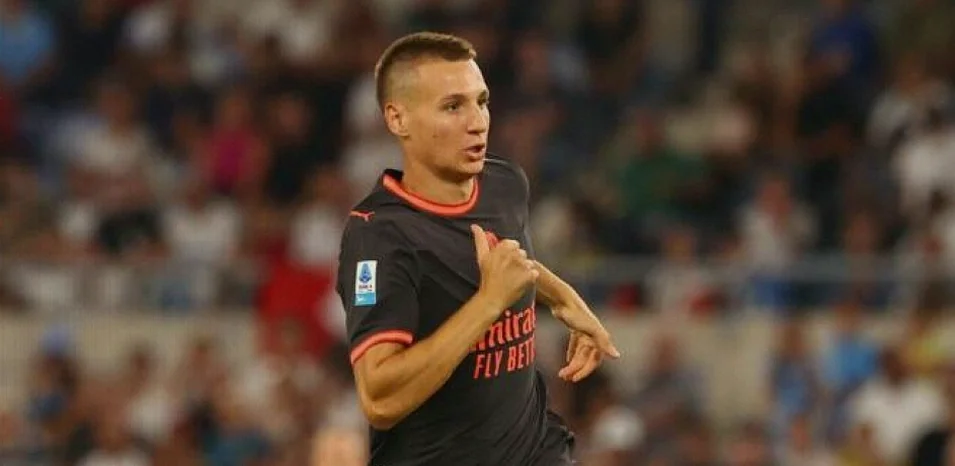
Milan’s first month has left the club searching for a clearer attacking rhythm, and Francesco Camarda has become one of the quieter questions within that wider uncertainty. The 18-year-old is the deputy to Gonçalo Ramos, Milan’s record signing, yet he has played only five minutes across the team’s first five competitive matches: a brief appearance against Lazio in Rome.
The coach and the club
Ruben Amorim had made his position on Camarda clear two months ago, after the forward scored twice in a friendly against Celtic. The coach said the teenager had to stay, stressing his belief in Camarda and in the young players working with the senior squad. He did not want to discuss individuals in detail, but confirmed that Camarda would remain at Milan for the season.
It was a significant call. Camarda has already spent a season on loan at Lecce and has had to manage the consequences of right-shoulder surgery during his development. Yet Milan chose not to bring in another centre-forward during the summer, leaving the academy product immediately behind Ramos in the pecking order.
That decision suggested faith, but the opening weeks have provided limited evidence on the pitch. Amorim has rotated widely as he tries to establish his strongest starting side. Players have been tested, and established names have not been protected: Luka Modric, for example, was substituted at half-time only a week ago.
Camarda, however, has largely remained on the bench. He did not play in the 2-0 defeat to Benfica, a night when Ramos struggled to influence the match. The Portuguese forward lost possession 16 times, more than any other Milan player, had four touches in the opposing area, contested 16 duels alongside Strahinja Pavlovic, and sent three attempts off target.
Ramos has scored once in five appearances, and Milan’s wider attacking difficulties have made Camarda’s lack of involvement more noticeable. The side are still trying to find an identity after a run of poor starts and limited attacking fluency. In that context, the coach’s selections inevitably receive greater scrutiny.
A place waiting to be claimed
There are several possible explanations for Amorim’s caution. He may believe Camarda needs more time, may be reluctant to expose him while the team are struggling, or may simply consider that the right match has not arrived. What is clear is that the forward was among the young players Milan were determined to retain at the start of the campaign.
Camarda renewed his contract until 2031 in July, at the same time as fellow prospect Christian Comotto. Amorim has also identified Comotto as a player he wants to develop, although the midfielder has not yet featured. Competition is heavier in midfield than in attack, but Amorim has said he wants to assess all his players before January.
Camarda is not entirely unfamiliar with senior football. He has made 13 Serie A appearances for Milan and played four times in the Champions League. His most painful European moment came against Club Brugge, when an offside decision denied him what could have been a defining first goal.
Milan’s ownership have also publicly tied the club’s future to the academy. Gerry Cardinale said in July that youth development was a priority, naming Camarda and Comotto as among the best products of the club and promising that they would be valued.
The issue carries added weight after Milan allowed Mattia Liberali to leave a year ago. Cardinale was unhappy with that outcome, and the club later attempted to bring Liberali back, without success, despite the owner personally contacting the player.
Patience in a difficult season
Camarda is unlikely to solve Milan’s attacking problems by himself. Asking an 18-year-old to transform a side in the middle of a broad rebuild would be unfair. Still, his energy, freedom and desire to make an impression could offer something useful when opportunities arrive.
For now, Milan’s public message and their team selection have not entirely met. Amorim’s confidence in Camarda has been expressed clearly, and the club have committed to him with a long contract. The next step is a meaningful chance, perhaps even a start, for a forward who has waited through the opening chapter of the season while Milan look for answers in front of goal.