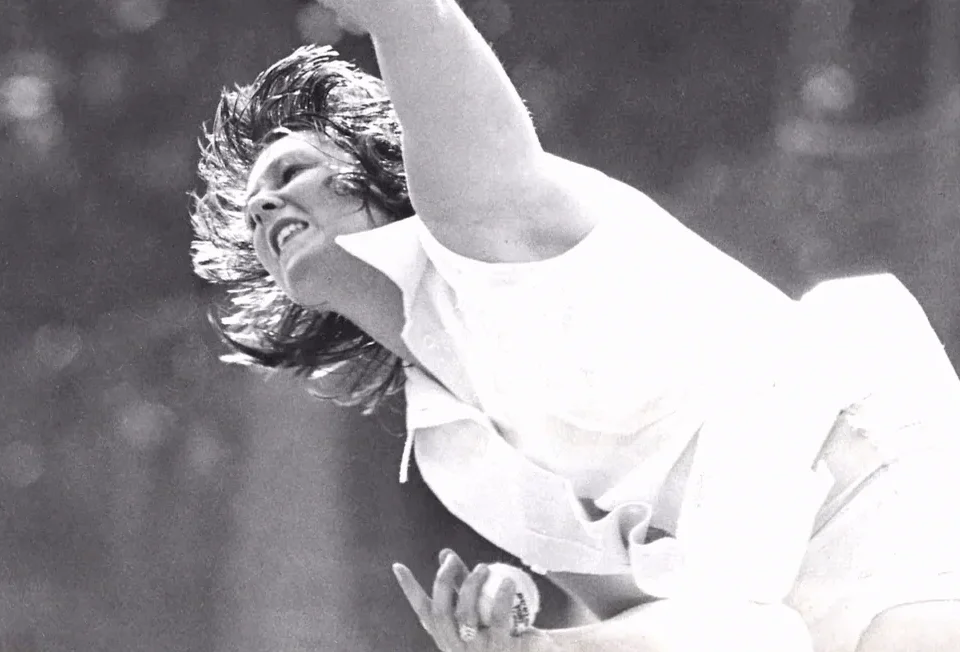
Penelope “Penny” Moor, a British player from the first years of the Open Era and one of the women present at the WTA’s founding meeting in 1973, has died aged 75. Moor died on October 8 at her Devon home, surrounded by close friends.
Born in Exeter on July 7, 1951, Moor went on to become a Top 100 player and a committed figure in tennis long after her playing career ended. Her life in the game stretched from the original Virginia Slims Circuit to youth outreach work in England, including recent projects with the Elena Baltacha Foundation and WTA Foundation.
From Exeter to the early women’s tour
Moor’s ability was noticed by a coach during a tennis holiday camp. After leaving boarding school, she relocated to London to train with a national squad that included fellow British players Corinne Molesworth and Jill Cooper. Her parents ran inns and worked demanding hours.
A tall left-hander with a natural attacking game, Moor was especially at ease moving forward to the net. In an era led in Britain by Virginia Wade, she saw limited room to develop at home and accepted Gladys Heldman’s invitation to join the emerging Virginia Slims Circuit in 1972.
Looking back in 2023, Moor said the British environment had felt restrictive for a player lower down the rankings. She credited Heldman with offering encouragement, protection and an infectious belief in the new circuit, while the chance to live and compete in the United States appealed strongly.
The move placed Moor in the centre of a changing professional landscape. She wore outfits designed by Teddy Tinling, attended sponsor functions across America and recalled meeting John Wayne after staying at his tennis ranch, where she gave lessons to the actor’s wife.
WTA formation and Wimbledon run
On June 21, 1973, Moor was among the players at Billie Jean King’s meeting at London’s Gloucester Hotel, where the Women’s Tennis Association was established. She later served on the young organisation’s Membership and Tournament sub-committees.
The next week brought Moor’s best major result: a run to the third round at Wimbledon. Later that summer, she was in Houston’s Astrodome to watch King defeat Bobby Riggs in the Battle of the Sexes.
Another highlight came at Eastbourne in 1974, where Moor faced Chris Evert in the opening round shortly after the American had claimed her first Roland Garros title. Moor remembered the circuit’s early travelling culture as one built around host families, hospitality and close relationships among players.
She later said that period offered a rare balance: she was able to earn a living, travel widely and meet the strongest players of the day before the modern tour became dominated by flights, hotels and greater competitive pressure.
Injury curtailed playing career
Through persistence, Moor established herself inside the Top 100, but a knee injury at 24 had lasting consequences for her movement and changed the course of her career. She retired from the tour in 1980.
Moor then moved to North Carolina, remaining there for 20 years. She worked in tennis event promotion, occasionally drawing on contacts including King and Wade, and also served as a country-club professional. Her coaching work included the USTA Regional Development and Training Center in Greensboro.
An only child, Moor returned to England in 2000 to care for her elderly mother. Away from the court, she developed a business as a United Kingdom agent for American sellers of antique furniture, lighting and home accessories.
A lasting commitment to access and mentoring
Moor continued to direct her time toward tennis projects designed to create opportunities for young people, disadvantaged children and local communities. She became a trustee of the Elena Baltacha Foundation, established in memory of the former British No. 1, who died of liver cancer in 2014.
She also took part in WTA Foundation activities, including WTA Come Play sessions led by Judy Murray. During the WTA’s 50th-anniversary celebrations in 2023, Moor joined the commemorations with enthusiasm and loaned dresses from her Virginia Slims days for exhibition.
Ann Austin, the WTA Foundation’s executive director, said Moor understood deeply how tennis could improve lives. Austin noted that Moor took pride in helping form the WTA and in the organisation’s continuing ability to create positive change.
Billie Jean King said she and Ilana were saddened by Moor’s death, describing her as both a leading British player and one of the courageous women who attended the decisive Gloucester Hotel gathering. King added that Moor’s work with the Elena Baltacha Foundation and WTA Foundation had helped open tennis to people of different ages and abilities.
This past summer, Moor worked with fellow former tour player Trish Bostrom on a community tennis project at Exeter Cathedral in her home city. Bostrom described Moor as faithful, generous, industrious and brave for leaving England to compete on the original Virginia Slims Circuit. Even at 75, Bostrom said, Moor was still playing regularly and searching for stronger hitting partners.
Moor’s husband, Geoff, whom she married in 2005, died in 2024.