On a grey morning at Getafe’s training ground, with the Coliseum still being reshaped around the team, Zaid Romero spoke about the long road from Mendoza to Madrid and the resilience that has carried him through it. The Argentine centre-back, 1.90 metres tall and now an established presence in José Bordalás’ side, has known the uncertainty of leaving home, the frustration of the Brugge bench and the reward of helping Getafe rise from danger to Europe.
Romero grew up in a family where work was never abstract. His father drove a taxi; his mother combined cleaning work with hairdressing. He says both gave him the values that now guide him on the pitch, recalling the efforts they made simply to buy him boots or take him to training. “I am what I am because of them,” he said, stressing that the difficult memories matter as much as the happy ones because each brought a lesson.
There was never a fallback career in his mind. Romero admits there were periods when he worried daily that football might not work out, for himself, his family and his wife, who has been alongside him throughout his journey. Faith helped him keep going. Had the game not opened its door, he believes he would have followed his father into the taxi trade, where family contacts would have made a start possible.
At 21, Romero left Mendoza for Buenos Aires with his wife, both still very young and suddenly far from the relatives who had always surrounded them. The move was difficult, he said, but it shaped them. Another lasting influence was his grandfather Domingo, who shined shoes from the age of eight before spending the rest of his life selling coffee. Romero says people sometimes underestimate what such a job can provide, but Domingo offered the family far more than financial support: he passed on a belief in daily work that remains close to the defender’s heart.
From Brugge doubts to a Getafe opening
Romero had been playing regularly at Estudiantes before his European move brought far fewer minutes at Club Brugge. He did question whether leaving Argentina had been a mistake, although his Champions League debut remained a landmark moment for a player from his background. In retrospect, he sees Belgium as part of the route that brought him to the Spanish capital.
Getafe’s circumstances were difficult when he arrived, alongside the Uruguayans Martín Satriano and Juan Boselli. The club was in the relegation places, yet ended the campaign by securing European football. Romero sees that turnaround as a major source of pride and as evidence of what can follow a lean period. A substitute can easily feel unwanted or overlooked, he said, but continued work can eventually create an opportunity. It did not happen for him in Brugge; it did at Getafe.
Bordalás offered immediate trust despite Romero arriving without the playing time he wanted. The defender believes his manager recognised his character, personality and commitment, and he has tried to repay that confidence in matches. The coach’s demanding reputation does not trouble Romero. Within the squad, he says, the intensity is understood as an attempt to get the best from players. Football creates a different version of people, he added: hard edges are needed on the field, while life away from it is another matter.
The renovation of the Coliseum is another sign, in Romero’s view, that the club is advancing beyond results alone. The dressing room wants the work completed as soon as possible, while accepting that such a project needs time. Players, he said, must contribute by helping Getafe keep moving forward.
That progress has also put him closer to Argentina’s senior set-up. Romero was included in a preliminary squad, though he was not selected for the World Cup. Even so, the recognition meant a great deal to him and his family after his difficult spell in Belgium. He still carries the ambition of playing in a World Cup or Copa América, aware that Argentina’s depth makes competition fierce and keeps every player from relaxing.
Barcelona’s movement and Messi’s lasting claim
Getafe now face Barcelona, a challenge that will demand flexibility from Romero and the defensive unit around him. He sees no simple preference between marking a fixed reference point such as Robert Lewandowski or confronting the movement associated with Raphinha, Dani Olmo and Lamine Yamal. Centre-backs, he said, must adjust to whatever an opponent presents, whether it is a penalty-box striker such as Lewandowski or Vedat Muriqi, or quicker and more mobile attackers.
Yamal’s talent requires collective concentration rather than an individual answer. Romero said defenders must stay connected with teammates, remain alert between the lines and avoid losing focus against players of Barcelona’s quality. Yet he does not believe Getafe should approach the meeting merely trying to survive and waiting for a single break. Respect for the opponent must be paired with personality, adherence to the coach’s plan and a winning mentality.
He pointed to last season’s victories over Villarreal, Real Madrid, Real Betis and Athletic Club as proof that Getafe can compete with major opponents. “Nothing is impossible for someone who believes,” he said.
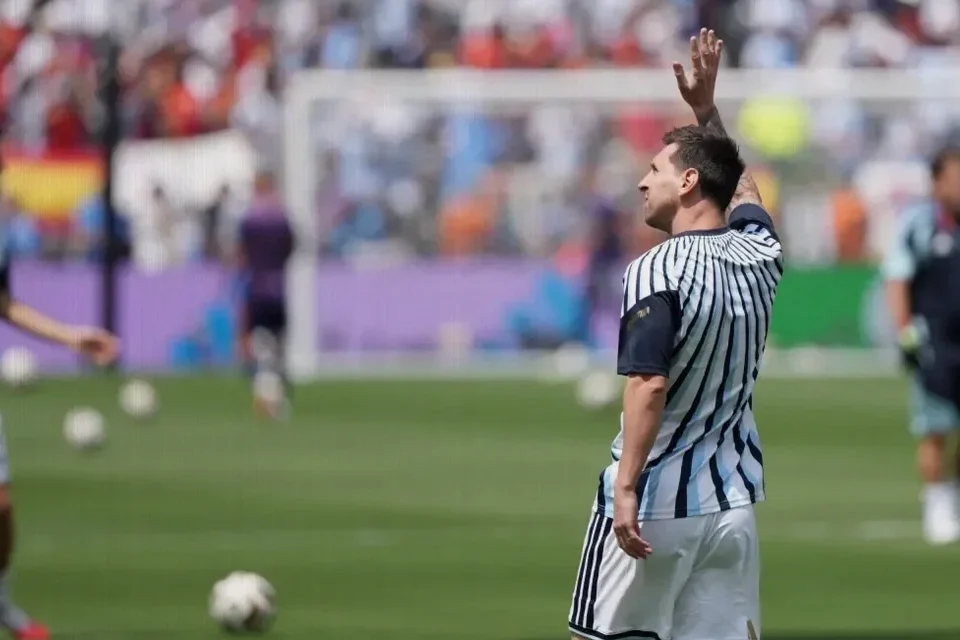
Asked about the Ballon d’Or debate involving Yamal and Kylian Mbappé, Romero declined to present himself as a judge of the award. But his own choice was unequivocal. As an Argentine, he will always back Lionel Messi, whom he calls the greatest player in football history. Romero praised the level and potential of the younger contenders, but said Messi’s World Cup performance at 39 was something he had not seen from another player of that age.
For Romero, Messi’s reserve is part of the distinction. He admires the fact that the Argentine has never publicly declared himself the best or demanded the Ballon d’Or, even while holding a place in the game that Romero believes nobody else can match.