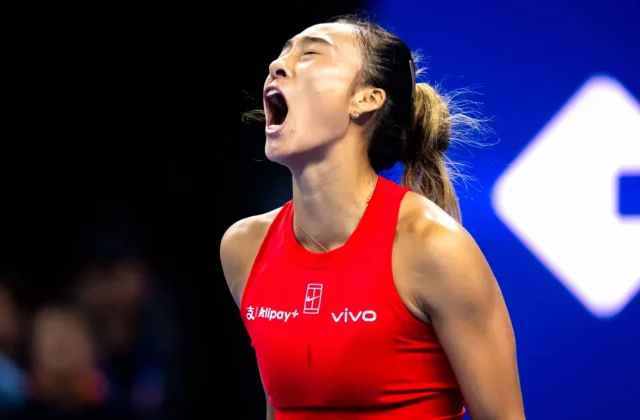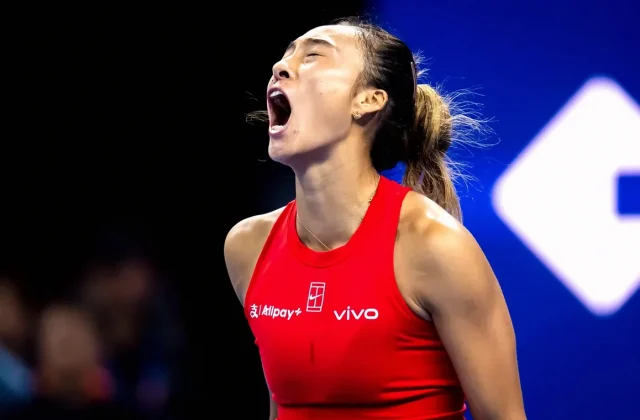
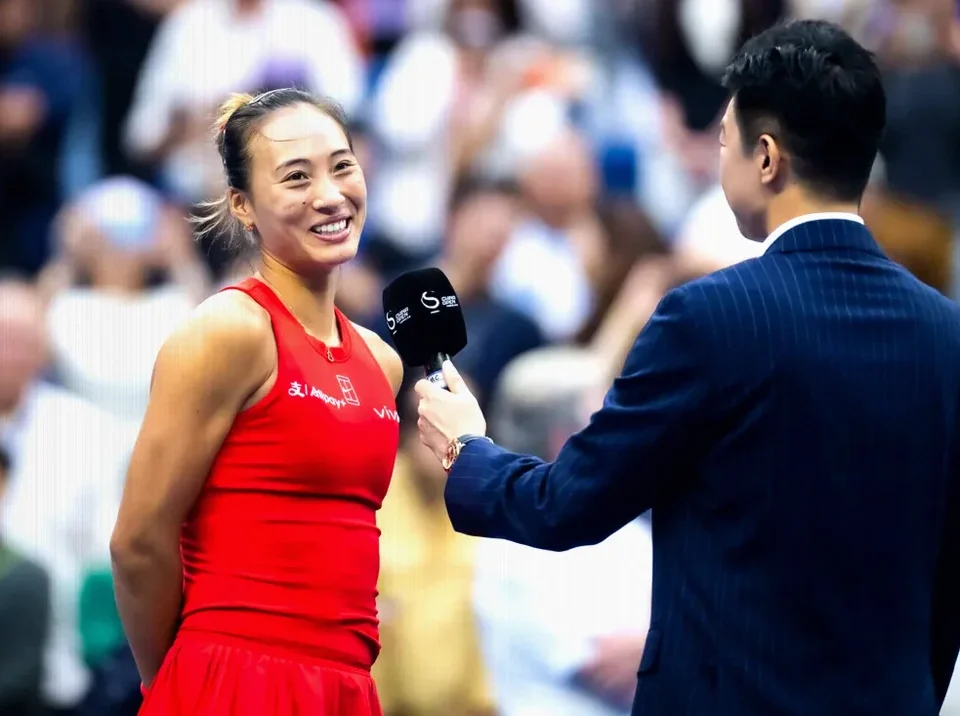
BEIJING — Zheng Qinwen’s return to the China Open semifinals has been built on a changed relationship with victory. A day after turning 24, the Chinese player defeated Elina Svitolina in Friday’s quarterfinals to reach the last four in Beijing for the second time in her career, extending a resurgence that has followed one of the hardest stretches of her tour life.
Once, Zheng said, she treated every win as something indispensable — “like water” — and struggled when results fell away. Her outlook has shifted in recent months. She now values the work required to produce victories as much as the victories themselves, a perspective sharpened by injury, a long absence and a dramatic fall down the rankings.
“I am more thankful for each win because I know how much work has gone into it,” Zheng said. “I have learned to enjoy both the win and the effort I put in on court.”
The Beijing event carries particular weight for Zheng. At the 2025 China Open, she was forced to stop during her third-round match because of a right-elbow injury. The problem had sidelined her from Wimbledon following surgery, and she did not return to competition until Doha in February.
Unable to immediately rediscover her former level, Zheng — previously ranked as high as No. 4 — dropped to No. 160 and needed wild cards to secure places in main draws. Her season reached another difficult point with a qualifying defeat in Toronto, but that loss led to a pivotal decision from her team: an intensive training spell in Florida, with Cincinnati skipped to focus on rebuilding her game.
A revival after Toronto
The work has brought rapid rewards. Zheng reached the quarterfinals at the US Open and has now repeated that level of progress on home soil by making the Beijing semifinals. Since Toronto, she has compiled a 12-1 record when her three US Open qualifying wins are included.
She said the Florida block remains vivid because it demanded patience and acceptance. Her coach, Pere Riba, reminded her that her ranking had fallen from No. 65 to around No. 140 and told her she needed to listen more carefully on court rather than rely on the status she once held.
Zheng admitted that the message initially angered her, but she came to accept it as the truth of her position. “I had to settle myself and say that it was reality,” she said, adding that the commitment now appears to be paying off.
She did not expect the turnaround to arrive so soon, having felt too low at the time to look far ahead. But Zheng now regards difficult periods as useful rather than purely damaging: they expose technical shortcomings and personal weaknesses, she believes, and provide the energy to make a breakthrough.
“When you are down, you have to meet the challenge,” Zheng said. “That is how you reflect, grow and eventually come back.”
Her journey, she noted, has always contained swings between strong runs and setbacks, including throughout her junior career. What made this latest dip different was its length. With a China Open semifinal now secured in front of her home crowd, Zheng said that prolonged struggle has made every opportunity in the draw matter more.