France’s midfield is being asked to change the temperature of a match. Ahead of Italy’s visit, the early signs of Zinédine Zidane’s tenure point towards a more technical, possession-led approach — with Ligue 1 talent Lucas Da Cunha, Rayan Cherki and Maghnes Akliouche central to that shift.
Key takeaways
- Zidane’s France have won their first two matches 1-0 despite adopting a more attack-minded midfield structure.
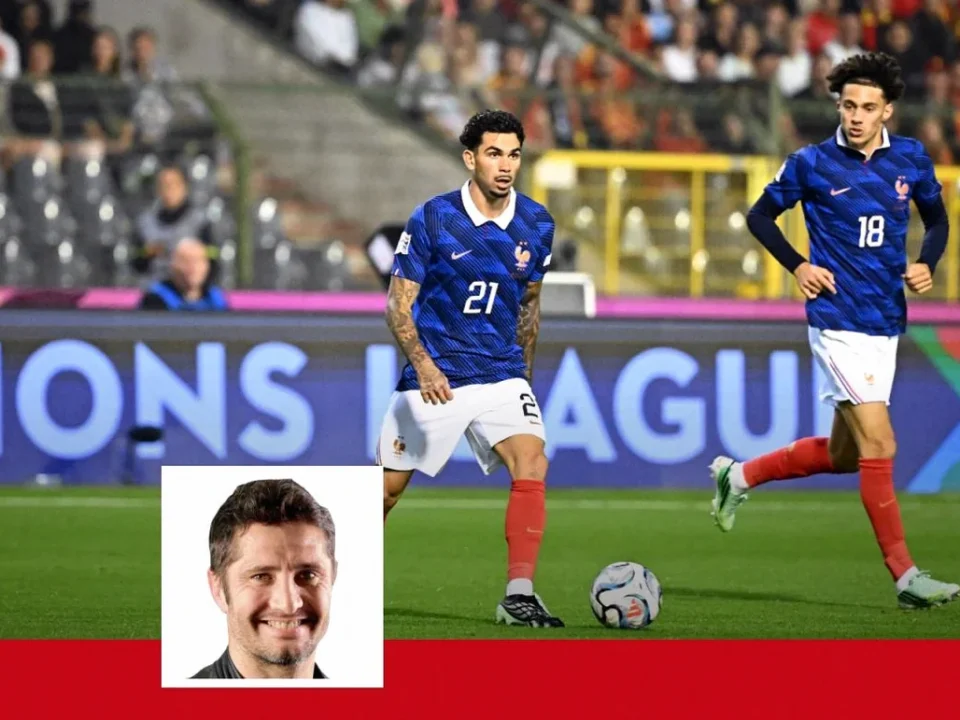
- Lucas Da Cunha impressed against Belgium with his ball security and ability to organise France’s build-up.
- Cherki and Akliouche offer further creative options in a three-man midfield built around technical quality.
- France recorded their best passing accuracy in the opposition half during the win in Belgium.
- The coming match against Italy will offer another indication of whether Zidane’s new midfield ideas can take hold.
A move from recovery to control
Bixente Lizarazu sees a clear break from the recent France model, which had often relied on two or three midfielders selected primarily for defensive work since Paul Pogba stopped playing for Les Bleus.
Under Zidane, France appear to be moving towards midfielders who can retain possession rather than simply win it back. Lizarazu compared the direction of travel with Spain’s long-established technical identity and with the possession football developed by Luis Enrique at Paris Saint-Germain.
“There are two opposing philosophies in midfield, even if they can overlap,” Lizarazu said. “You either pick players to recover the ball or players to keep it. With Zidane, France seem to be heading towards the second option.”
He believes the 2-0 World Cup semi-final defeat to Spain exposed the value of sustained command of the ball. Spain, he argued, were able to dictate the rhythm, make France chase and gradually wear down their opponents.
That does not mean France are abandoning their transition game. Zidane can still exploit the pace and quality of his forwards on the break, but greater control in midfield could allow his team to decide when matches accelerate and when they slow down.
Da Cunha offers a different reference point
Da Cunha’s display against Belgium was viewed as an early illustration of the new balance. The midfielder repeatedly made himself available in possession, gave defenders a secure outlet and helped organise the first phase of France’s attacks.
“His team-mates kept looking for him because they could see that he was not losing the ball and that he was directing the build-up well,” Lizarazu said. “He gave the defence reassurance.”
The former France international cautioned against drawing firm conclusions from one game, stressing that elite football is about consistency. Still, he felt Da Cunha’s technical command brought France a level of control they have not always possessed in recent years.
Adding Cherki or Akliouche to a midfield three could deepen that change. Both players bring imagination and a different interpretation of the role, potentially allowing France to field three technically gifted midfielders within a tailored structure.
Such a system may also alter the hierarchy in Zidane’s squad. Players previously considered automatic selections could find themselves less suited to a side expected to dominate the ball more regularly.
The strongest examination would come against Spain, who have beaten France in two major-tournament meetings, including the Euro 2024 semi-final. Lizarazu noted that Spain’s command of possession remains exceptionally difficult to match because that technical culture is developed across every position from an early age.
For now, Italy provide the next checkpoint. Zidane’s forthcoming midfield selections will show whether the encouraging first impressions are becoming a durable French identity.