Saint-Denis has always carried a particular weight for Zinedine Zidane, but France’s meeting with Italy gives the occasion an unusual overlap of beginnings and endings. After opening his tenure with 1-0 Nations League victories away to Turkey and Belgium, Zidane will take charge of France at home for the first time when Italy arrive at the Stade de France in Group A1.
The ground is inseparable from the finest evening of his playing life. Zidane scored twice as France beat Brazil 3-0 in the 1998 World Cup final, establishing himself as the defining figure of a tournament won on home soil. Yet Italy bring back another, far more complicated, chapter: the opponent in his final international appearance, the 2006 World Cup final in Berlin.
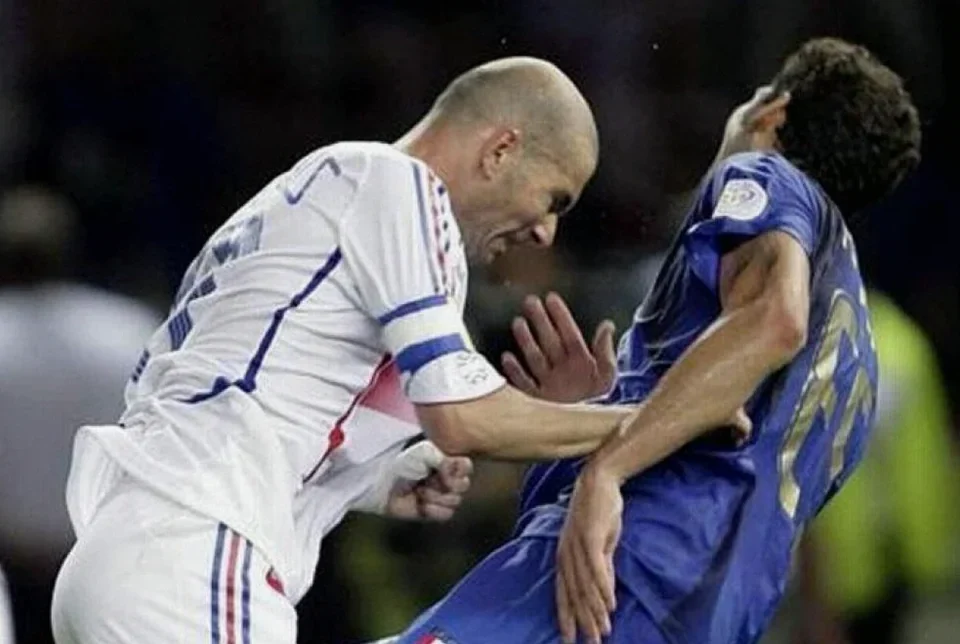
Twenty years on, Zidane spoke calmly about the scene at the Olympiastadion. He had put France ahead from the penalty spot in the seventh minute before Marco Materazzi levelled 12 minutes later. Near the conclusion of extra time, Zidane was sent off by Argentinian referee Horacio Elizondo after headbutting Materazzi, an incident which remains among football’s most enduring images. Italy went on to win the shoot-out 5-3.
“They are pictures that stay with you,” Zidane said, acknowledging that the memories return often. “But my career cannot be reduced to that one moment.”
He said he was not proud of what happened in Berlin, while insisting he did not regret it. For Zidane, the dismissal which closed his France career also became part of the path that brought him back to the national side as coach. “It gave me extra motivation to return as a manager,” he said. “It is a dream realised. I trusted myself, prepared for this, and now I am ready to give everything to this team.”
Italy, and the long road through Turin
Italy is not merely the country attached to his difficult farewell. Zidane spent five years at Juventus between 1996 and 2001, winning Serie A twice and becoming one of Europe’s central midfielders. Turin also brought disappointment in Champions League finals, with Juventus beaten in 1997 and 1998.
His European Cup story later changed at Real Madrid: he scored the celebrated winning goal against Bayer Leverkusen in the 2002 final, a 2-1 victory, before leading Madrid to three successive Champions League titles as coach in 2016, 2017 and 2018.
“Juventus is among the positive parts of my career,” Zidane said. “That was where I became an important player.” He added that he has not spoken with Materazzi since the 2006 final, describing the incident as one part of a life and career in which no one experiences only good moments.
The visitor is a different Italy from the side Zidane encountered in Berlin. Roberto Mancini has returned to lead a national team seeking a revival after missing the last three World Cups. Zidane called it strange to see a country of Italy’s football stature absent so often, though he did not claim to know the reasons behind that decline.
He nevertheless expects a demanding opponent. Italy lost 1-0 to Belgium but responded with a 4-1 win in Turkey, results that have sharpened the early Nations League picture. “They are difficult to play against,” Zidane said. “We have to be prepared and produce our best football if we are to win.”
There is, he suggested, a shared understanding beneath the old rivalry. Italy’s tactical tradition remains formidable, and Zidane said he carries some of that culture himself from his years in Serie A. On Sunday in Saint-Denis, France’s newest manager will face the country that frames both an unsettled last act and many of the richest passages in his football life.