The 2026-27 fantasy board is full of role changes, new addresses and injury flags, and the cleanest value may sit with players whose minutes are about to grow. Naz Reid in Charlotte, Julius Randle in Brooklyn and Walker Kessler with the Lakers all land in situations built to expand their box-score opportunities, while several familiar stars carry a much heavier draft-price risk.
Key takeaways
- Reid’s move to the Hornets could finally put the former Sixth Man of the Year in a regular starting role.
- Randle is projected to regain high-volume production as Brooklyn’s offensive centerpiece.
- Kessler has a path to top-40 category-league value if he can stay available as the Lakers’ lead big.
- Chicago rookie Caleb Wilson enters the year with a starting job and an ADP of 96.3 after an impressive Summer League.
- LeBron James, Ja Morant and Anthony Davis headline the veteran names carrying workload, health or usage concerns.
- Brandon Miller and Ace Bailey are positioned for larger offensive responsibilities on young teams.
New roles create draft value
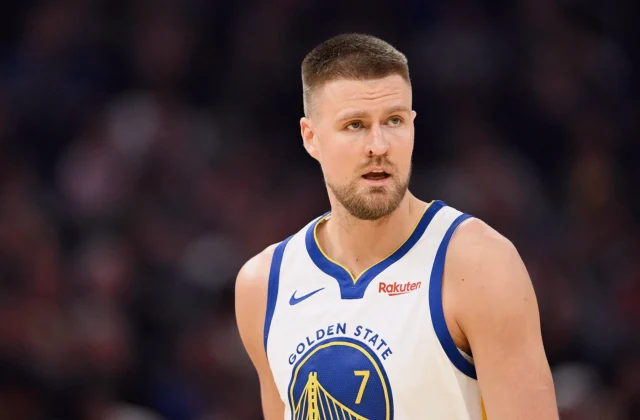
Reid’s fit in Charlotte is one of the more appealing late-draft bets. He spent his Minnesota years producing at near-starter levels despite coming off the bench behind a crowded frontcourt. Now he brings efficient scoring, rebounding, defensive production and rare perimeter shooting for a big to a Hornets roster where a starting assignment is in reach.
His career 72.8% free-throw mark is a drawback, but he attempted only 1.6 foul shots per game last season, limiting the category damage. Reid has also played between 68 and 81 games in each of the past six seasons. The question is how touches will be divided with Coby White, Kon Knueppel and Brandon Miller on the floor, though there appears to be enough offensive room for him to matter.
Brooklyn should give Randle the volume Minnesota did not. His scoring and fantasy output, especially on the glass, dipped during his two Timberwolves seasons. With the Nets lacking established high-usage options, however, he has a chance to resemble the player he was with the Knicks. A line in the neighborhood of 24 points, 10 rebounds and five assists per night is the expectation, making his current draft slot look light for a player headed back to New York.
Wilson, the fourth pick in this year’s draft, arrives in Chicago after posting 23.5 points, 7.3 rebounds, 2.3 assists and 2.5 blocks per game in Summer League. The North Carolina product had already shown similar production in college and has also drawn attention in offseason workouts with LeBron James. He is expected to open as the Bulls’ power forward, with available scoring and rebounding work around him. At an ADP of 96.3, his upside is available well after the early rounds.
Orlando’s Anthony Black is another guard to watch. The former lottery selection made tangible progress last season, developing into a more reliable downhill attacker and converting better than 70% of his attempts at the rim. If his playmaking continues to develop in a stronger Magic offense, the 6-foot-7 combo guard can return value beyond his draft cost.
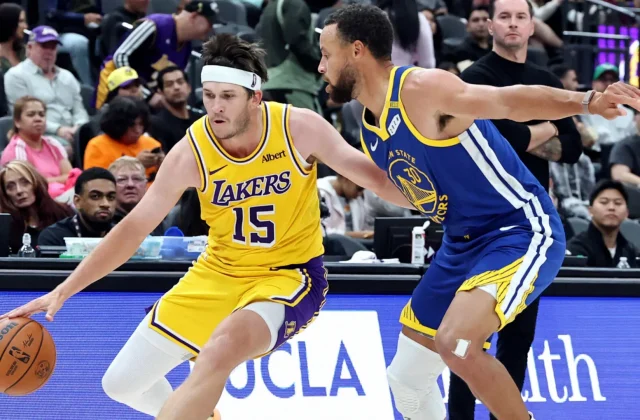
Jaime Jaquez Jr. enters a changed Milwaukee environment following the Giannis Antetokounmpo trade. He rebounded last season with averages of 15.4 points, 5.0 rebounds and 4.7 assists in 28.3 minutes, shooting 50.7% from the field. Better ballhandling, self-created looks and midrange work fueled that bounce-back. A starting role and more shared minutes with Tyler Herro could push Jaquez to personal bests across multiple categories.
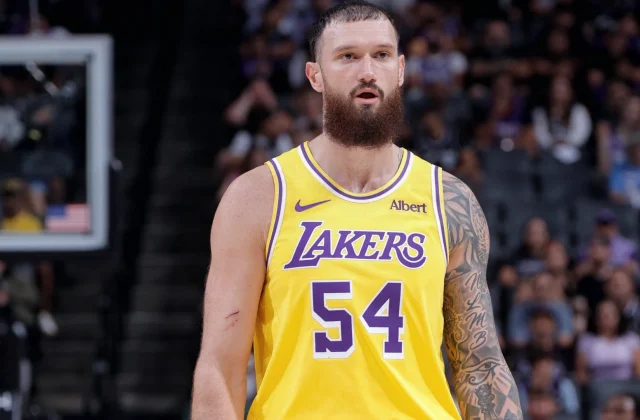
Kessler’s breakout case begins with availability. Across his final two Utah seasons, he delivered double-double production, nearly 70% shooting and more than three combined steals and blocks per game, but injuries limited him to 63 appearances out of 162 possible. He now steps in as the Lakers’ primary center beside Luka Doncic, whose pick-and-roll creation should simplify the offense for an athletic finisher. Kessler’s rebounding and rim protection give him major category-league upside if his health holds.
Memphis has a young backcourt that could be undervalued in drafts. Cedric Coward averaged 13.6 points in only 25.8 minutes as a rookie, with strong guard rebounding and shooting indicators. A leap toward 20 points per game is considered possible. Scotty Pippen Jr. could take the starting point-guard job and offers upside in assists and steals. With Cameron Boozer and Zach Edey anchoring the young frontcourt, the Grizzlies’ developing guards may be available too late on draft night.
Miller has a clearer star runway in Charlotte. He is expected to receive more playmaking and scoring responsibility, and his shooting base and defensive-category potential provide the foundation for a major jump. The projection is ambitious: production approaching prime Paul George could begin as soon as the opening weeks of the season.
Milwaukee center Kel’el Ware has the fantasy profile of a modern big: blocks, 3-point range, strong field-goal percentage, plus the ability to contribute in rebounds, scoring and steals. His free-throw shooting improved from 68.7% as a rookie to 74% last season. The immediate challenge is a frontcourt rotation that includes Myles Turner, but Ware is viewed as the more talented player at this point. If coach Taylor Jenkins gives him a steady 25 minutes a night, his category profile could take off.
Dallas needs Dereck Lively II on the floor before it can find out how high his ceiling goes. He has appeared in just 98 games over three seasons, including seven last year. In his rookie campaign, he posted 8.8 points, 6.9 rebounds and 1.4 blocks in 23.5 minutes while shooting 74.7% from the field. Playing beside Cooper Flagg and Kyrie Irving should provide finishing chances, though Daniel Gafford will still command center minutes. Better health and a larger share of the rotation could put double-digit rebounds and multiple blocks within reach.
Bailey already gave Utah a strong rookie scoring season at 18.5 points per game despite a slow start. After entering the starting lineup, the No. 5 pick from the 2025 draft began showing why he was so highly regarded. His usage climbed to 26% over the final two months, while his points, assists and rebounds all rose. In Year 2, the Jazz are expected to put the ball in his hands more often and make him their top scoring option.
Big names, smaller margins for error
LeBron’s arrival in Philadelphia should help a team with title ambitions, but NBA impact and fantasy return are not always the same calculation. In a healthy lineup featuring Tyrese Maxey, Jaylen Brown, Joel Embiid and VJ Edgecombe, James could be the fourth or fifth offensive choice on a given possession. He already accepted a reduced-volume role at times last season alongside Doncic and Austin Reaves in Los Angeles.
There is no suggestion that James has suddenly declined, but he will turn 42 soon and could be managed carefully along with Embiid. The expectation is that Philadelphia’s talent concentration will produce occasional huge outings without the nightly consistency fantasy managers expect from a premium selection.
Morant is discounted in drafts, yet the concern remains straightforward: he has played only 79 games across the past three seasons. Even a season above 62 games would be his first in six years. He averaged 19.5 points and 3.3 rebounds last season while struggling from 3-point range, and Portland’s guard group also includes Damian Lillard and Jrue Holiday. The path to major fantasy value is narrow if the missed games continue.
Davis remains capable of monster per-game production, but his availability and Washington’s reshaped hierarchy make his ADP difficult to endorse. He recorded 20.4 points, 11.1 rebounds and 1.7 blocks in 20 games last season before being traded to the Wizards, where he did not play. He has missed at least 14 contests in 10 of his 14 NBA seasons and has topped 60 games only once in the last four campaigns. Trae Young and No. 1 overall pick AJ Dybantsa will also absorb offensive usage in Washington.
Zion Williamson played 62 games last season, the second-highest total of his six-year career, and averaged 21.0 points. But his fantasy line came with limitations: no made 3-pointers, only 5.7 rebounds and 0.5 blocks per game. Even after that relatively healthy season, there is skepticism that he will clear 50 appearances this year. His name value could again push him above a more appropriate draft range.
Toronto’s Jakob Poeltl is another center whose draft cost may be running ahead of his ceiling. He is being selected around the 26th center off the board, while later options such as Ware, Derik Queen, Edey and Nic Claxton are preferred alternatives. Matchup-specific lineups could also send Toronto toward Collin Murray-Boyles at times, trimming Poeltl’s minutes and limiting a profile that depends heavily on defensive contributions.