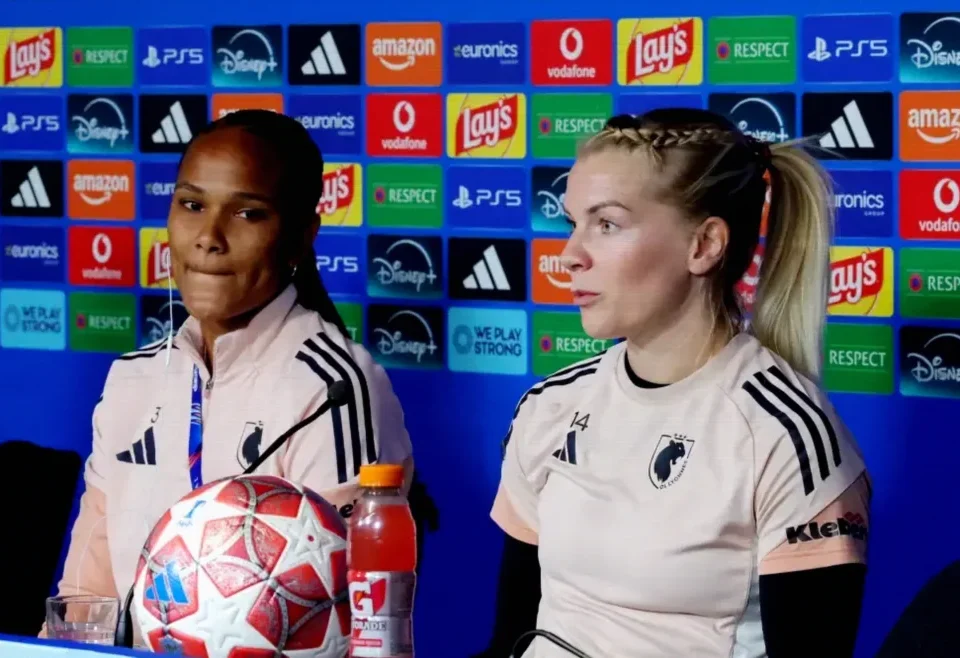
From Lyon, where Ada Hegerberg has long been one of the defining figures of the European women’s game, the Norwegian forward has offered a strong defence of Cristiano Ronaldo’s enduring standards. The 31-year-old, whose own career has been shaped by elite longevity and a willingness to speak plainly, said the Portugal captain remains a model for athletes despite the criticism surrounding him.
A champion’s view of Ronaldo
Hegerberg, the first winner of the women’s Ballon d’Or in 2018, spoke with admiration about the Al-Nassr striker at a time when Ronaldo has drawn attention for reportedly refusing to join Portugal’s national-team set-up following a disagreement with coach Jorge Jesus.
For the Lyon forward, Ronaldo’s standing rests not only on the goals that made him one of football’s most recognisable names, but on the habits that have sustained him close to his 40th birthday.
- Hegerberg said Ronaldo was an inspiration to her when she was younger.
- She highlighted his work ethic, mentality and prolific scoring record.
- She acknowledged that he can be an easy target for criticism now.
- She stressed that he continues to prepare every day to perform at the highest level, physically and mentally.
“It is hard not to see him as someone to follow,” Hegerberg said. “His way of working, his mindset and the number of goals he scored inspired me a great deal when I was younger. People may find it easy to criticise him today, but he still gets up every morning and tries to give his best at nearly 40.”
She described that consistency as evidence of exceptional professionalism, extending beyond training and matchdays into every part of an athlete’s preparation.
The need for more visible women’s role models
Hegerberg’s point went beyond Ronaldo and the men’s game. The Norwegian believes women athletes already offer comparable examples of commitment and excellence, even if they do not receive the same public platform.
She argued that greater visibility matters not simply for football, but for young people growing up across Europe and beyond.
- Elite women athletes can provide the same kind of inspiration as male sporting stars.
- They often receive less exposure despite reaching the top of their disciplines.
- More women succeeding at the highest level would benefit society, Hegerberg said.
- Girls and boys should be able to see figures with Ronaldo’s inspirational value in both the women’s and men’s game.
“There are plenty of those examples in women’s sport too,” she said. “They may not have the same showcase. It is important that more women reach the top, for society but also for young girls and boys, so they can see that there can be a ‘Cristiano Ronaldo’ on either side of the game.”
A voice with continental weight
Hegerberg’s remarks carry the perspective of a player who has experienced the summit of club football in Lyon and who made history when the women’s Ballon d’Or was awarded for the first time. Her message was not a dismissal of the debate around Ronaldo’s Portugal situation, but a reminder that sporting influence can outlast the noise around a single international window.
In her view, the sport’s next task is to ensure that the work and ambition visible in the game’s biggest male names are recognised just as readily among its female champions.