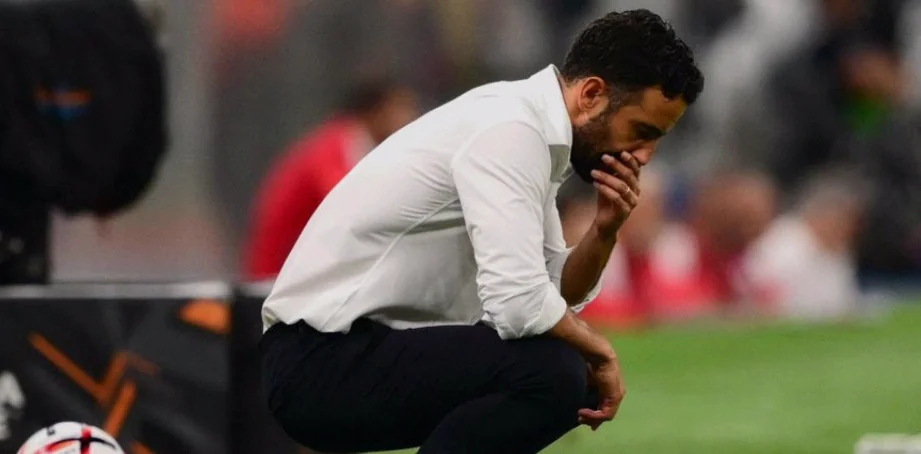
AC Milan’s latest setback left Ruben Amorim confronting familiar concerns: a side short of invention around the penalty area, too fragile when defending its own box and unable to recover its focus after conceding early.
Amorim examines Milan’s shortcomings
Speaking after the match, Amorim accepted responsibility for the performance and identified a lack of attacking imagination as the central issue. Milan had possession, he said, but did not turn it into danger.
- “We have the ball, but we do not cause problems. We lack creativity close to the area,” Amorim said.
- His longer-term ambition is for Milan to control matches through possession and established combinations.
- He felt too many players moved inside and too close together, rather than using the wide areas.
- The absence of runs behind the opposition, particularly before half-time, meant Milan failed to open room between the lines.
Amorim’s assessment was not simply about the final pass. For him, Milan’s possession lacked the movements needed to stretch a defence before creating chances.
Selection decisions and the Lazio comparison
There had been questions over why Milan did not begin with the group that had finished so positively against Lazio. Amorim explained that availability and preparation had shaped his choices.
- Adrien Rabiot had completed his first 90 minutes on Saturday, leaving uncertainty over whether he could manage another long outing.
- Christian Pulisic was returning from injury.
- Moreira had missed two days of team work because of personal matters.
The explanation underlined a wider difficulty in this stage of the season: Amorim is trying to establish his preferred habits while managing players whose physical condition or preparation has limited continuity.
Defending the box and recovering belief
Fabio Capello raised the weakness of Milan’s defensive work, and Amorim agreed that his team had not protected the decisive areas well enough. He was especially critical of the sequence leading to the opening goal.
“We cannot allow a goal when we have to defend the area,” Amorim said. “We already have trouble creating chances, so that makes everything harder.”
On the first goal, he believed Milan should have held their position outside the box. By the time Lukebakio carried the ball forward, Amorim said, his defenders were already retreating too close to their own goal.
A recurring poor start
The coach also addressed the psychological cost of another difficult opening. Milan lost sight of their plan after going behind in the first half, and Amorim admitted that the team had begun badly for a second consecutive match.
He could not say with certainty whether the pattern was a mental issue, but insisted that solutions would be found as the side adapts. For now, that remains the encouragement available to Milan: the problems have been stated plainly, and the next chapter will depend on whether they can be corrected on the pitch.
SEO Title: Ruben Amorim identifies Milan’s attacking and defensive concerns
SEO Description: Ruben Amorim reflects on Milan’s lack of creativity, defensive errors, selection decisions and a second successive poor start.