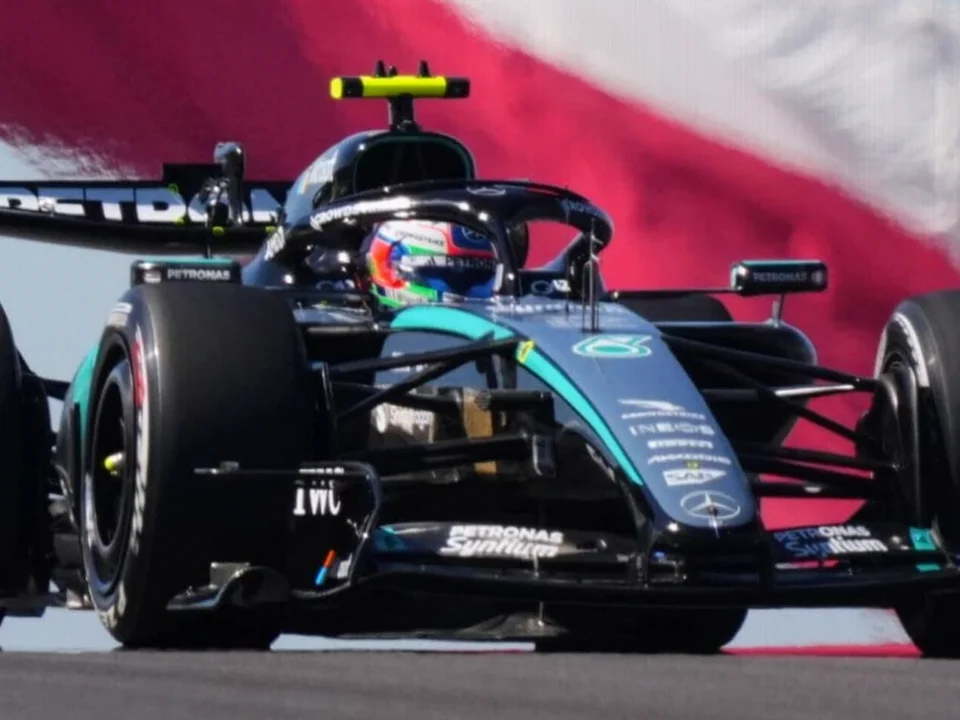
Andrea Kimi Antonelli arrived in Austin with a first chance to settle the world championship at just 20, but the Circuit of the Americas instead became another demanding examination of race management. Pole position, a rapid opening stint and George Russell’s penalty briefly placed the Mercedes driver on the title-winning path; Ferrari and Max Verstappen then turned the afternoon into a strategic contest that kept the championship open.
A title opportunity shaped by a narrow equation
Antonelli began the United States Grand Prix as championship leader, with Italy hoping for its first Formula One world champion since Alberto Ascari in 1953. The calculation for an immediate coronation was exact:
- Antonelli needed to win in Austin.
- Russell had to finish ninth or lower.
- Lewis Hamilton had to end the race fifth or lower.
He had given himself a strong platform with pole position, while Hamilton lined up fifth and Russell directly behind him. Verstappen started alongside Antonelli and arrived in Texas after victories in the previous two races. Isack Hadjar occupied third on the grid, continuing a strong recent spell, while Charles Leclerc and Hamilton were left fourth and fifth after Ferrari had excelled through practice, Q1 and Q2 before losing ground in the final qualifying segment.
The mood around COTA was substantial, with almost half a million spectators expected across the event. Cloud cover and cooler-than-anticipated track conditions created an awkward surface: the asphalt was around 38°C and drivers struggled for grip in their practice starts.
Different tyre calls and a fierce opening
Mercedes chose medium tyres for Antonelli and Russell, while the Red Bull and Ferrari cars around them began on softs. The pre-race expectation had leaned towards one stop, although the undercut was considered particularly powerful if the race stayed clear of a Safety Car.
Antonelli had said before the start that he was concentrating on winning rather than discussing the title. He expected an aggressive first lap and identified the run through Turn 1 as central to the race, while insisting he was treating the occasion like any other event. The support from Italy, he said, had given him extra energy.
Ferrari team principal Fred Vasseur had warned that energy management and tyre temperatures would dictate the long race. He felt the cars could not be pushed too hard without overheating the tyres and urged caution into the first corner.
Leclerc made the sharper launch, holding Hamilton behind him and taking second from Verstappen through the opening sequence. Verstappen soon reclaimed the place, but Antonelli had already built a 2.2-second advantage by lap two. A brief Virtual Safety Car for debris did not alter the order, despite repeated yellow flags that raised concerns over the signalling system.
- Antonelli set the fastest lap on lap six with a 1:40.330.
- Russell came under investigation after leaving the circuit and making contact with Oscar Piastri on the first lap.
- The McLaren team later asked Piastri to let Lando Norris through.
- Russell received a five-second penalty on lap nine.
With Hamilton fourth and Russell sixth in the early stages, Antonelli was not yet in a championship-winning position. Russell’s penalty, however, offered Mercedes an opening.
Stops rearrange the race
At the front, the leaders initially became separated, while the lower positions produced much of the wheel-to-wheel action. The pit phase changed the texture of the contest.
Verstappen stopped on lap 14 for fresh softs, a decision that meant he would need another tyre change. Ferrari responded by bringing Hamilton in on the following lap for new medium tyres, followed by Leclerc on lap 16. Leclerc’s stop gave Verstappen the chance to move ahead of Antonelli in the projected order once the Mercedes made his own visit.
Russell, increasingly vulnerable on ageing rubber, was overtaken by Verstappen and then Leclerc. Hadjar remained second for a time on his soft tyres and asked to continue, while Leclerc produced a 1:39.687 to take the fastest lap.
- Russell pitted on lap 23, served his five-second sanction and rejoined in tenth on hard tyres.
- For a short period, with Antonelli leading, Hamilton fifth and Russell tenth, the points projection made Antonelli world champion.
- Antonelli stopped a lap later for hard tyres, emerging behind Leclerc but ahead of Hamilton.
- Verstappen inherited the lead, while Antonelli found himself between the two Ferraris.
Hadjar then delayed Leclerc in their battle before making his own stop, helping Verstappen’s position at the head of the race. Verstappen’s unchanged compound from his earlier visit nevertheless ensured that he would have to stop again.
Ferrari’s response closes the title door in Texas
As Verstappen encountered traffic while lapping slower cars, Leclerc and Antonelli closed on him. Verstappen pitted on lap 31 for medium tyres, visibly frustrated as he returned to the circuit, and Leclerc moved into the lead.
Antonelli quickly attacked the Ferrari. He drew close on lap 31 and passed Leclerc on the following lap along the straight, but the title prospect had already begun to fade. By lap 35, Leclerc and Hamilton were running second and third, a Ferrari double podium position that meant Antonelli could no longer seal the championship in Texas.
Hamilton later stopped for hard tyres on lap 38. Antonelli lost time in traffic, and Leclerc made his own hard-tyre stop on lap 40, returning behind Verstappen. The Austin contest had begun as a possible crowning afternoon for Mercedes’ young leader, but it developed into a reminder that a championship is decided not only by pole laps and opening-stint pace, but by the changing demands of rivals, tyres and timing across a long Sunday.