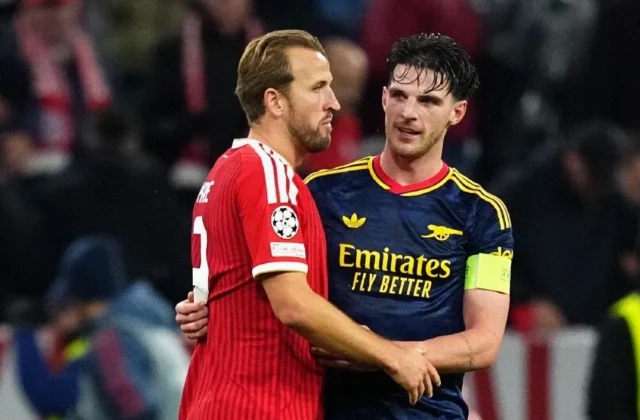
Arsenal arrive in Munich as English champions with Mikel Arteta determined that success will not make the place too comfortable. The manager has renewed his contract until 2030, but the mood around London Colney has been one of deliberate disruption rather than celebration.
After ending a 22-year wait for the Premier League title, Arsenal have strengthened both the squad and the work behind it. Arteta has brought in motivational advisers and behavioural psychology specialists, seeking sharper standards from a group now asked to chase a longer run of trophies.
Quick facts
- Arsenal face Bayern Munich at the Allianz Arena on Tuesday night.
- Arteta’s side have won the Premier League for the first time in 22 years.
- New arrivals include Konsa, Tzolis, Guimaraes, Hincapie and Meslier.
- Arsenal have scored five goals following passing sequences of 10 or more passes this season.
- Arteta’s new four-year deal runs to 2030 and is worth £20 million.
The Allianz Arena has not been a welcoming ground for Arsenal in recent European campaigns. They were knocked out there in the last 16 and then the quarter-finals, with the most recent defeat coming in 2024, when Bayern won 1-0.
Yet this Arsenal travel with greater depth than the side of last season. Arteta can call upon as many as 20 players capable of starting, with the additions of Konsa, Tzolis, Guimaraes, Hincapie and Meslier increasing competition across the group.
The manager has built a side with more than one face. Arsenal could be seen grinding out a 1-0 Premier League win at Nottingham Forest’s City Ground on Sunday, then showing a more fluent side in a 3-0 Champions League victory over Lille.
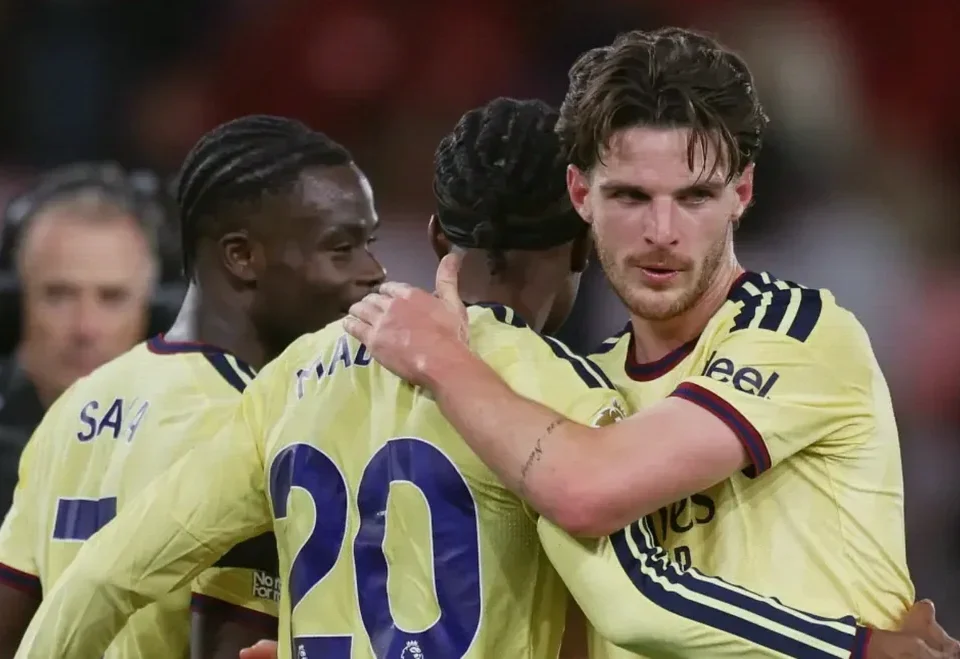
Martin Odegaard, Bukayo Saka, Declan Rice, Kai Havertz and Eberechi Eze were among those involved as Arsenal moved the ball quickly against Lille. Their football this term has placed greater emphasis on constructed attacking play, even if the defensive standards remain a central part of Arteta’s work.
Set pieces were a major weapon last season, but Arsenal have yet to score directly from either a free-kick or a corner in the opening months of this campaign. Instead, five of their goals have come after strings of at least 10 successive passes.
There is a familiar idea behind Arteta’s restlessness. Arsène Wenger used to argue that when a football environment became overly settled, it was time to alter it. Arteta, once Wenger’s captain, has taken that lesson seriously.
Arsenal’s progress has also come with financial housekeeping. Record commercial income and rules limiting spending to 70 per cent of revenue have improved the club’s position, while the wider game continues to watch Manchester City’s alleged irregularities closely.
It has not, however, been an easy summer away from the pitch. The cost of Arsenal’s wider project has led to internal restructuring and redundancies as the club seeks to balance its accounts.
Arteta has nevertheless been handed authority and a salary among Europe’s leading managers. His four-year extension comes with an ambition that goes beyond retaining the league: Arsenal want the Champions League during that period.
“We are only at the start of what we can achieve together,” Arteta has said. Bayern provide the immediate test, and few fixtures offer a clearer measure of whether Arsenal’s stirred-up champions are ready to become regular European contenders.