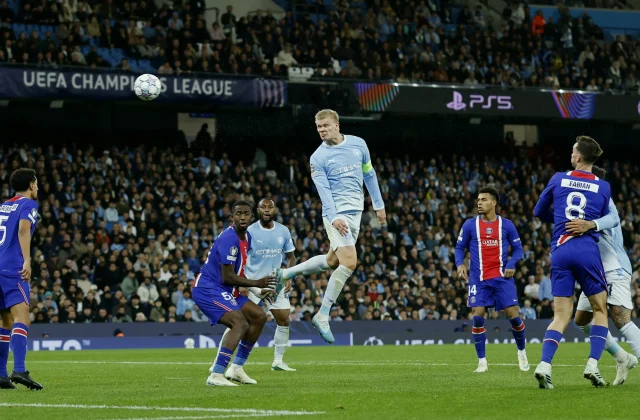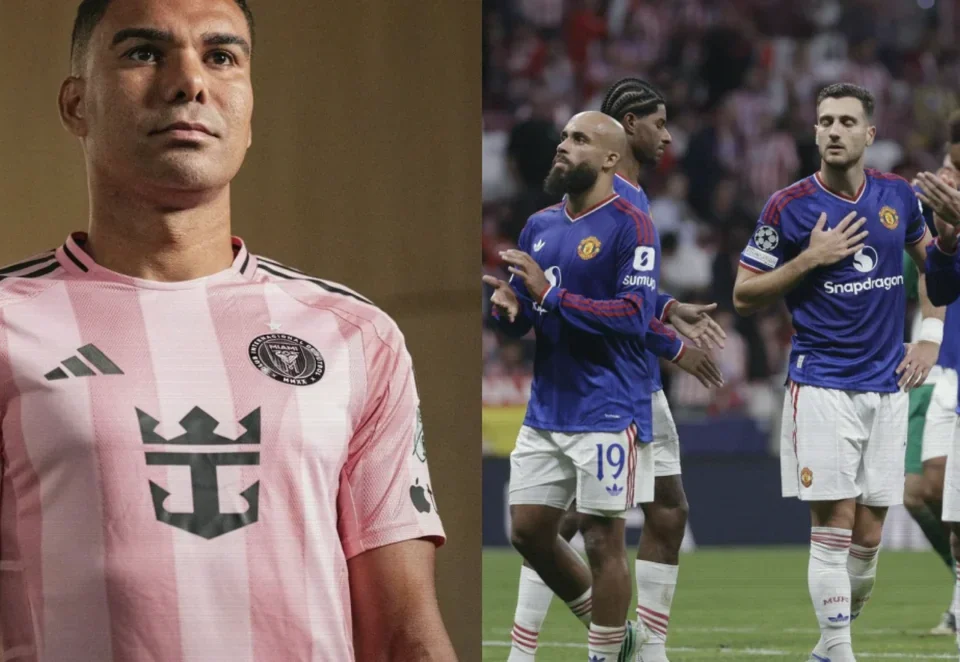
Manchester United’s return to the Champions League is already testing the midfield rebuild that followed Casemiro’s departure, with Atlético de Madrid’s 2-0 win at the Metropolitano exposing a side still searching for control, protection and a settled identity.
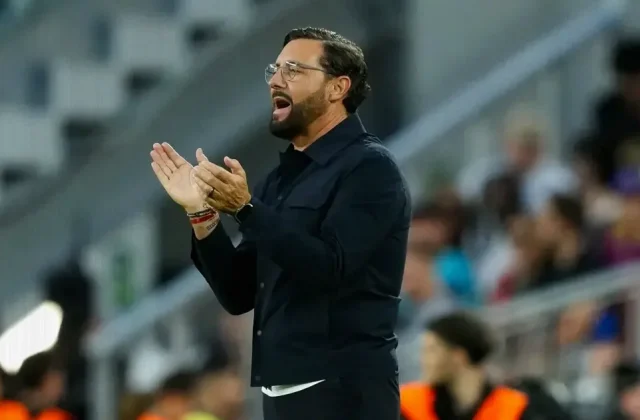
Michael Carrick sent out an unfamiliar three-man central unit of Carlos Baleba, Youri Tielemans and Andrey Santos in the Spanish capital, with Bruno Fernandes operating further forward. The selection was intended to make United less open after a troubled start to the season, but Atlético seized the initiative early through Pablo Barrios before Leny Yoro’s dismissal left the visitors with an even steeper task. Ademola Lookman scored the second with 10 minutes remaining to settle the contest.
“We wanted much more control in the game,” Carrick said before kick-off. “In certain matches we have been a little too open and we wanted to try to change that.”
The attempted adjustment did not bring the response United needed. Carrick described the Metropolitano defeat as an isolated result in one sense, acknowledging the difficulty of playing in Madrid, but admitted the wider picture demands improvement.
“Tonight is a one-off when judging things because it is not easy to play here,” he said afterwards. “The overall situation is a different story. We need to improve certain aspects.”
A costly midfield reset
United have committed more than 170 million to reshaping the area Casemiro once anchored. Tielemans arrived for 41 million, Andrey Santos for 56.3 million and Baleba for 75.9 million, with Carrick also bringing Kobbie Mainoo back into contention.
Manuel Ugarte remains unavailable after suffering a cruciate ligament injury against Spain at the World Cup, further limiting the manager’s options as he tries to find a working blend.
Several combinations have been tried during the opening weeks, yet opponents have increasingly chosen to surrender possession and challenge United to break them down. When United lose the ball, their structure has too often been stretched apart.
The defensive figures underline the concern. Across Carrick’s 17 Premier League matches last season, United conceded 18 goals. They have already allowed nine in their first six league fixtures of the new campaign.
Results have reinforced the pressure: one victory from six Premier League games, elimination by Brighton in the first round of the Carabao Cup, and only one clean sheet — against Sabah in their Champions League opener.
The absence of Casemiro
The difficulty of replacing Casemiro is becoming clearer. Signed from Real Madrid for more than 70 million when already 30, the Brazilian had previously been asked to operate in more possession-heavy approaches under Erik ten Hag and Rúben Amorim, without Old Trafford consistently seeing his best form.
Under Carrick, however, his duties changed. With fewer demands to build play, Casemiro became the player clearing up behind a more pragmatic and reactive team. He finished last season second among Premier League midfielders for successful tackles per game, at 4.89, and fourth for interceptions, at 1.4.
His contribution was not only defensive. Casemiro scored nine goals, the best total of his career, and supplied two assists as United secured Champions League qualification after a two-year absence.
“He has been fantastic since I arrived, on and off the pitch,” Carrick said of the Brazilian. “Experience is a great asset if you use it in the right way. A senior player has the responsibility to set an example for younger players, help the others and pass on that experience. It has been a pleasure to work with him, and I hoped to do so for a few more months.”
Casemiro chose another path, leaving Carrick to address a vacancy he had already identified as difficult to fill. The United manager said the holding midfield role was vital in connecting the team and praised the Brazilian’s calmness and understanding of the game as major influences within the squad.
He also insisted United did not have to find an identical replacement and could instead take “a different direction”. The early evidence, though, is that the new direction has yet to deliver the balance required for a demanding European campaign.