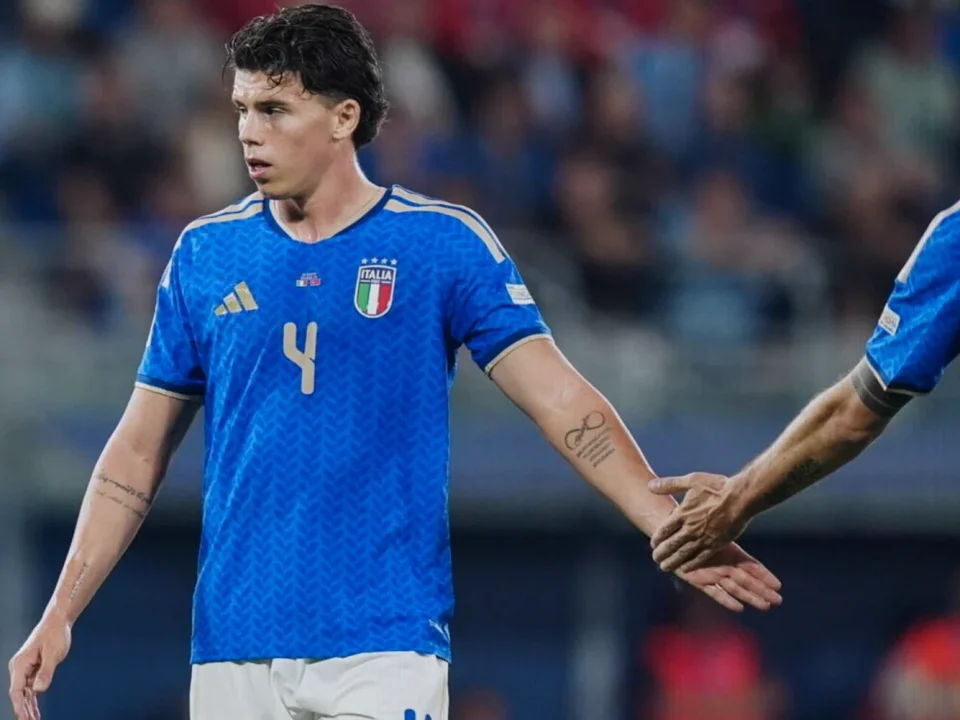
Alessandro Romano returns to Cagliari with a fuller fortnight behind him: an Italy debut, difficult moments against Belgium, work with Roberto Mancini and a renewed sense of purpose after his rise at the Dall’Ara. On Sunday, Juventus arrive in Sardinia, bringing another important page in a season that is rapidly enlarging the midfielder’s place in Italian football.
The coach and the club
Fabio Pisacane and president Tommaso Giulini were in the stands at Bologna to watch Romano’s progress during the international break. The 180cm midfielder has become one of the most promising figures in a young Cagliari side, and he has made clear how much he owes to the coach, the president and his teammates.
“They are two people I must thank, and I owe a great deal to them, as I do to the whole squad,” Romano said. “It is a young group with plenty of energy.”
Cagliari have Romano on loan from Roma, with an option to buy set at €6.5 million. His performances have not gone unnoticed: Juventus, Sunday’s opponents, are monitoring him closely, as are Inter.
His first Serie A appearance for Cagliari remains a defining early memory. Away to Parma, on his maiden match in the red and blue shirt, Romano struck a volley that helped secure victory. The following months have brought a steadier development, founded on his ability to read play, move the ball forward quickly, shoot and contribute without possession.
Pisacane has used him in a midfield pairing with Harry Winks, a combination in which Romano feels particularly comfortable. “Playing in a two is ideal for me,” he explained, while accepting that he must follow the national coach’s requirements when on Italy duty.
A choice for Italy and a demanding debut
Romano had represented Switzerland at youth level before choosing Italy, a decision that was not warmly received across the Swiss cantons. His Italian roots come through his paternal grandparents and family, while his father Umberto was also a professional footballer in Switzerland.
The first senior Italy call-up came with a challenging introduction against Belgium. Mancini placed him at the base of a three-man midfield, as the deepest player in a diamond structure that differs from his usual club role. It was a severe test, but one followed by important work on the training ground and mentally.
Romano looked more effective when allowed to leave his starting zone, and Italy’s second-half display against Turkey offered another indication. With Sandro Tonali taking on more of the playmaking responsibility, Romano was able to influence the game further forward; the move for Pio Esposito’s third goal developed in that phase.
The midfielder believes the national-team experience has helped him move beyond the criticism that accompanied his early steps. “These things happen and I keep going,” he said. “My teammates and the coach have supported me. Wearing the Italy shirt has given me positive feelings, and even receiving the call-up was emotional.”
He also sees the value in Mancini’s emerging group: “A young Italy is taking shape. The balance between experienced players and younger ones is important, and we should continue in this direction.”
A Sardinian connection
Romano’s life away from the pitch reflects the same willingness to adapt. His first language is Swiss German, and he also speaks Italian, English, German and French. Since arriving at Cagliari, he has begun learning Sardinian too, seeking a closer relationship with the island, the club and supporters who have quickly embraced him.
For Romano, however, football remains his clearest language. Physical presence is matched by imagination and personality, and the coming months at Cagliari will help determine whether this chapter becomes the foundation for a longer future with Italy as well.