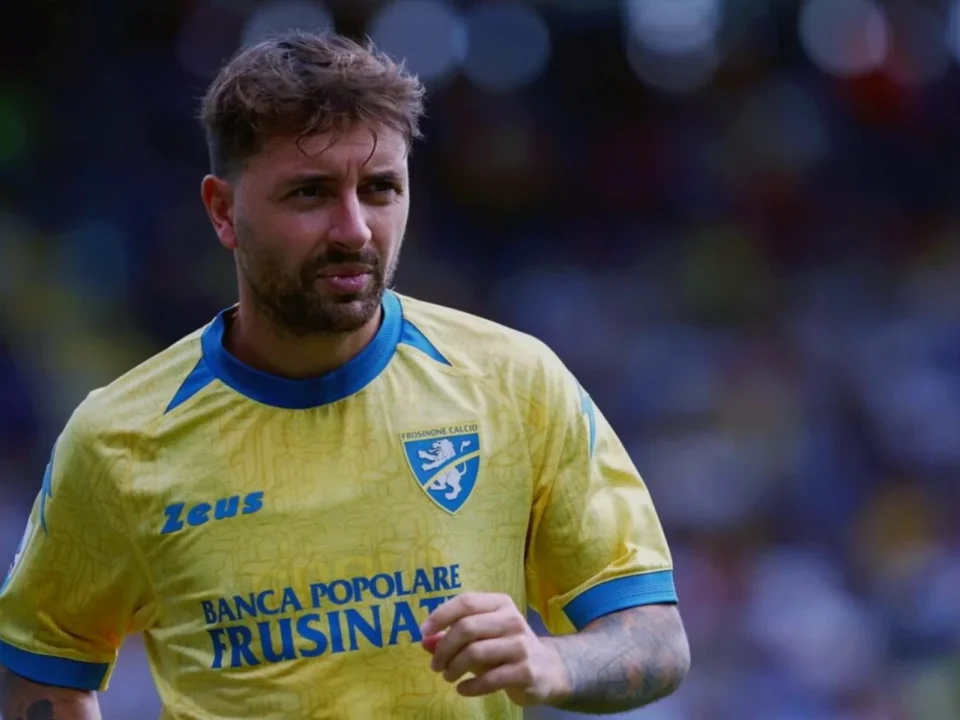
Frosinone’s position alongside Juventus and Como in sixth place has invited the usual language of dreams, but Giacomo “Jack” Calò sees the season in more practical terms. The club are brushing against the European places, yet the midfielder’s priority is not to turn the table into a promise it cannot keep. For a side seeking to make its fourth Serie A stay the one that lasts, the target is both simpler and larger: survival.
“We do not need to dwell on something that everybody already feels,” Calò said. “We are ready to try to write another part of the club’s history. Staying in Serie A would unquestionably be history, with a capital H.”
It is the outlook of a player who reached the top division only at 29, after a career largely built away from the glare. Calò arrived at Frosinone after a season in which the Canaries set a club record of 81 points in Serie B. Their momentum has carried into a far more demanding setting, with an early win over Como bringing both an assist and a goal from the Trieste-born midfielder.
Yet he insists the change in division has not altered the foundations of the group. Frosinone, he argues, remain the team who approached last season without the pressure of a grand declaration, then overturned expectations through a clear collective idea and a liberated frame of mind. Serie A has made the stage bigger; it has not required them to abandon their identity.
Calò’s long route to the top flight
Calò has made a career from supplying others. Since 2016, he has registered 59 assists and 33 goals, a record that works out at roughly six goal-making passes per season. Twice Serie B’s leading assist provider, he was nevertheless allowed to leave Sampdoria’s youth side before Genoa signed him. Four seasons of loans followed, including a spell at Juve Stabia, without a genuine opening in Genoa’s senior plans.
“At Sampdoria I was released, and perhaps Genoa never properly looked at me,” he reflected. “I did a couple of weeks of pre-season while knowing I was not part of the plans. I have learned that football is not always especially merit-based.”
He accepts that his own choices may have played a part in the delayed arrival at this level, but also believes Italian football has too often looked elsewhere when opportunities should have been available to domestic players. In his view, the tendency to choose foreign recruits over young Italians has had consequences beyond individual careers, affecting the wider national-team pool.
That makes Frosinone’s squad-building policy especially meaningful to him. Italy Under-21 coach Silvio Baldini has described the club as a more representative expression of Italian football than Como, and Calò said the compliment reflects a deliberate direction taken by the board. Several Frosinone players have already featured in Baldini’s Under-21 selections, while the midfielder shares the concern raised by Davide Frattesi that Italians are receiving fewer opportunities across the league.
“It is pleasing to hear that,” Calò said of Baldini’s assessment. “Our squad now shows that there is an Italian product worth valuing and being proud of. The club has made that choice deliberately. Things have improved, but there is still a great deal more that can be done.”
His own football education was shaped by coaches who gave him responsibility before Serie A finally did. Paolo Indiani, who managed him at Pontedera when Calò was 19, was the first to provide sustained faith. Fabio Caserta, a former midfielder himself, worked with him for three seasons at Juve Stabia and later at Benevento, demanding heavily from a player operating in his old position.
Alvini’s clarity and Frosinone’s mission
Massimiliano Alvini has become the figure directing the current chapter. Calò describes the coach as straightforward, clear in his requests and able to give the squad a sense of fresh energy. Players who had already been at the club told Calò that such a forceful personality was needed, while the enthusiasm of the younger members of the dressing room has reinforced the manager’s work.
Asked for the defining quality of Alvini’s football, Calò offered a concise answer: “He asks for intensity, both with the ball and without it.”
There is no appetite within the squad for false grandeur. The midfielder does not claim Frosinone belong in their current league position simply because they occupy it, nor does he dismiss it as a freak run. Results, he says, are born from a playing mentality, a precise footballing idea and the environment around the team. That conviction helped them outperform better-equipped rivals last year and remains their guide now.
Calò is equally grounded when comparisons are offered. A description likening his qualities to Andrea Pirlo leaves him uncomfortable. Pirlo, he says, was “a giant” beyond comparison, while Calò is only beginning his Serie A story. His personal midfield podium makes the scale of his admiration clear: Pirlo first, followed by Sergio Busquets and, among the modern generation, Rodri.
For all his assist numbers, Calò knows context matters. He jokes that he will try to add to his total if the forwards keep making the right runs, but refuses to measure himself against Pirlo’s numbers and stages. The immediate test is much closer to home. Frosinone have found a way to compete again, and the task now is to ensure this season becomes more than another brief visit to Serie A.