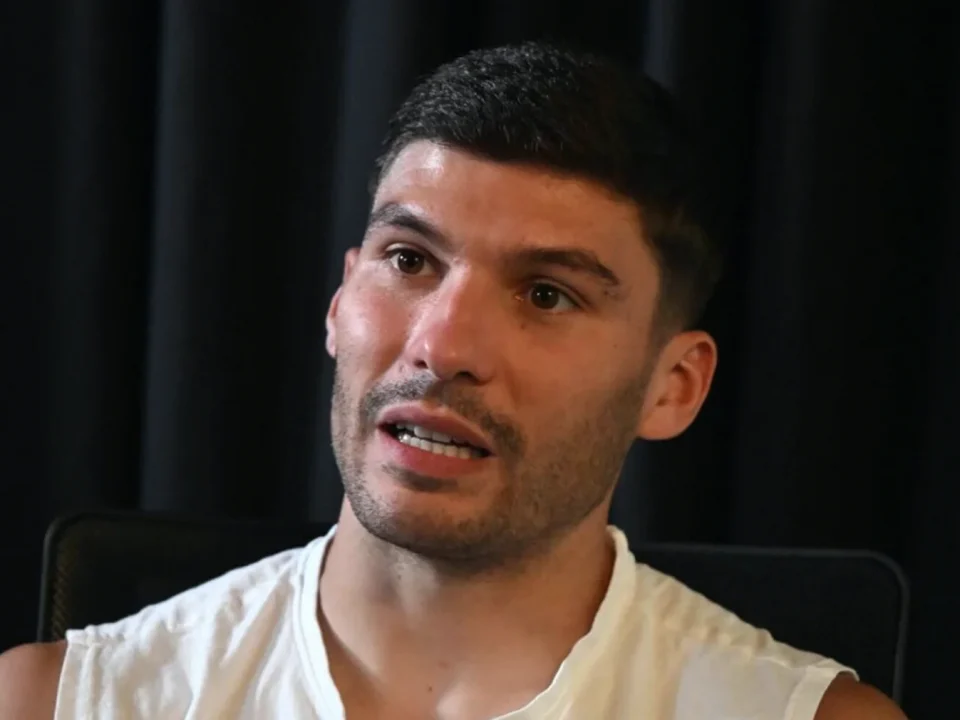
Bologna travel to Lecce on Sunday carrying a low position in the table but not, in Nicolò Cambiaghi’s view, a low opinion of themselves. The winger has returned from two weeks with Italy to find a club resetting under Raffaele Palladino, with the players sharing lunch at Casteldebole and working through the first principles of a new staff. The chapter is still early, Cambiaghi insists, but it has already become one in which belief must be protected by results.
The coach and the club
Palladino has arrived after the dismissal of Domenico Tedesco, an outcome Cambiaghi believes the squad must own as much as the former coach. Results did not come, and in football that leaves the manager exposed, but the Bologna player said responsibility did not rest with one man.
“When a coach is dismissed, he pays the price, but the players also carry a large part of the blame,” Cambiaghi said. “We were sorry because we had a good relationship with him. We worked well in pre-season and did not have major problems, but results matter.”
He felt Bologna had continued trying to follow Tedesco’s requests until the end, even if performances did not always deliver them properly. Cambiaghi pointed to incidents, opponents and difficult results, but did not seek to remove the players from the equation.
Tedesco had followed important spells under Thiago Motta and Vincenzo Italiano, and Cambiaghi accepted that succeeding coaches who left a mark at the club is demanding. Still, he did not see that inheritance as the core issue.
“He was the right person from whom to start again,” Cambiaghi said of Tedesco. “The problem was not coming after Italiano. We simply did not begin well and did not produce the results.”
The task now is to take on Palladino’s ideas quickly enough for them to appear on matchdays. Cambiaghi said the change has brought different methods and a different system, while the players are also adapting to fresh technical and tactical instructions following the return of the internationals.
He described the work as calm but demanding, with considerable physical preparation alongside sessions he called intense and enjoyable. Palladino, he said, places the group at the centre of his work, much as Mancini had done, and the feeling around Casteldebole has improved.
“He is letting us work calmly,” Cambiaghi said. “There is a good atmosphere. That is the right way: if you work in a serene environment, things can return to how they were.”
A table that does not settle the argument
Bologna are near the bottom, a reality Cambiaghi does not deny. Yet he believes their early-season returns have been harsher than their football deserved, identifying two or three matches in which the side could have taken more.
That has made the standings difficult to live with. A poor start can take away the freedom with which a team works, he admitted, and the absence of victories can create a general sense of disorder. But Cambiaghi remains convinced that Bologna do not belong in those places.
“We must understand the moment, because we are down there, but we should not panic,” he said. “This is a strong group, with strong players, capable of finishing comfortably in the top half.”
The squad has changed after significant departures, and Cambiaghi said it is too soon to decide whether this Bologna are stronger or weaker than last season’s version. New arrivals need time to settle, he said, but he expects them to make an important contribution.
His own competition remains intense. Cambiaghi said he does not think about life without Rowe, because his daily challenge is to perform at the highest level in training and retain his place with Italy. He also noted Bologna’s established attacking depth.
Among his team-mates, Federico Bernardeschi has made the strongest early impression on him. Cambiaghi said he had known Bernardeschi mainly through television before becoming a colleague and has been struck by his quality. He also spoke warmly of Dovbyk, whose injury period has limited him, and of Piccoli.
“Dovbyk needs no introduction,” Cambiaghi said. “He has shown how exceptional he can be and his numbers are remarkable. In time, he can get back to being the player injuries prevented him from being recently. Piccoli is also a very good player.”
Lecce as the next measure
Cambiaghi rejected the idea of describing Sunday’s trip to Lecce as a relegation contest. It is too soon in the season for that label, he said, although the match matters greatly to both sides.
Bologna will need to make the most of their chances and remain alert against a Lecce team Cambiaghi called dangerous and awkward to face, especially on their own ground. The immediate responsibility is to show what Bologna believe they are.
“It will be a difficult game, but we have to demonstrate our value,” he said.
His Italy experience has added conviction rather than distraction. The national side’s match against Belgium came after only a few days together and against a strong opponent, but it exposed mistakes and gave the group material from which to improve. Cambiaghi identified collective compactness and an almost flawless attitude as the principal advance made between international fixtures.
For a player at the beginning of his international career, every Italy appearance has brought emotion and learning. He returned to Bologna with enthusiasm, while stressing that the club had already worked hard during the break and should be ready for the weekend.
The wider aim is not merely to climb away from danger but to restore the home-ground feeling Bologna enjoyed in recent seasons. Cambiaghi said the city deserves more major occasions and remembered a period when the team seemed able to find a result almost every time they played at home.
That connection with the supporters remains important. “They are always close to us and give us great help,” he said. Before Bologna can recreate that atmosphere at home, however, Lecce offers the first away examination of Palladino’s new beginning.