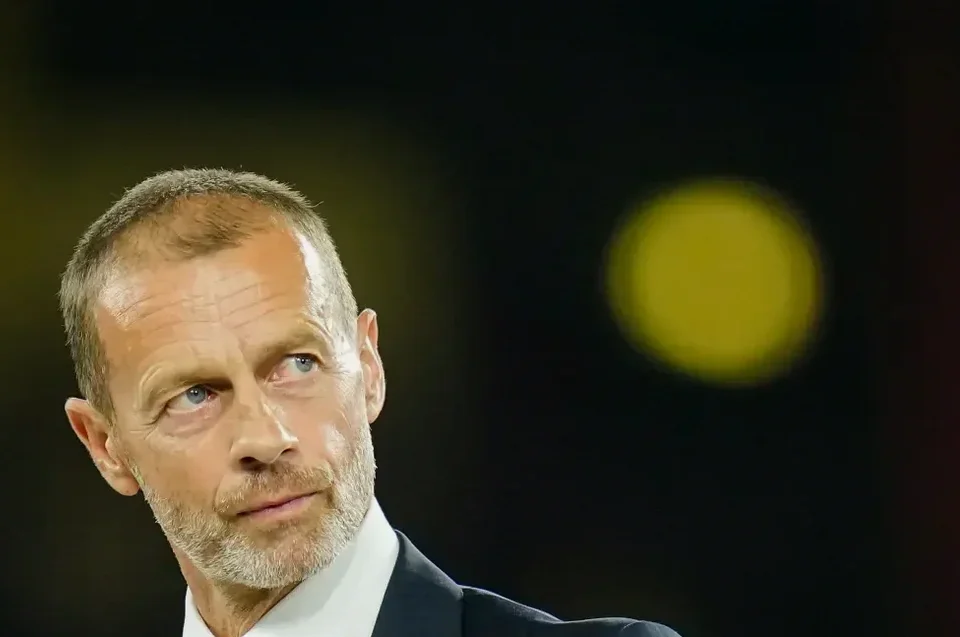
Rome’s route towards Euro 2032 runs alongside Turkey’s, but UEFA president Aleksander Ceferin has warned that Italy must turn institutional stability and stadium promises into visible progress long before the tournament arrives. The joint hosts have time on the calendar, yet Ceferin believes that time is already becoming a pressing concern.
Independence of the Italian federation
Ceferin addressed uncertainty surrounding Giovanni Malagò and the Italian Football Federation (FIGC), after questions were raised over the validity of Malagò’s election in June, despite his large majority. The situation has prompted discussion of possible special administration for the federation.
The UEFA president said no verdict had yet been reached, while underlining that football bodies must remain independent from political control.
- Malagò could lose his FIGC role following investigations into alleged breaches of the federation’s statutes.
- The possibility of a special administration for the FIGC has been considered.
- Ceferin said UEFA and FIFA statutes place major importance on federations’ independence and on respecting the choice of their members.
- He warned that political interference could weaken confidence among UEFA and its partners, damaging both Italian football and the Euro 2032 project.
“Italy has a particular duty as a co-host,” Ceferin said in substance. “That is why the independence of sporting institutions must be protected.”
Stadium work remains central to the bid
The more familiar concern lies in the country’s grounds. Italy’s football culture carries enormous weight across Europe, but Ceferin again argued that much of its infrastructure has not kept pace with that standing.
He said the gap between the sport’s prestige in Italy and the standard of its stadium facilities remains substantial. For the Slovenian administrator, the 2032 finals should become a catalyst for renovation rather than an event Italy simply prepares for at the last moment.
There are encouraging signs. Thirteen Italian cities indicated in August that they wanted to stage matches, while significant investment plans have been announced. Ceferin regarded those developments as proof that institutions now understand the scale of the task.
But his message was clear: intentions need to become construction, approvals and completed projects quickly.
Club-owned examples offer a route forward
Ceferin pointed to three clubs whose stadium projects offer Italy a practical model for the next phase of preparations.
- Juventus have shown the impact of taking responsibility for a stadium and its operation.
- Atalanta have demonstrated how a club-led redevelopment can modernise a matchday home.
- Udinese were also cited as evidence that direct club management can deliver results relatively fast.
In Ceferin’s view, Euro 2032 gives Italy the right moment to expand that approach. The tournament shared with Turkey can still provide a long-term upgrade for the Italian game, but only if governance questions are settled and the country’s stadium plans move beyond declarations.