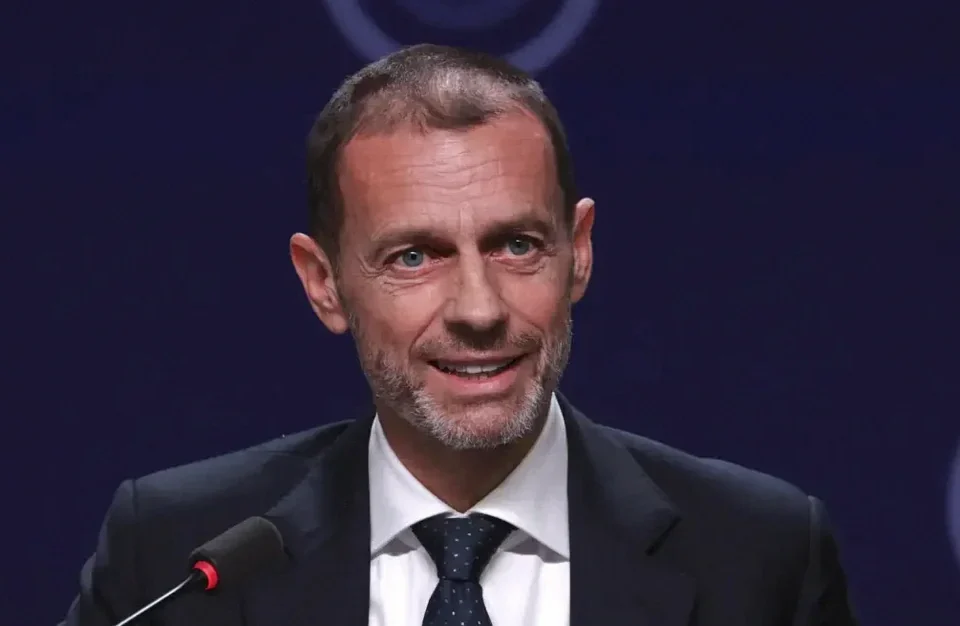
In Copenhagen, with Hans Christian Andersen’s city as the setting, UEFA president Aleksander Ceferin used the writer’s most famous fable to deliver an extraordinary rebuke to Gianni Infantino and FIFA’s abandoned commercial plans for the global game.
Addressing the general assembly of the European Football Clubs organisation, formerly known as the European Club Association, Ceferin said football had heard too many reassuring terms used to conceal a less comfortable reality. His target was FIFA Forward Enterprise, the shelved proposal to place major FIFA competitions, including the men’s and women’s World Cups and the Club World Cup, within a FIFA-controlled commercial subsidiary.
Under the plan, private investors could have bought up to 20 per cent of that company. Infantino had presented the project as a route to increased funding for football development, with FIFA’s 211 member associations due to be involved in a democratic consultation. The proposal was eventually dropped amid widespread resistance.
A Copenhagen warning over football’s future
Ceferin invoked Andersen’s tale of an emperor persuaded that he is wearing magnificent clothes visible only to the wise and capable. In the story, the court plays along until a child states the obvious. “The emperor has no clothes,” Ceferin said, using the image to challenge FIFA’s language around the failed venture.
The UEFA president argued that calling the sale of part of football’s future “development” did not make it so. Presenting national associations with an arrangement that was already effectively decided could not be described as democratisation, he said, irrespective of the size of the payment involved. Nor, he added, could secrecy become consultation simply through the choice of words.
He asked club executives in the room to picture a senior official privately negotiating away control of their clubs’ “crown jewels”, while boards, players and supporters remained unaware until an agreement was close to completion. What would their boardrooms do, Ceferin asked.
Ceferin then widened his criticism with a hypothetical scenario in which the same official created an award for a politician, only for that politician to make a phone call after which “the rules were no longer the same”. He asked how often such conduct could occur at a club before the wider football world objected, before declaring that the moment had come to say enough.
The reference was to the Balogun case at the 2026 World Cup. United States forward Folarin Balogun was sent off against Bosnia and Herzegovina but was permitted to play against Switzerland in the round of 16 after FIFA suspended his sanction following a call received by Infantino from Donald Trump.