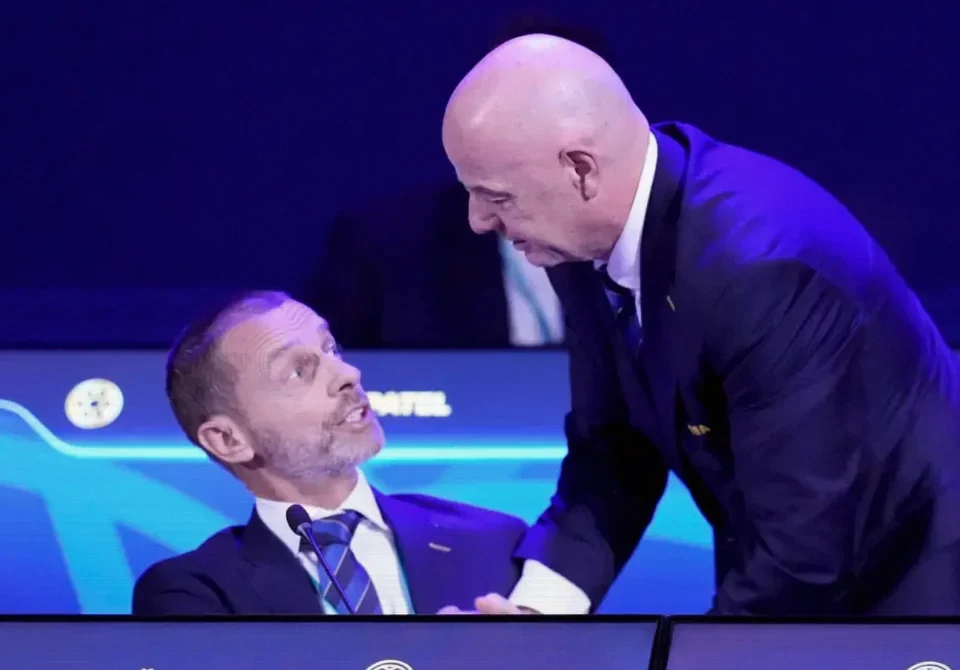
In Oeiras, on the Atlantic edge of Lisbon, UEFA president Aleksander Ceferin used the opening of the Portugal Football Summit to return to a familiar fault line in the international game: who football is run for, and whether its major competitions can be treated as assets for sale.
Speaking by video on Wednesday, Ceferin said football’s public standing rests on unity, transparency and governance designed to serve the majority. Those principles, he argued, had recently been neglected by people who had pledged to uphold them.
“The project that shattered the unity of world football may have been abolished, but the trust it damaged has not been restored,” Ceferin said. “Repairing it is now our task. Football is not for sale.”
His remarks came as Oeiras hosts national and international figures from across the sport until Friday. Ceferin presented the gathering as a chance to reinforce standards in administration as well as to exchange ideas about football’s future.
“The game will remain safe if those who govern it remember who they govern it for,” he said.
A message beyond Lisbon
Ceferin did not identify any individual in his address, but the intervention reflected his previous opposition to Gianni Infantino’s proposal to sell commercial rights covering 20 per cent of competitions. The UEFA president’s language also echoed the wider European resistance to attempts to reshape elite football without broad agreement among clubs, federations, players and supporters.
For Ceferin, the summit’s value lies not only in successful ideas but also in the willingness to examine failures. Every reform discussed, each mistake acknowledged and every project that has worked can help improve the work of the next generation, he said.
He also singled out the Portuguese Football Federation, saying the wider football world has much to learn from its working model. In a city better known as Lisbon’s western neighbour than as a centre of football power, the message was directed far beyond Portugal: trust remains one of the game’s most valuable and fragile possessions.