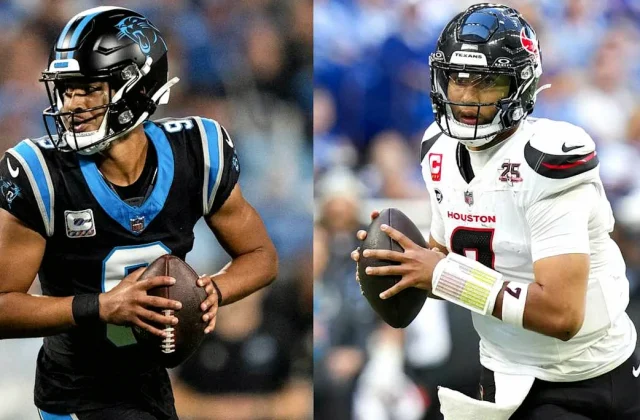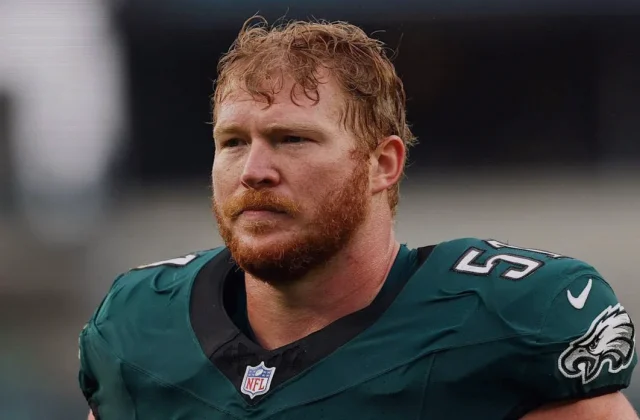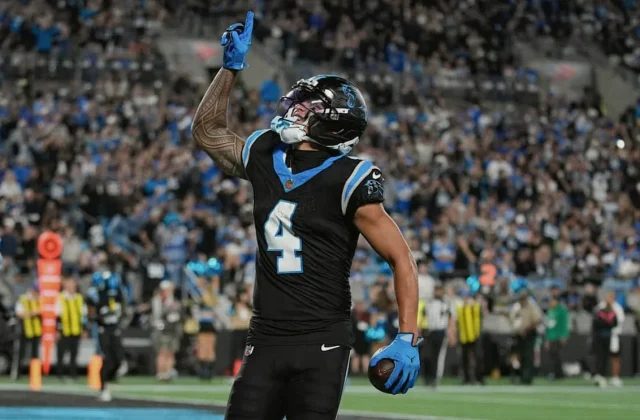
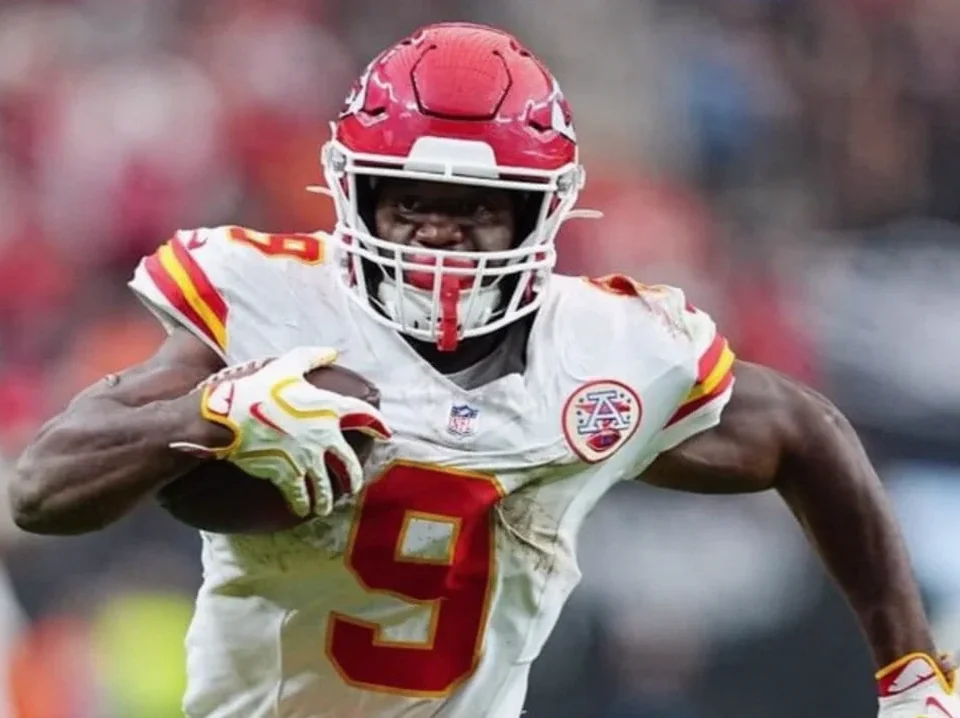
Four weeks into the 2026 season, the Kansas City Chiefs’ decision to sign running back Kenneth Walker III has reshaped their offense, while the Las Vegas Raiders’ major investments in Tyler Linderbaum and Nakobe Dean have helped drive a 3-1 start. At the other end, the winless Houston Texans and Tennessee Titans have yet to see returns from several expensive defensive additions.
What changed for the franchise
Walker has transformed Kansas City’s offensive approach
Walker joined the Chiefs on a four-year contract worth an average of $14.35 million per season after earning Super Bowl MVP honors in February. He has immediately become the league’s leading rusher, piling up 537 yards through four games.
His latest performance included 177 rushing yards and two touchdowns against Las Vegas, highlighted by a 76-yard breakaway run that swung momentum in Kansas City’s favor. Walker’s presence has allowed the Chiefs to operate much more frequently with quarterback Patrick Mahomes under center.
Kansas City has used under-center formations on 42.1 percent of its offensive snaps, up from 20 percent last season. The Chiefs were 27th in offensive success rate from those looks in 2025; they are second this year. Their under-center play-action attack has also climbed from 30th in the NFL a year ago to first through four weeks.
The running game is supplying the foundation. Kansas City’s explosive-run rate has risen from 5.3 percent in 2025 to 11.9 percent, forcing defenses to account for Walker and opening more opportunities for Mahomes off play action.
Raiders gain stability on both sides of the ball
Las Vegas made Linderbaum the NFL’s highest-paid center in March with a deal averaging $27 million annually, and the early results have justified the commitment. The Raiders have improved from 28th in pressure rate allowed last season to 12th this year.
The protection has given quarterback Kirk Cousins more room to work between the numbers, helping Las Vegas become a top-10 offense in EPA per play. The ground game remains an area for improvement, but coach Klint Kubiak’s use of play action and quarterback movement has also aided a rebuilt offensive line.
Dean, signed for three years at slightly more than $12 million per season, has provided a similarly important lift to the defense. The Raiders rank ninth in defensive EPA per play in Rob Leonard’s first year as an NFL defensive play-caller.
Dean starred in the Week 3 victory over the New Orleans Saints and delivered two consecutive short-yardage stops against the Chiefs in Week 4. One of those plays was a fourth-down tackle of Walker in the opening quarter.
Las Vegas has also received high-level production from Maxx Crosby, along with contributions from young defensive linemen Tonka Hemingway, defensive back Treydan Stukes and cornerback Hezekiah Masses.
Evans keeps San Francisco’s passing game rolling
Mike Evans has played through groin, hip and rib issues, but the veteran receiver has helped the San Francisco 49ers withstand injuries elsewhere in their receiving corps. San Francisco leads the NFL in offensive EPA per play and ranks comfortably first in passing EPA per dropback.
Evans is second among NFL receivers in EPA per route run. His timing and route detail have remained sharp despite the injuries, and quarterback Brock Purdy has continued to perform at an elite level in Kyle Shanahan’s offense.
There may still be another level available in the Evans-Purdy connection. Evans has been targeted only four times on passes traveling at least 20 yards in the air, despite possessing the size and speed to be a more frequent vertical threat.
Cleveland gets the offensive-line upgrade it purchased
The Cleveland Browns signed guard Zion Johnson for an annual average of $16.5 million, and the early return has been strong during their 3-1 start under coach Todd Monken.
Johnson held up well against Pittsburgh Steelers defensive tackle Cameron Heyward in Week 4, even as the Steelers repeatedly worked to create those pass-rush matchups. Cleveland also used Johnson in space on a 25-yard screen to receiver KC Concepcion.
His physical style became particularly valuable once the Browns had the lead in the second half. Johnson will have difficult stretches over a full season, but he has offered starting-caliber play in a market where teams must pay heavily for reliable offensive linemen.
Thomas supplies bargain production for Atlanta
Atlanta Falcons edge rusher Cameron Thomas has turned a one-year, $3.095 million deal into one of the offseason’s best values. Thomas recorded another productive outing during Atlanta’s Monday night rout of the Saints and has now produced seven pressures in each of his last two games.
He leads the Falcons with 19 pressures and ranks eighth in pressure rate among players with at least 50 pass-rush snaps. Atlanta leads the league with pressure on 46.5 percent of opposing dropbacks, while Thomas is enjoying a breakout season at age 26.
Houston’s secondary problems continue
The Texans are 0-4 after their defense, expected to be among the NFL’s best, fell to 25th in defensive EPA per play. Houston surrendered 34 points in its loss to the Dallas Cowboys, including a dominant outing from CeeDee Lamb, who caught 17 of 21 targets for 189 yards and the late go-ahead touchdown.
The pass rush remains a strength, with Will Anderson Jr. continuing to play at an elite level, but the trouble has been concentrated in the back seven. Safety Reed Blankenship, Houston’s key new defensive starter, has not met expectations after signing for $8.25 million per year.
Blankenship has again shown inconsistent eye discipline, an issue that surfaced during his previous season with the Philadelphia Eagles. Houston owns the NFL’s worst explosive-pass rate allowed, though the defensive regression extends beyond one player.
Linebacker injuries have compounded the issue. Henry To’oTo’o is on injured reserve, Azeez Al-Shaair missed the Dallas game with a groin injury, and Kenneth Murray—added to the practice squad on Sept. 15—started against the Cowboys and played 65 snaps.
Tennessee’s costly defensive additions have not clicked
The Titans are also 0-4 in Robert Saleh’s first season as head coach. Tennessee’s offense and quarterback Cam Ward have been the club’s largest concerns, but two high-priced defenders have also struggled to deliver early production.
Cornerback Alontae Taylor signed for $19.33 million per year after thriving primarily as a nickel defender with the New Orleans Saints in 2025. He has had difficult coverage moments, including against Philadelphia Eagles receiver DeVonta Smith in Week 2.
Tennessee’s deployment has not appeared to suit Taylor’s strengths. The Titans use quarters coverage at the NFL’s second-highest rate, frequently leaving him as a deep zone defender. They rank 22nd in man-coverage usage, and Taylor has played exclusively outside rather than near the line of scrimmage, where his physicality, run support and press coverage can be more useful.
Defensive lineman John Franklin-Myers has also fallen short of the standard attached to his $21 million-per-year contract. After becoming one of the league’s more disruptive interior rushers during two seasons with the Denver Broncos, he has logged just six pressures in four games for Tennessee.
Among 118 defenders with at least 70 pass-rush snaps, Franklin-Myers ranks 96th in pressure rate. He has shown some value against the run, but the Titans signed him to affect quarterbacks, and that impact has yet to arrive.