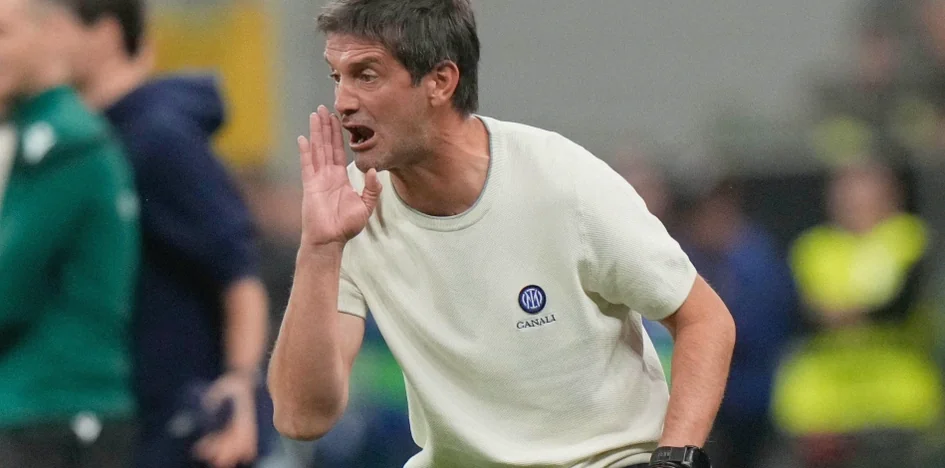
Inter’s European season has begun with a warning that cannot be ignored: the domestic authority associated with Cristian Chivu’s side has not travelled into the Champions League. A night that might have turned on a possible 2-1 instead became a 3-1 defeat, exposing the frustration, defensive looseness and uncertainty around the goalkeeping department that have accompanied the club’s recent continental results.
Key takeaways
- Inter have started the Champions League with two defeats and no points.
- The club have lost four consecutive Champions League matches for the first time in their history.
- They have also suffered four straight European defeats at San Siro.
- Inter have conceded 14 goals across eight matches in all competitions this season.
- Chivu accepted responsibility for failing to find the necessary balance in certain European fixtures.
A familiar European collapse
The margin of the defeat was shaped quickly after Inter failed to take their own decisive opportunity. Lautaro Martinez wasted a clear opening in front of former Inter goalkeeper Sommer, while Josep Martinez endured another difficult evening that will deepen questions over the reliability of Chivu’s options between the posts.
Inter had the chance to move 2-1 ahead, but the contest swung sharply in little more than ten minutes and finished 3-1. For a team that has now lost seven of its last eight matches in Europe’s leading competition, the result was not simply another unfortunate night. It reinforced a pattern that has become increasingly difficult to separate from the wider problem.
Chivu’s approach asks Inter to play with aggression and attacking intent, a formula that has brought convincing Serie A wins and has allowed the side to recover from substantial deficits. Yet the same ambition can leave large spaces when the opposition possess greater pace and technical quality. In Europe, where the standard rises quickly, Inter have too often lost their shape when the game turns.
After the match, Chivu said the team became carried away by its own disappointment after the pivotal moment. “There was too much frustration and haste,” he said. “We lost our distances and our balance, and after the possible 2-1 everything went out of control.”
Chivu calls for balance before the next six matches
The coach did not try to disguise the scale of the issue. “We know what is not working in the Champions League,” Chivu said. “There is something we are carrying with us, and I take responsibility first. In certain matches I have not been able to find the right balance.”
The four-match Champions League losing run is unprecedented for Inter, while San Siro has ceased to provide the protection it once offered in European competition. With no points from the opening two rounds, talk of a deep run is premature. A strong position in the play-off places is a more realistic immediate target.
The defensive record demands attention beyond any individual mistake. Inter’s 14 goals conceded in eight season matches point to problems in both collective organisation and personnel. Chivu does not have central defenders built to cover 50 metres of open ground behind them, and an error from the goalkeeper remains a possibility in every unsettled spell.
“I cannot say that the 14 goals conceded do not concern me,” Chivu added. “There are things to reassess, particularly in the Champions League. In this competition, when you go behind, it is difficult to come back. We must think about our balance and recover the right distances. Perhaps we could have prepared this match better.”
He also stressed the difference between the league and Europe, citing the higher intensity and technical level of Champions League opponents. Inter have six matches remaining in the league phase to change direction. “Without anger and determination, comebacks do not happen,” Chivu said. “We want to act rather than react. Tonight we lacked clarity and were too rushed.”