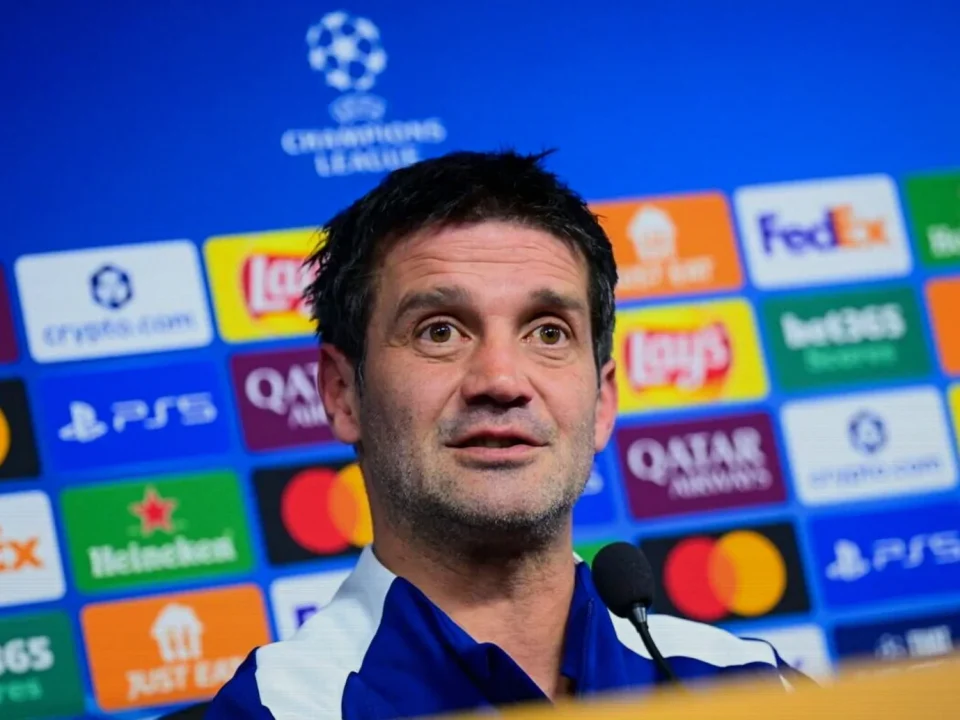
Cristian Chivu has begun his coaching career at Inter with a Scudetto and Coppa Italia, but the Romanian has made clear that a first season of silverware is only the beginning of his ambition at the club. A central figure in the Treble-winning Inter side as a player, he now wants his work on the bench to leave an equally lasting mark.
“I want to build something that lasts, something that leaves an important trace in the history of this wonderful club,” Chivu said. His language reflects the weight he attaches to the job at Inter, where he has moved from the club’s youth sector to leading the senior side.
Chivu said he understands both the scale of the club and the responsibility that comes with guiding it. Rather than allowing distant targets to dominate his thinking, he sets short-term objectives and treats progress as a sequence of steps.
“I know where I am and what my responsibility is,” he explained. “I set myself small goals to achieve in a short period, because I do not think too far ahead. Starting with small steps, you can reach the targets that then allow you to dream bigger.”
Champions League remains the larger horizon
For a club that has reached two Champions League finals in recent years, Europe remains the competition that frames Inter’s wider aspirations. Chivu sees it as a contest with its own demands, one in which reputation, money and planning cannot provide a guaranteed route to the trophy.
“It is everyone’s dream,” he said of the Champions League. “It is a different competition and cannot be compared with the league. There is no formula that gives you certainty of winning it. Neither money nor ideas can simply deliver it. It is the sum of many things. You can name favourites today, but nobody can know who will actually go all the way.”
Inter’s European pursuit therefore continues as part of a longer project, now shaped by a coach whose background includes substantial work with young players. That experience has informed his view of how a modern dressing room must be managed.
Chivu’s emphasis on listening
The Inter coach made his remarks in connection with an initiative that offers 200 free assessments to young footballers through the Futnet platform. The players can be watched and evaluated by professionals including Walter Sabatini, Giorgio Perinetti, Walter Zenga, Dario Marcolin and Cristian Brocchi.
Chivu believes coaches cannot rely on the methods used in previous generations. He recalled a time when players were driven by harsher treatment and raised voices, but argued that young footballers now require a quicker and more individual response.
“We should never take what we did in our day as the model, because we belong to different generations,” he said. “We had very little, apart from ambition. Coaches were much tougher. Through shouting and their manner, they found a way to provoke you into saying: ‘Now I’ll show you.’
“That does not work today. We did one thing, while the new generations do three things at once. The approach has to be much more empathetic, and you have to be quick or you lose them. You need to understand each person: what they like and dislike. They want to feel noticed, listened to and understood.”
Pio Esposito as an example
Francesco Pio Esposito embodies that pathway for Chivu. The striker first worked under him in Inter’s academy before later returning to the senior squad, following a spell in Serie B that Chivu regards as an important act of courage.
“He had the courage to leave the Primavera and go to Serie B, into an environment he did not know, where he had to start again from zero,” Chivu said. “We spoke about that decision and I was happy for him. We stayed in touch, and he told me about his difficulties. When I found him again in the first team, he was more prepared and more mature, with the same hunger and desire to improve.”
Esposito has also become a visible figure in discussion around the state of Italian talent, but Chivu does not share the most pessimistic assessments of the national picture. In his view, the issue is less a permanent shortage than the natural rhythm of footballing generations.
“I do not see the situation in Italy as so dramatic,” he said. “Talent always emerges, but it is also a generational matter: there are cycles. It has happened in other countries too.”