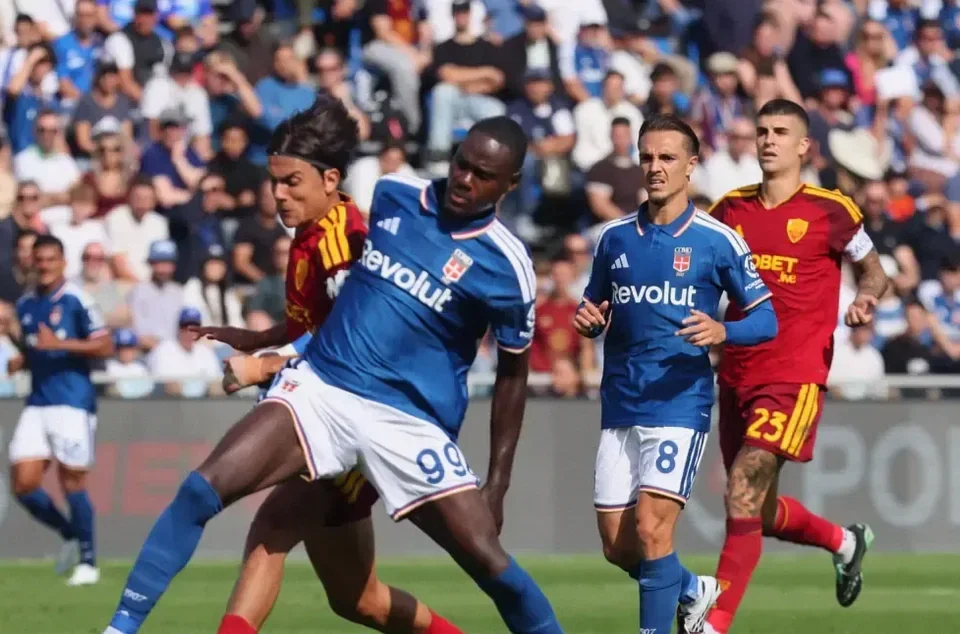
On the shores of Lake Como, a goalless draw with Roma finally brought Serie A back to a scoreline once synonymous with Italian football. The 0-0 was the first in the division this season, arriving only in the league’s 54th match, and it offered a striking contrast to a campaign reshaped by measures designed to keep the ball moving.
A rare scoreline in a faster Italian season
For decades, the Italian game was associated with defensive restraint and catenaccio, but the early weeks of this Serie A season had produced goals at an unusual rate. Como and Roma ended that sequence in the weekend’s standout fixture, though the broader trend remains one of longer spells of active play.
- Across Serie A and Serie B, only one 0-0 had been recorded from the mid-August start of the campaigns until the weekend: Cremonese against Entella on 19 September.
- After the international break, Serie B produced two further scoreless matches on Saturday, with Arezzo drawing Cremonese and Sudtirol meeting Ascoli.
- In Serie A’s first five matchdays, average ball-in-play time rose by five minutes and five seconds from last season, reaching 59 minutes and 24 seconds.
- Italy had trailed the other major European leagues for effective playing time last season.
The contrast with recent years is clear. Five 0-0 draws had already appeared after five rounds last term, while the 2024-25 season had seen seven at that point. There were also seven in 1986-87, when each round contained only eight fixtures, and 10 around two decades ago during a more defensive era.
World Cup measures reach the peninsula
The shift follows the adoption in Italy of refereeing protocols used at the 2026 World Cup. Italy did not take part in the tournament, its third successive World Cup absence, but the domestic game embraced measures promoted by FIFA’s head of refereeing, Pierluigi Collina, the former Italian official.
The objective is straightforward: reduce the delays that have long formed part of match management in Italy, whether through slow restarts, time-wasting or treatment for apparent injuries.
- Throw-ins must be taken within five seconds.
- A substituted player has 10 seconds to leave the pitch.
- A player who receives medical attention must remain off the field for one minute.
Inter coach Cristian Chivu welcomed the altered rhythm after his side’s 2-2 draw with Roma at the Olimpico before the international pause. “I see a league with greater intensity and better football,” he said. Chivu added that the new provisions had increased speed and removed stoppages, arguing that higher-scoring results were a consequence he was happy to accept.
Officials regain a central role
The quicker pace has also changed the atmosphere around refereeing after a 2025-26 campaign dominated by debate over VAR. Its scope was reduced during the summer, while on-field officials have been given a more prominent role in enforcing the new timing rules.
Daniele Orsato, now in charge of Serie A referees, said the World Cup had underlined the importance of the match official. He explained that players now understand the risk of remaining down: their team may have to play with 10 men for a minute and could concede during that period.
Orsato acknowledged that his referees are finishing matches exhausted and must process more situations, but insisted the workload is justified by the visible improvement in the game.
Mancini expects old habits to return
Roberto Mancini, back in charge of Italy after leaving the national post in 2023, also began the latest international window by praising the officials. He said he had long felt that Italian football moved at a slower tempo than England’s because referees stopped play too readily.
Yet the former player and coach sounded a note of caution from the national-team camp. In his view, the goalless draw has not disappeared for good: when the season reaches matches with greater pressure and consequence, the traditional Italian 0-0 is likely to return.