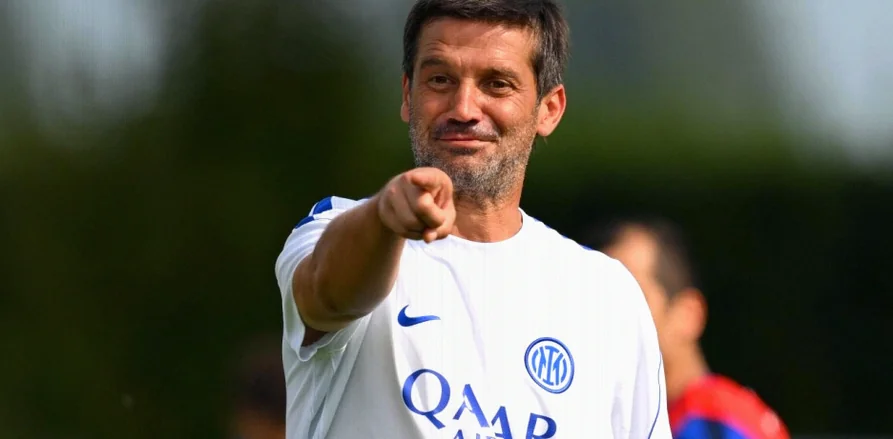
Inter’s title and Coppa Italia success have made Cristian Chivu’s first major chapter on the Nerazzurri bench look almost inevitable. That is the danger of a winning season: the work that led to it can be mistaken for simple continuity. Yet with the league about to resume, Inter’s 13 points, their victory over Napoli and their draw away to Roma point to something more substantial than the preservation of an inherited order.
A coach shaping the champions
Chivu has often been placed in the category of coaches described as custodians rather than innovators, as if he merely extended the work of those before him. The results alone challenge that view. Inter collected two trophies in a single campaign, while previous sides had sometimes ended seasons without silverware despite working from similarly strong foundations.
There are, however, five quieter successes behind the Scudetto: players trusted, restored or repositioned by a coach prepared to make decisions before necessity forced his hand.
- Pio Esposito was retained when a loan move had appeared the obvious route for his development.
- Alessandro Bastoni was protected through a difficult period and found a personal response with his goal in Turkey.
- Josep Martinez received backing after serious errors rather than being discarded.
- Piotr Zielinski was brought back into the picture after a long spell in the shadows.
- Diouf was remoulded for a role on the flank, despite the player’s own preference for central midfield.
Trust before the market solution
The decision over Esposito has become particularly telling. Around 18 months ago, sending him elsewhere to gain experience seemed unavoidable. Chivu instead kept faith with the forward, rather than seeking an older and supposedly safer alternative. Esposito has since become Italy’s national-team centre-forward, a development that makes the earlier doubts easy to forget.
That willingness to stand by a player has also been evident when confidence was most fragile. Bastoni went through criticism that extended beyond technical mistakes, but Chivu continued to support him. His goal in Turkey became a moment of individual redemption, made possible by the confidence retained by his coach.
Martinez’s case followed a similar pattern. The goalkeeper was at the centre of attention after a series of conspicuous mistakes, yet Chivu moved to shield him rather than abandon him. Martinez was subsequently recalled by world champions Spain, an outcome that would have been far less likely had Inter’s coach publicly or privately lost faith in him.
Recovery, adaptation and the value of the squad
Zielinski’s contribution underlined that Chivu was not merely reacting to an injury crisis or a shortage of options. The Poland international was restored after a prolonged difficult period and became one of the leading figures of the previous campaign. His six league goals played a part in Inter’s run to the title.
Diouf’s adaptation has been less celebrated but equally revealing. Chivu placed him wide, even though the player has repeatedly maintained that central midfield is his natural position and that the new role has not always felt comfortable. The performances became strong enough for Zinedine Zidane to use him in the same role with the national team. It was a change that required the coach to convince the player as well as the rest of the side.
Selections that changed the afternoon in Rome
Inter possess a deep and balanced group, but a large squad does not automatically mean broad involvement. In earlier seasons, the same 14 or 15 players could carry too much of the load, leaving some fatigued and others detached from the campaign.
Chivu has spread responsibility more widely. The draw at Roma offered a practical example: he withdrew Bastoni and Federico Dimarco, introduced Carlos Augusto and Luis Henrique, and Inter came back into the match. The substitutions were not simply changes of personnel; they showed a coach reading the moment and trusting the players beyond his most familiar names.
For Inter, that may be the most important part of Chivu’s work. The trophies established the outcome, but the season’s larger story is of a coach making his own decisions within a successful club — and ensuring that more of his squad belongs to the journey.