Czech women’s tennis celebrated both its latest surge and a defining chapter from its past at the Livesport Prague Open, where former stars returned to Stvanice to mark 40 years since the 1986 Federation Cup final.
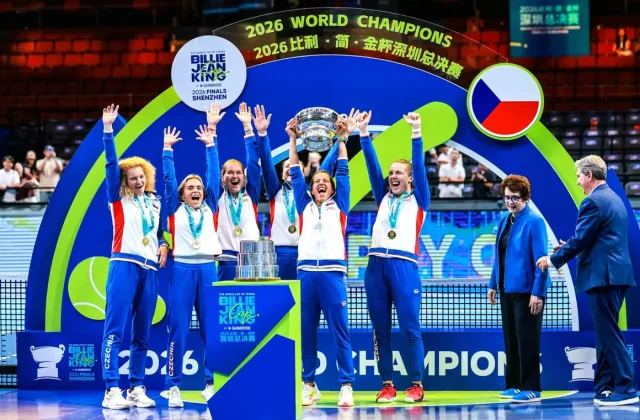
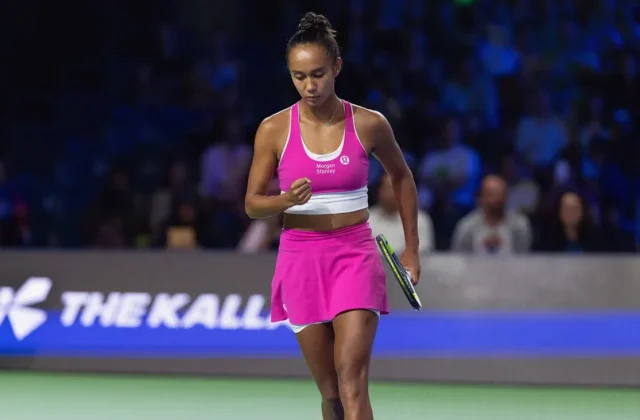
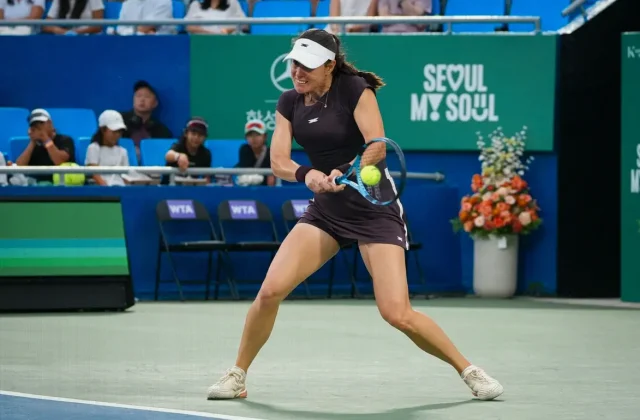
The anniversary came after a standout season for the country. Czechia completed a Billie Jean King Cup Finals title run in Shenzhen, while Linda Noskova lifted the Wimbledon singles trophy. Katerina Siniakova also expanded her Grand Slam collection with titles at Roland Garros and the US Open.
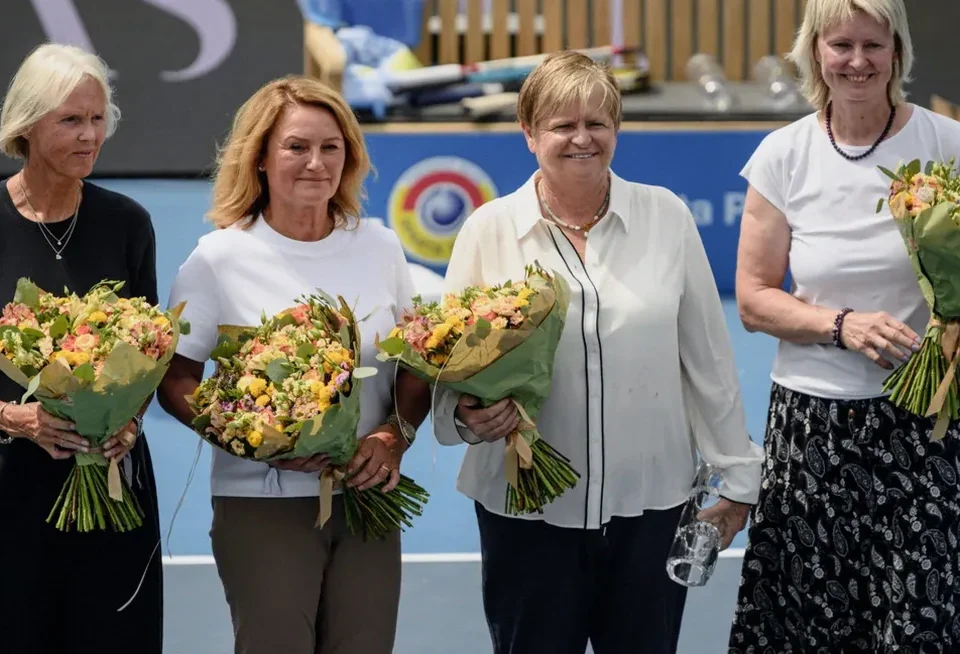
At the WTA 250 event in Prague, Hana Mandlikova, Helena Sukova, Regina Marsikova and Andrea Holikova were welcomed back at CLTK Prague, the club on Stvanice island that staged the 1986 team competition. Fans used the occasion to honour a generation whose achievements helped establish Czech and Czechoslovak women’s tennis as an enduring force.
Navratilova’s return shaped the 1986 final
The tournament brought together 32 nations in the Czechoslovak capital, three years before the Velvet Revolution ended the communist regime. Its most resonant storyline was Martina Navratilova’s return to her native country, 11 years after she had defected to the United States during the 1975 US Open.
Navratilova had largely been removed from public life by state-controlled media in the intervening decade, making her appearance a major emotional event for spectators. The United States arrived with an imposing squad featuring Navratilova, Chris Evert, Pam Shriver and Zina Garrison, while Czechoslovakia entered as the three-time reigning champion.
Sukova, who reached a career-high No. 4 and contested four Grand Slam singles finals, recalled that hosting rights required the federation to accept every player selected by a competing nation.
“That was why Martina’s presence became possible,” Sukova said. “She had to be permitted to represent the United States.”
For the home players, however, the week was initially about defending their title rather than the wider political and personal significance of Navratilova’s homecoming.
“We were trying to win the Cup and enjoying the competition,” Sukova said. “The stands were full through the week and the support was with us. Only on the final day did the crowd lean more towards Martina. It hurt then, but looking back it was a wonderful celebration of tennis.”
Mandlikova, a four-time major singles champion and former world No. 3, remembered being asked to address the assembled teams without specifically referring to Navratilova. She refused, arguing that Navratilova’s arrival deserved acknowledgement and respect for both her and the American team.
Mandlikova subsequently welcomed Navratilova in both Czech and English, telling the crowd how pleased everyone was to see her back. She said the Czechoslovak players remained focused on reaching the final, but understood how significant the week was for Navratilova, who was able to play in front of relatives and friends.
The final delivered the United States the trophy. Evert defeated Sukova, before Navratilova overcame Mandlikova to secure the winning tie. The loss did little to diminish the event’s place in Czech tennis memory, as the reception for the returning players at Stvanice underlined.
Vera Sukova’s lasting influence
The reunion also turned attention to the foundations of the country’s tennis tradition, particularly the impact of Vera Sukova. A Wimbledon finalist in 1962, when she finished runner-up to Karen Hantze Susman, she later rose to No. 5 and became a long-serving coach of the Czechoslovak national side.
Under her guidance, Czechoslovakia won the Fed Cup in 1975. Her husband, Cyril Suk II, served as president of the Czechoslovak Tennis Association and was among those who greeted Navratilova upon her arrival in Prague in 1986.
Vera Sukova died of brain cancer four years before the final and did not witness the landmark week at Stvanice. Her daughter Helena believes her mother’s work helped create the culture behind generations of success.
“I believe it began with my mother,” Sukova said. “The tradition exists, but the greatest credit also belongs to the parents. They can help enormously, or cause real damage. The key is knowing how to encourage a player without overdoing it.”
Mandlikova, now the mother of developing players Elizabeth and Mark Mandlik, said Vera Sukova had been a crucial mentor in her own rise.
“Being part of that lineage is extraordinary,” Mandlikova said. “I had a close bond with Helena’s mother. She was calm, intelligent and a very good coach. My father asked her for advice when he wanted me to take up tennis, and she helped shape the player I eventually became.”
Mandlikova described Vera Sukova as the figure who set the standard for what followed, linking her influence to the modern achievements of a nation still producing major champions and Billie Jean King Cup winners.