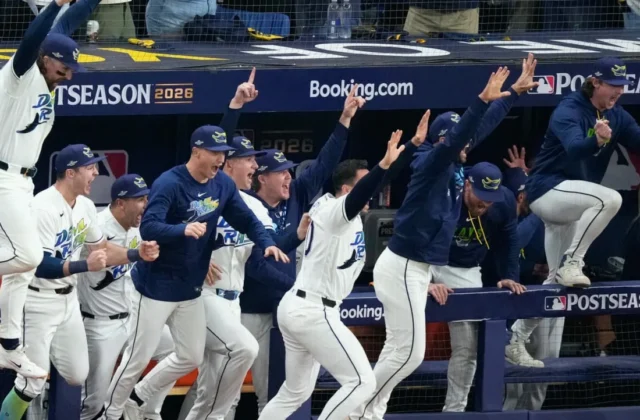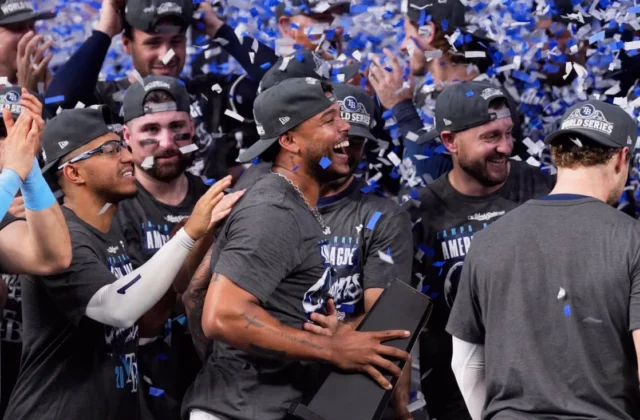
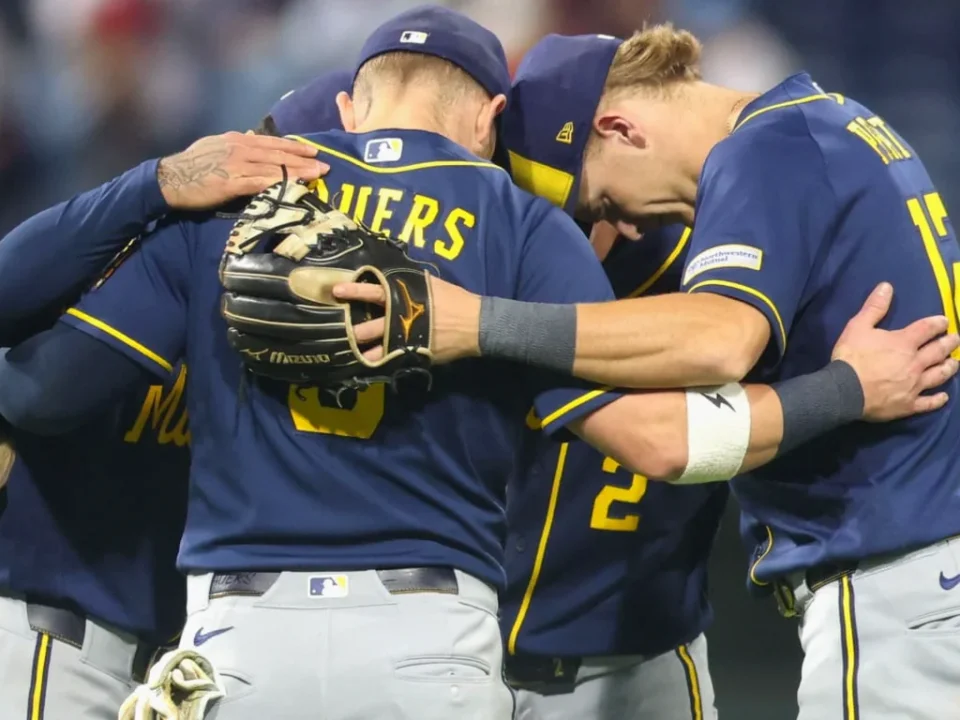
The Division Series opens with four rested clubs holding the advantages they spent six months earning: Milwaukee and Los Angeles in the National League, Cleveland and Tampa Bay in the American League. The Wild Card survivors are still carrying the edge of recent competition, but they also arrive on the road and without the same freedom to arrange their pitching staffs.
That is the annual October argument. Does a few days away from game-speed pitching leave a division winner flat, while the team that just survived a best-of-three stays sharp? The concern sounds reasonable in a sport built around daily repetition. The history of this postseason format, however, has not shown a measurable penalty for the clubs that earned a first-round pass.
The bye has done what it was supposed to do
Since the expanded playoff setup began in 2022, no team given a Wild Card round bye has been eliminated before the Division Series. That may sound obvious, but it is the most important part of the bargain. The Red Sox, Astros, Cubs and Phillies, whose seasons ended in the opening round, would surely have taken a few days of uncomfortable waiting over cleaning out lockers.
The teams coming through the Wild Card round also pay for their path in other ways. They must begin the next series away from home, and their rotations cannot be reset as cleanly as those of the rested clubs.
Tampa Bay, for example, can hand Game 1 to ace Drew Rasmussen against the Yankees. New York will not have Cam Schlittler available for the opener, despite expectations that he will win this season’s American League Cy Young Award.
What four postseasons say about momentum
- In 2022, the bye clubs split their four Division Series, going 2-2.
- In 2023, only one of the four rested teams advanced. The Braves, Dodgers and Orioles were all beaten, creating much of the modern concern about the layoff.
- In 2024, bye teams bounced back with a 3-1 record.
- In 2025, they again won three of four Division Series.
Across 16 Division Series in the current format, teams with byes have won nine times and Wild Card winners have taken seven. It is not dominance, but it is a modest edge in the direction one would expect from teams that posted better regular-season records.
| Division Series measure since 2022 | Bye teams |
|---|---|
| Series played | 16 |
| Series won | 9 |
| Actual series-winning percentage | .563 |
| Combined projected series-winning percentage | .576 |
That near match between projection and result is the useful point. The rested teams have generally been somewhat better, and they have won at roughly the rate anticipated. If the break were routinely draining their timing or their edge, the gap should show up more clearly in the results. It has not.
A short series can turn on far more than rest
The 2023 round remains the easy exhibit for anyone arguing that momentum matters, but it was not a clean test of that theory. The 104-win Braves lost to a 90-win Phillies club that was hardly an ordinary underdog. Arizona’s sweep of the Dodgers looked startling by the standings, yet Los Angeles entered with a badly compromised rotation; Clayton Kershaw made his start despite a visibly injured shoulder.
Best-of-five baseball always leaves room for outcomes that look larger than they are. A strong player can run into the wrong pitching at the wrong time, bye or no bye. In the most recent Wild Card action, Cubs stars Alex Bregman and Pete Crow-Armstrong combined to go 0-for-15 with one walk against San Diego pitching. A few October games can squeeze even elite bats into a very small box.
The pre-series forecasting has told a similar story. Milwaukee, for instance, carried a 55-45 projected advantage against the Cubs last year. The largest miss came in 2024, when Philadelphia was given a 66-34 edge over the Mets and still lost the series. Those are reminders that a better team is not an invulnerable one.
The matchup still has to be played
History suggests that two or three of this year’s four bye teams should move on, not necessarily all four. Milwaukee, Los Angeles, Cleveland and Tampa Bay earned a little extra breathing room, not a guarantee of October survival.
If one falls, the explanation need not be a loss of momentum. The Padres, Braves, White Sox and Yankees are capable opponents, and any of them can win three games in a best-of-five. The bye teams have the preferred path because they avoided the immediate elimination risk of the Wild Card Series and lined up their pitching for this round. In October, that is a real advantage. It just is not a permanent shield.