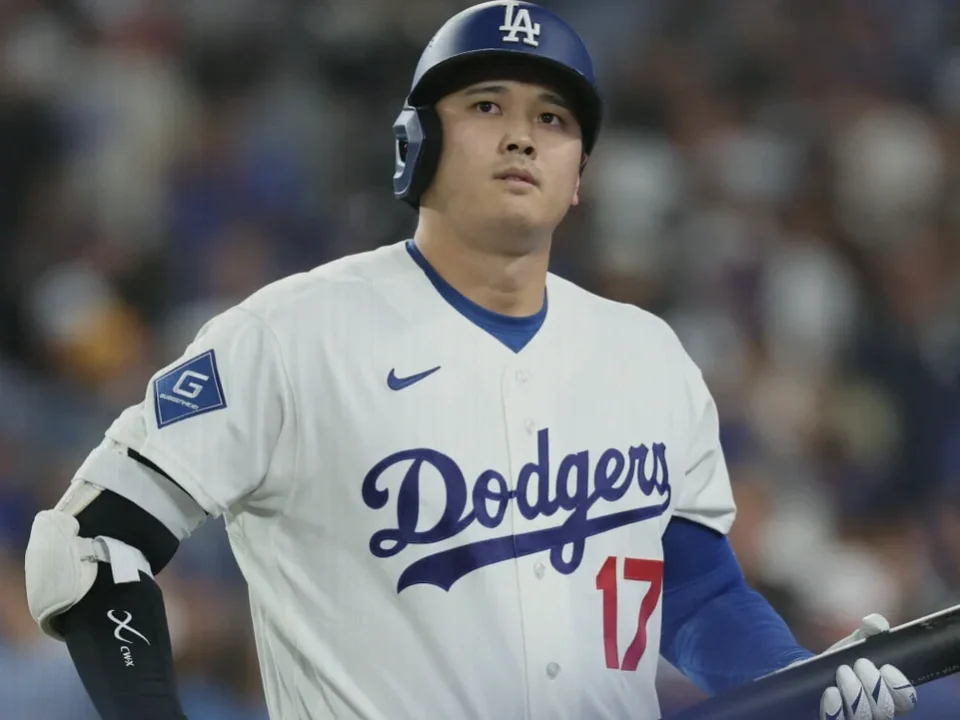
Shohei Ohtani will enter the Dodgers’ 2027 plans with a clean medical outlook but a complicated workload question. The club does not expect surgery for the right biceps and left knee problems that lingered through much of 2026, and president of baseball operations Andrew Friedman expects him to be ready when next season opens. The larger task is building a two-way schedule that leaves Ohtani at full force when October arrives.
Los Angeles saw how quickly that balance can tilt during its failed push for a third straight championship. Ohtani remained one of the club’s biggest producers, leading the Dodgers with 30 home runs and posting an .889 OPS. On the mound, he logged a 1.79 ERA in 14 starts. But the physical trouble that had been present since at least June gradually caught up with him.
His final pitching appearance came July 3. His work at the plate began to fade sharply in the middle of August, around the same period he was attempting to build himself back toward pitching. The Dodgers finally put him on the injured list in September, and he never quite regained his usual form after returning. In the postseason, he went 5-for-26, a .192 average, with only one extra-base hit: a three-run homer in Game 4 of the National League Championship Series.
That blast did not reverse the course of the series. Milwaukee swept the Dodgers out of the NLCS, with the lineup struggling well beyond Ohtani’s diminished production. Still, Ohtani at something close to full strength would have changed the texture of any October lineup, and the organization now has to confront how much can reasonably be asked of him across a full season.
October is the target
Friedman said the Dodgers have not yet settled on the details, but the conversations will center on how to coordinate Ohtani’s hitting and pitching responsibilities through the regular season while preserving his impact for the playoffs. The club’s baseball operations chief said the value of Ohtani’s two-way role makes a deliberate plan essential.
One option already under consideration is delaying Ohtani’s return to the rotation at the start of 2027, even if he is medically cleared to pitch. Rather than asking him to hit every day and begin starting immediately, the Dodgers could manage the early season more carefully, then reassess after the first month.
Friedman fully expects Ohtani to pitch next year, but he acknowledged there is no certainty that the 32-year-old can carry a complete two-way regular-season load and still reach a deep postseason at his best. The club will have to decide when both sides of his workload begin, and how much strain each side places on the other.
Communication will be part of that blueprint. Friedman said Ohtani, like many elite players, may not always have conveyed the full extent of how he felt physically in 2026. He framed that tendency as a product of Ohtani’s competitive drive and his determination to remain available to help the team win, rather than any lack of concern over the injuries.
Ohtani, speaking through interpreter Will Ireton after the season ended, said he had not yet fully processed the lessons of the year. He plans to revisit his treatment and training routines and determine what must change for next season.
There is no ready-made precedent for the assignment. Ohtani has never opened a season as a two-way player and then pitched in that same year’s postseason. His heaviest combined workload came in 2022, when he made 28 starts, threw a career-best 166 innings and took 666 plate appearances as a hitter during his age-27 campaign.
Whether he can again approach that kind of volume as he moves deeper into his 30s remains unanswered. Ohtani has made a career out of turning unusual demands into routine accomplishments, but the Dodgers’ 2027 season may depend on resisting the urge to use all of that talent at once. The plan now is not merely to get him onto the field in April. It is to have both versions of Ohtani standing there when the games matter most.