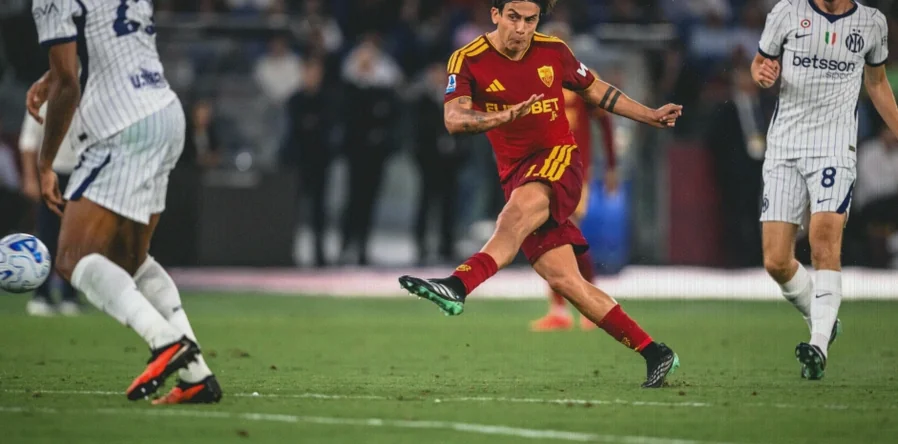
Roma’s early season has been shaped by a familiar talent performing with an unfamiliar regularity. Paulo Dybala entered the summer as a free agent, with no shortage of possible destinations open to him, yet chose to remain in the capital. Roma, encouraged by Gian Piero Gasperini’s conviction, answered by extending his contract. Five league rounds and one European night later, that decision already looks like one of the most rewarding pieces of business in Serie A.
The first international break naturally brings questions rather than final judgements. Inter remain the side to catch, while the league has begun to identify its challengers, its early surprises and the coaches adding their own ideas to the opening weeks. New arrivals such as Moreira have made persuasive early cases in the discussion over the summer’s best signing. But Dybala’s status was different: he did not need a transfer fee, and his value to Roma has been immediate.
His contribution has gone beyond the four official league assists recorded so far. He was also central to the two attacking sequences that produced Roma’s goals against Inter, underlining how often the decisive moment begins at his feet. Technical quality has never been the question with Dybala. The more significant development is the consistency of his work, including a willingness to track back into Roma’s own half and contribute without the ball.
A workload that changes the conversation
The numbers tell the deeper story. Dybala has played 407 Serie A minutes already, having also completed Roma’s full Champions League match in Turkey. That domestic total represents almost a third of the minutes he managed across each of the previous two league campaigns: 1,421 in one, 1,356 in the other.
More strikingly, he has been used more heavily than any of the teammates around him. Gianluca Mancini follows on 392 minutes, while Malen has played 345, Wesley 330, Manu Koné 323 and Matías Soulé 279. Roma have found ways to manage other players’ workloads, but Dybala has so far been treated as essential.
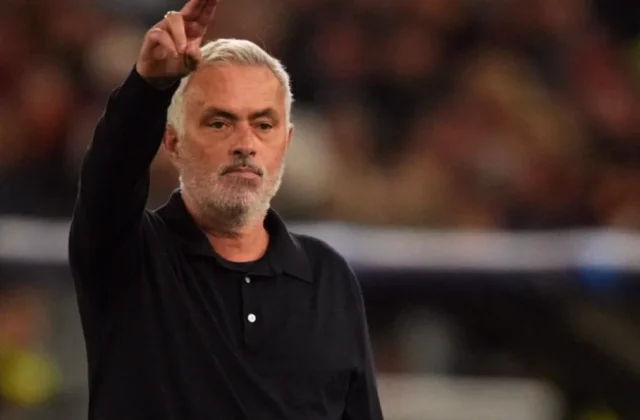
José Mourinho once described him as Roma’s light. Under Gasperini, he has also become a dependable reference point, offering output and continuity alongside players considerably younger than him. That is a particular satisfaction for a club that, only months ago, faced understandable doubts over whether retaining him was the sensible course.
Gasperini took the opposite view. He wanted the renewal and made full use of having Dybala available throughout pre-season. Roma’s start has supported that faith, even if nobody inside the club can reasonably expect the forward to sustain such a demanding pace without care. Caution remains necessary with experienced players, and that helps explain the arrival of Rodrigo Mora, a highly regarded young player who can be given time to settle into his new surroundings.
For now, though, Roma’s opening chapter has been written in large part by Dybala. After six matches in all competitions, the question is not whether his ability can decide games; that was settled long ago. It is how long it has been since he looked this physically present, this available and this central to a team’s weekly rhythm.