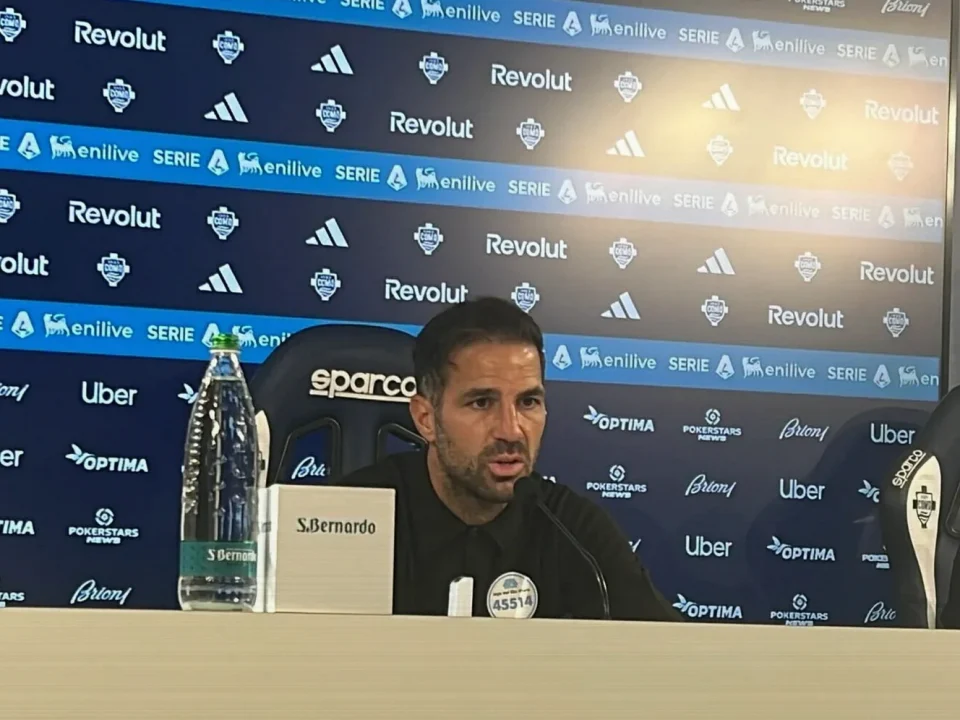
Como and Roma shared a goalless draw, but the afternoon carried the strain of a match that neither side approached as a quiet point. Cesc Fabregas saw enough in his team’s performance to take encouragement, even if the failure to turn a numerical advantage into a winner left a measure of regret.
The coach and the club
Fabregas described the 0-0 as an unusual result for two sides with attacking intentions. In his view, the contest was open in spirit and competitive in execution, with both teams showing respect while still trying to impose themselves.
“Football sometimes defies explanation,” the Como coach said. “With two positive, attacking teams, a goalless result would not seem the obvious outcome. But it was a good game between two sides that respected each other.”
Como had wanted the victory, and Fabregas stressed that facing Roma demands personality before any tactical plan can take effect. He felt his side had produced their strongest display against Roma since his arrival, particularly without the ball.
There was disappointment at the final whistle, however. Roma were reduced to ten men following Malen’s dismissal, but Como did not find the composure required to exploit the extra player. Fabregas said his young group needed to move possession faster and show more patience in those moments.
Still, he noted an important defensive detail: Como did not concede a single counter-attack despite their effort to force the game. For him, that was among the positive signs from the afternoon.
The disputed moments
The match did not end without argument. Roma coach Gian Piero Gasperini was unhappy with Malen’s sending-off, while Fabregas was equally convinced that Roma’s Wesley should have been dismissed after his challenge on Diao.
Fabregas had reacted strongly on the touchline to the incident and maintained his position after the game. Asked about Gasperini’s view of Malen’s red card, he said every post-match discussion carries competing interpretations, but he considered the Wesley episode clearer.
“For me, Wesley’s dismissal was the more obvious one,” Fabregas said. “There was no doubt. N’Dicka would not have caught Diao, who was heading towards goal.”
A growing club and an unwelcome kick-off time
Fabregas also questioned the timing of the fixture, arguing that a meeting of this quality deserved an evening setting. He felt the lights, the stadium atmosphere and the rhythm of the ball would have suited a night match more naturally.
The early slot, he said, brings greater physical fatigue and fewer recovery hours, particularly after long journeys. His comments came with a wider reflection on Como’s rapid development: within two years, the club has gone from having one international player to between 15 and 16 players called up by their national teams.
Fabregas called that rise “magnificent” for the club, returning to a theme that has accompanied Como’s progress: supporters may dream, but the journey itself remains the most meaningful part of the season.