FIFA’s handling of Folarin Balogun’s World Cup red card is set to return to the agenda at Thursday’s Council meeting, with the governing body expected to argue that its disciplinary rules were insufficiently clear when it allowed the United States forward to play in the round of 16.
Balogun case returns to FIFA Council
The dispute grew into one of the defining off-pitch controversies of the World Cup hosted by the United States, Mexico and Canada, a tournament ultimately won by Spain against Argentina. FIFA is now facing calls for an investigation from Belgium, UEFA and members of the European Parliament after Balogun’s sanction was put on hold before the United States met Belgium.
The key issue is Article 27 of FIFA’s Disciplinary Code. Its established wording, reinforced by circulars issued over the past two decades, states that a red card brings an automatic suspension of at least one match. Challenges are generally limited to mistaken player identity or an expulsion resulting from a serious and obvious refereeing error.
People familiar with the Council discussions say FIFA is seeking to alter the article’s wording in a way that would support its earlier decision after the fact. The move has intensified criticism over the reported involvement of US President Donald Trump.
How the suspension was put on hold
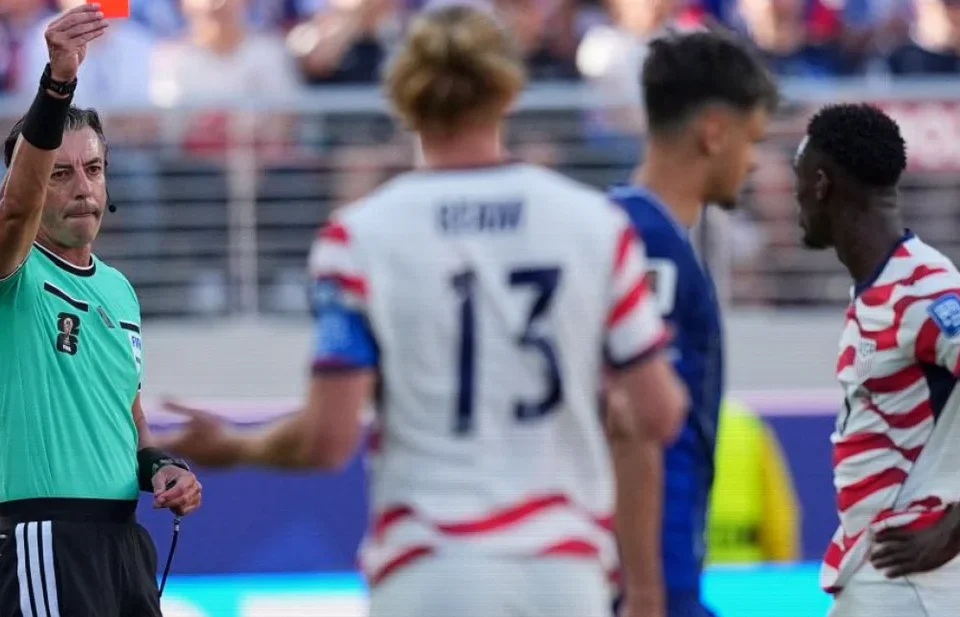
- Balogun was sent off in the United States match against Bosnia on 1 July.
- Trump later publicly acknowledged that he had called FIFA president Gianni Infantino, asking for the incident to be reviewed because he believed it had not been a foul.
- On 6 July, FIFA’s Disciplinary Committee said it had not cancelled Balogun’s dismissal, but had instead made the one-match ban suspended and subject to a one-year probationary period.
- The committee imposed a $40,000 fine and a one-game suspension, while allowing the ban not to be served immediately.
- That ruling made Balogun eligible for the round-of-16 match against Belgium, which Belgium won 4-1.
- The United States were eliminated, and Balogun later said that he initially believed the news of his eligibility was “a joke” and described the situation as “unreal.”
Questions over political pressure
FIFA’s disciplinary body has denied that outside pressure affected its ruling. Its expected explanation to the Council is that uncertainty in the regulations allowed the conditional suspension to be applied.
Critics, however, point to the long-standing automatic-ban principle and argue that Balogun’s case did not fit the narrow exceptions normally available. The Council discussion will therefore centre on whether the rules need clarification, or whether changes are being considered to validate a decision already made during the tournament.