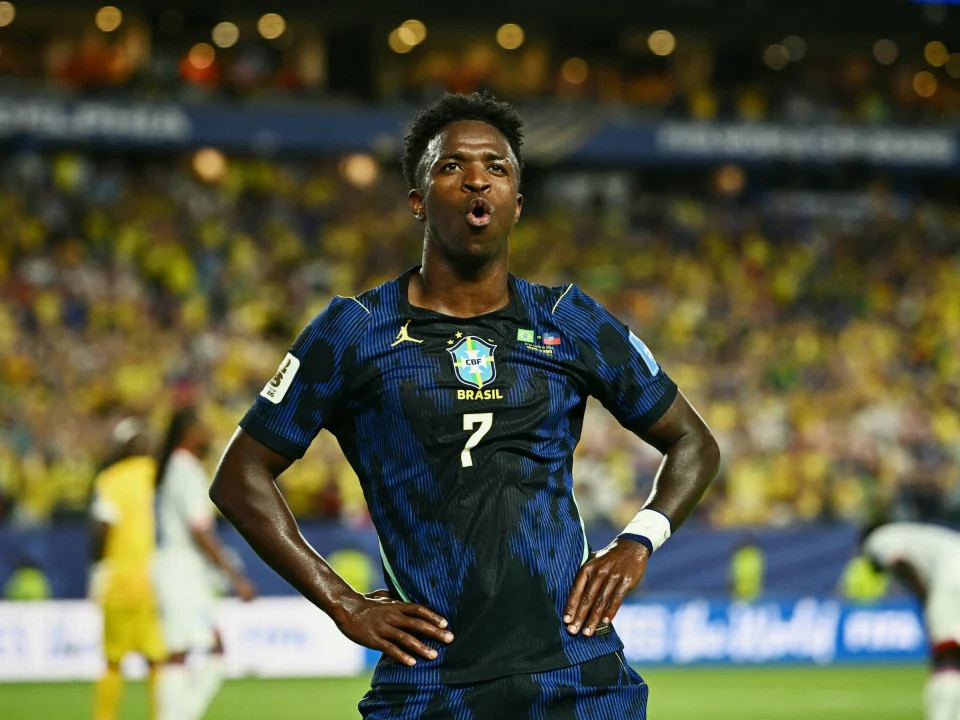
From Miami’s analysis hub to the touchline observations gathered across the 2026 World Cup, FIFA’s Technical Study Group has placed Brazil winger Vinicius Junior among the tournament’s most influential attacking runners. The findings, released on Friday after a review of all 104 matches, underline how Brazil shaped its forward play to create isolated wide duels for the Real Madrid player.
Vinicius started each of Brazil’s five matches, playing more than 440 minutes while scoring four goals and supplying one assist. He was named FIFA’s player of the match against Morocco, Haiti and Scotland, before Brazil’s campaign ended with a 2-1 round-of-16 defeat to Norway.
Brazil’s route to Vinicius in space
The study found that Vinicius was among the five players who most often carried the ball into the penalty area. Brazil frequently advanced through central areas before moving the ball towards the flanks, where the intention was to leave their wide attackers facing defenders with room to attack.
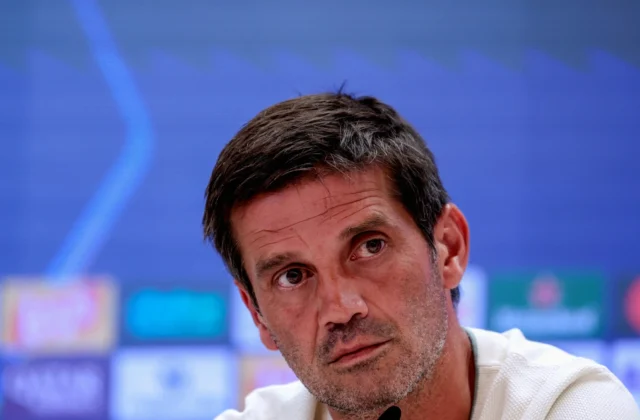
Pascal Zuberbühler, FIFA’s senior football specialist and head of the Technical Study Group, described Vinicius as a classic left-sided winger rather than a player who routinely drifts inside.
“He stayed wide on the left and repeatedly took opponents on one against one,” Zuberbühler said. “He wants to go directly towards goal and score. His mentality is that of a genuine winger, and it is visible in the way he plays.”
How FIFA studied the World Cup
- The 11-member Technical Study Group examined every one of the tournament’s 104 fixtures.
- Forty per cent of the games received in-person observation, while the remaining 60 per cent were monitored from FIFA’s central operation in Miami.
- Analysts worked with six video angles and roughly 15,000 live data points during matches.
- The project produced more than 300 videos and over 500 pages of technical information.
- The group also selected the recipients of the World Cup’s individual awards.
The panel included former Germany forward Jürgen Klinsmann, Brazil’s former midfielder Gilberto Silva and ex-Argentina defender Pablo Zabaleta. Arsène Wenger, FIFA’s director of football development, oversaw the work, which was designed to identify the game’s emerging technical and tactical patterns.
Eleven themes from the tournament
- Back-line construction involving three players.
- Extensive player rotation.
- Switching the point of attack.
- Attacking transitions.
- Organised high pressing.
- Defensive blocks.
- Changing responsibilities for key players.
- Pressure immediately after losing possession.
- Set-piece situations.
- Goalkeepers contributing to possession play.
- Goalkeeper punching.
Zuberbühler said the report reflected a more ambitious international game, including among teams without the traditional weight of the major football nations. Sides were taking more risks and pressing higher, he said, making the goalkeeper’s decisions and actions increasingly important.
The data also recorded a rise in short goal-kicks, which accounted for 58 per cent of the total. At the same time, 52 per cent of restarts did not involve a goalkeeper-led build-up. Goalkeepers nevertheless carried a larger role in developing attacks, a change linked to the growing intensity of opposition pressing.
Preparation and tactical variety
Tom Gardner, FIFA’s football performance insights lead, said the clearest tournament-wide impression was not one dominant tactical revolution but the range of systems deployed effectively by different national teams.
“There were many models, and they were all executed well,” Gardner said. “Teams made the most of their own strengths. It also showed how thoroughly they had prepared, using technology and analytical tools. National teams have never had so much information and data available to assess performances and prepare for matches.”