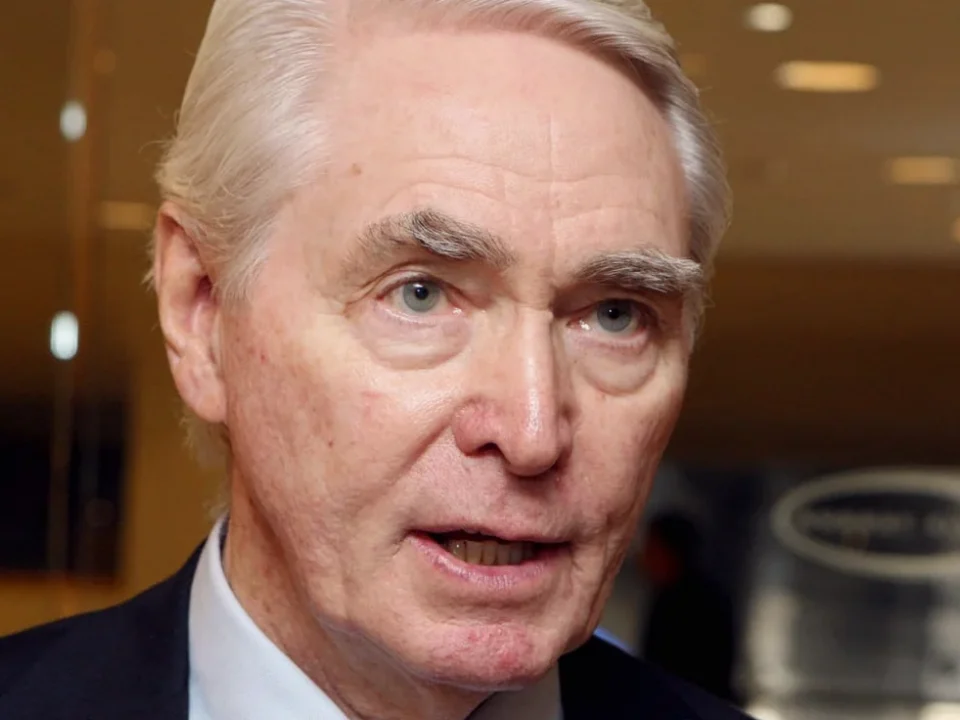
Fred Claire spent a lifetime around the Los Angeles Dodgers, helping shape both the club’s identity and one of its most unlikely championship runs. The former general manager of the 1988 World Series winners died Monday at 91, leaving behind a Dodger career that stretched from the press box to the front office and into the language fans still use when they talk about the team’s colors.
Claire’s work reached far beyond transactions. He was a key figure in making “Dodger Blue” a lasting part of the franchise’s public identity, and he helped launch the “Think Blue” campaign during his years in the organization’s public relations operation. The phrase became a natural fit for a club whose connection to Los Angeles has long been as recognizable as its uniforms.
Dodgers president and CEO Stan Kasten said the organization was mourning “a longtime key fixture” of the club. Kasten credited Claire with bringing victories, memorable players and the 1988 championship to Los Angeles, while offering condolences to Claire’s wife, Sheryl, and the rest of his family.
Claire is survived by Sheryl and their children, Jeff, Jennifer and Kim.
From the newspaper beat to the general manager’s office
Born in Jamestown, Ohio, in 1935, Claire was raised as a Reds fan while living above his father’s drugstore. His family relocated to suburban Los Angeles in 1950. He studied journalism at San Jose State University, after first attending junior college, and showed an early interest in baseball’s larger picture when Baseball Magazine published his argument that the Pacific Coast League should become a Major League.
He spent more than 10 years working for California newspapers as a sportswriter and editor. In 1969, the Long Beach Independent Press-Telegram assigned him to the Dodgers beat. When an opening developed in the club’s public relations department, Claire pursued it, beginning an association with the team that would last for decades.
Among his contributions in that department was the hiring of Ross Porter, who became a familiar Dodgers play-by-play voice from 1977 through 2004. Claire also sought to give the club a unifying identity with a collegiate-style feel. He later recalled looking at Michigan’s “Big Blue” nickname and adapting that kind of idea for Los Angeles. An exhibition game against USC helped inspire an early “Wear Blue” promotion, which grew into the broader Dodger Blue theme.
Claire moved into the general manager’s chair in April 1987 after Al Campanis was removed from his post within 48 hours of making offensive remarks on ABC’s “Nightline” about Black candidates in baseball executive positions.
The Dodgers had finished fourth in 1987 and entered the following season without much outside expectation. Claire’s front office work helped change that quickly. He acquired Alfredo Griffin from Oakland to strengthen the infield defense, added Jay Howell and Jesse Orosco for bullpen depth, and signed free-agent outfielder Kirk Gibson.
Gibson would win the National League Most Valuable Player Award and deliver his famous Game 1 home run in the World Series. The Dodgers, substantial underdogs against the Athletics, finished the job and won the 1988 title.
Claire later pushed back on the notion that the club lacked talent. He pointed first to Orel Hershiser, whom he considered the game’s premier pitcher at the time, along with starters Tim Belcher and Tim Leary. He also cited Howell’s bullpen work, the defensive improvement and the impact of center fielder John Shelby, acquired from Baltimore in 1987.
Claire remained the Dodgers’ general manager through the 1997 season. After News Corporation bought the team from the O’Malley family early in 1998, he initially stayed with the club. That changed in May, when Dodgers officials completed a deal without his knowledge that sent Mike Piazza and Todd Zeile to the Marlins for Gary Sheffield, Charles Johnson, Jim Eisenreich and Bobby Bonilla. Claire publicly objected to the trade and was replaced by Tommy Lasorda.
His baseball life continued afterward as a columnist and analyst. He co-wrote “Fred Claire: My 30 Years in Dodger Blue” in 2004, then followed it with “Extra Innings: Fred Claire’s Journey to City of Hope and Finding a World Championship Team” in 2020. The second book traced both his career and his successful fight against an aggressive skin cancer that spread to his jaw.
Claire turned that experience into cancer-research fundraising, often with help from the baseball community. He and Sheryl raised $500,000 through two golf tournaments, with former Dodgers and other baseball figures showing up to support the cause. For Claire, that work stood alongside the pennant races and championship memories as one of the proudest achievements of his life.