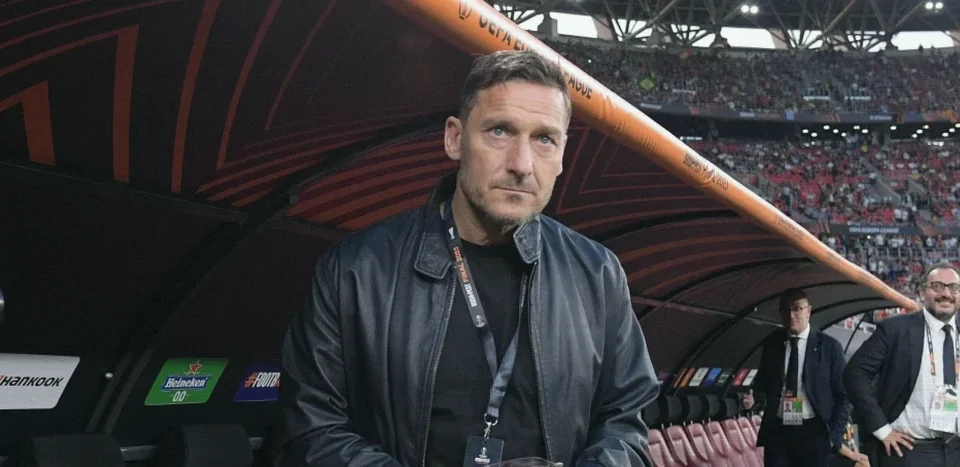
Francesco Totti’s new autobiography opens a deeply personal chapter from the autumn of 2020, when the former Roma captain faced Covid-19 only days after losing his father, Enzo, to the virus. In Oltre, which Totti will present on Monday evening at Teatro Brancaccio, he recalls fearing that his own illness might bring him towards the same fate.
In the championship
The infection came at a time when Totti was still mourning Enzo, who died on 12 October 2020. His father had been the central figure in his life, and Totti writes that he hoped they would meet again one day, while recognising that his own illness briefly made that prospect feel dangerously close.
His condition deteriorated with a fever reaching 39°C, coughing, pain and severe breathlessness. Initial treatment appeared to have little effect. Totti says he tried to stay calm at first, but then became overwhelmed by the fear of dying as his father had.
He called his children to tell them that he was not certain he would recover. At first, they believed he was joking, but he repeated that he did not know how much longer he could hold on.
- Totti was taken to Campus Bio-Medico for medical examinations.
- Tests found bilateral pneumonia, while his blood-oxygen saturation had fallen to 88%.
- Doctors advised hospital admission, but Totti chose not to remain in hospital.
- Guidance from Professor Alberto Zangrillo helped him manage the following days at home.
Totti’s refusal of admission was tied to the loss of his father and the prospect of being separated from his children. He recalls telling doctors that, if he were to die, he wanted it to happen at home rather than alone inside a hospital. A camera was placed in his room so that he could be monitored.
Help from Milan, and a recovery at home
During the most difficult period, Pier Silvio Berlusconi contacted Totti through Silvia Toffanin, a close friend of Ilary Blasi. Berlusconi offered to arrange a private flight to Milan, where Totti could be treated by Zangrillo, head of intensive care at San Raffaele Hospital and the Berlusconi family’s trusted physician.
Totti declined the proposed move. He did not want to leave Rome for Milan in such circumstances, but he spoke with Zangrillo about his symptoms and, in particular, how he was sleeping at night.
Totti explained that he lay on his side, with a pillow between his legs. Zangrillo advised him to try lying face down, with his chest against the mattress and his arms open. Totti responded with dark humour, comparing the position to being on a cross. The doctor made clear that admission to a medical facility would become unavoidable if this did not improve his breathing.
The advice accompanied a gradual recovery. His fever began to fall and his oxygen levels eventually rose to 99%. Totti describes the improvement as feeling as though he had been born again, and publicly thanks both Berlusconi and Zangrillo in the book.
He nevertheless says the illness left a lasting mark: even now, he feels that his breathing has never entirely returned to what it was before Covid-19.
A father’s absence
The physical recovery did not lessen the weight of Enzo Totti’s death. Francesco describes his father as his number one, while also reflecting painfully on the fact that he became another name in the pandemic’s death toll.
Among the images that remain with him are those from Bergamo, where army vehicles carried coffins during the worst stages of the emergency. Totti recalls crying as he watched people suffer, struggle for air and die, amid a period in which, he felt, public certainty often exceeded real understanding.