Giannis Antetokounmpo has turned Miami’s offseason from a retool into a championship swing. After finishing 43-39, landing 10th in the Eastern Conference and exiting in the SoFi Play-In Tournament, the Heat pulled off a blockbuster deal with Milwaukee for the two-time MVP and now enter camp with a roster built around size, experience and pace.
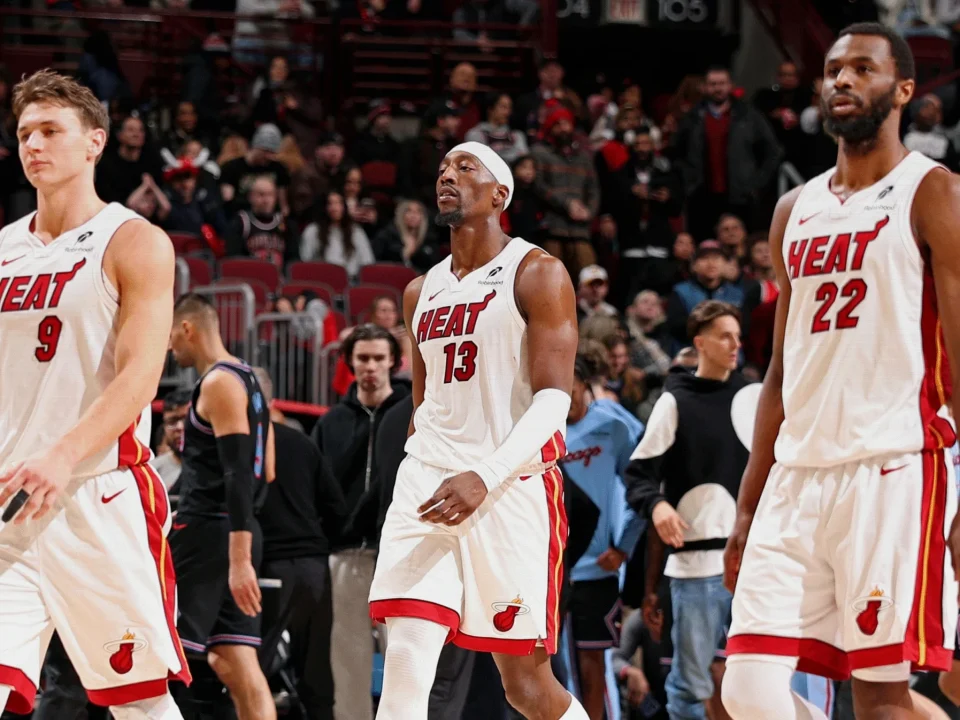
Antetokounmpo joins Bam Adebayo at the center of the project, giving Erik Spoelstra a two-way frontcourt with few obvious comparisons around the league. Both can protect the rim, switch and recover defensively, push the ball after stops, score inside and create for teammates. Miami’s challenge will be making that pairing work in a half-court setting while preserving the transition identity it developed last season.
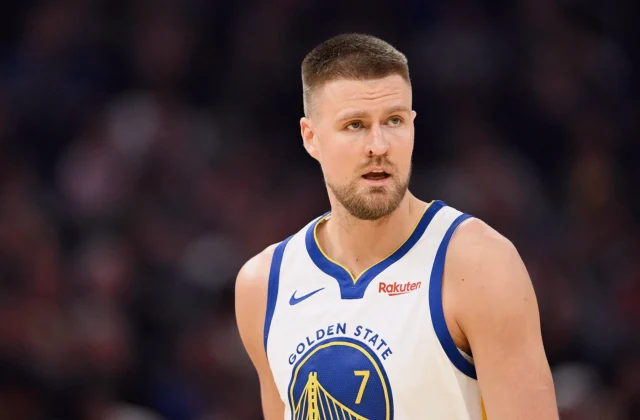
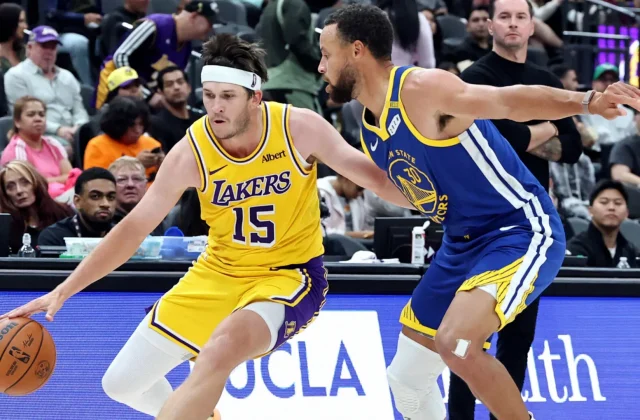
The Heat also added Ryan Conwell, Tim Hardaway Jr., Bobby Portis, Nick Richards and Klay Thompson. The incoming group joins a veteran core that includes Andrew Wiggins and Davion Mitchell, giving Spoelstra plenty of established options as he begins sorting out his starting five and second unit.
A veteran roster with shooting answers
The immediate question after the Antetokounmpo trade was spacing. Miami has responded with a collection of proven perimeter threats around its new star tandem.
- Hardaway made 224 3-pointers last season while shooting 40.7% from deep.
- Thompson hit 202 3s at a 38.3% rate and could see cleaner catch-and-shoot looks beside Antetokounmpo.
- Wiggins converted 138 triples and shot 41.4%.
- Portis knocked down 135 3-pointers at a 45.6% clip. He is one of only two players over the past five years to place among the league’s top five in 3-point percentage twice.
Antetokounmpo, Adebayo, Wiggins, Portis, Thompson and Hardaway have each logged at least nine NBA seasons. That group brings a long list of playoff mileage, Finals experience, All-NBA honors, an MVP award and Sixth Man of the Year-level production.
The likely opening lineup could feature Mitchell in the backcourt with Thompson and Wiggins on the wings, leaving Antetokounmpo and Adebayo to handle the frontcourt. But Spoelstra has more lineup combinations than answers at this stage, and training camp will be spent testing the best balance of shooting, defense and playmaking.
Miami plans to keep running
Last season, 24.9% of Miami’s possessions came in transition, the highest share recorded by any team across Synergy’s 22 years of play-type data. That pace should remain central to the Heat’s approach now that Antetokounmpo is in the building.
Over the last five seasons, Antetokounmpo has generated 1.21 points per possession in transition. The rest of the league averaged 1.13 over that span. With Adebayo and Antetokounmpo supplying defensive stops and rebounds, Miami has the personnel to get out early and put pressure on defenses before they are set.
The half-court offense remains the area to monitor. Neither Antetokounmpo nor Adebayo is a consistently reliable perimeter shooter, making the work of Thompson, Hardaway, Wiggins and Portis especially important when the game slows down.
Rotation questions behind the stars
The frontcourt depth chart will be one of camp’s main storylines. Nikola Jović, Simone Fontecchio and Richards are competing for roles behind the Antetokounmpo-Adebayo pairing, while Portis gives Miami another veteran big who can stretch the floor.
Point guard depth is another unsettled spot. Mitchell is positioned to run with the starters, but Miami must decide whether it can cover his backup minutes by committee or needs to use its open roster place on another ballhandler.
Third-year guard Pelle Larsson is also worth tracking. He averaged 11.4 points last season, his first campaign above double figures, and made 49.6% of his field-goal attempts. He scored at least 15 points in 26 games, showing he can find offense even on a roster with more established scoring options.
For Larsson to earn regular minutes in this deeper group, the 3-point shot will matter. He owns a 32.8% career mark from beyond the arc. His recent work for Sweden offers encouragement: Larsson averaged 26 points over his past four FIBA World Cup qualifying appearances, including 31 against Finland and 23 against France in late August.
Dates that will shape the Heat calendar
| Date | Matchup | Why it matters |
|---|---|---|
| Oct. 21 | Timberwolves vs. Heat | Miami opens the season, and Antetokounmpo makes his official Heat debut. |
| Nov. 27 | Heat vs. Knicks | The game falls within a punishing run in which Miami plays eight of nine contests against 2026 playoff teams. The stretch, from Nov. 13 through Dec. 1, also includes Philadelphia, Cleveland, Oklahoma City and Detroit, plus Antetokounmpo’s first meeting with Milwaukee. |
| Dec. 25 | Heat vs. Celtics | Boston had pursued Antetokounmpo before Miami completed the trade. |
| Jan. 28 | Heat vs. Bucks | Antetokounmpo returns to Milwaukee for the first time since the deal. The Prime Video game is set to recognize his 13 years with the Bucks, including the 2021 championship. |
| April 8 | 76ers vs. Heat | LeBron James and Philadelphia come to Miami in the third-to-last regular-season game. The Heat had also shown interest in adding James this season. |
Miami has moved quickly from a Play-In finish to a roster with real title expectations. The talent is obvious. The next task for Spoelstra is building a rotation that lets Antetokounmpo and Adebayo overwhelm teams defensively without sacrificing the spacing and ball movement needed to finish possessions on the other end.