LAS VEGAS — The Roman numeral X sits at center ice at T-Mobile Arena, a reminder that the Golden Knights have reached their 10th NHL season with the same ambition that defined their first: build a contender, fill the building and make hockey part of the fabric of Las Vegas. The anniversary campaign begins Tuesday against the Chicago Blackhawks at 10:30 p.m. ET, with ESPN and TVAS2 carrying the opener.
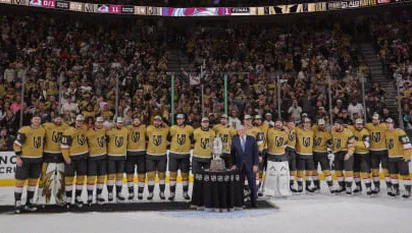
Vegas entered the League in 2017-18 as the city’s first major professional franchise and has spent nine seasons rewriting what an expansion club can be. The Golden Knights have collected 401 regular-season wins, fifth most in the NHL over that span, and their 76 playoff victories lead the League. They have qualified for the postseason eight times, reached the Stanley Cup Final in their inaugural year, lifted the Cup in 2023 and returned to the Final last season.
The club’s arrival also landed at a difficult and defining moment. Five days before its first game, the Oct. 1, 2017 mass shooting struck the Strip. The Golden Knights supported the community in the aftermath and brought first responders into an emotional ceremony before their first home date. A fast start on the ice gave a city of longtime residents and newcomers a common team, then the surprise run to the 2018 Final turned that connection into a full-fledged hockey following.
T-Mobile Arena has remained a regular sellout and one of the League’s loudest road stops, with gold-clad supporters, Elvis outfits and a game-night atmosphere tailored to the city. Nashville Predators forward Filip Forsberg, who has been in the NHL since 2012-13, said he initially expected Vegas to be driven mostly by visiting fans. Instead, he sees a durable home crowd. “They have created an unbelievable fan base and handled it really well,” Forsberg said.
NHL Deputy Commissioner Bill Daly called the organization’s rise tremendous, crediting the work of owner Bill Foley, president of hockey operations George McPhee and general manager Kelly McCrimmon. The League’s expansion rules gave Vegas a stronger chance to compete immediately than earlier expansion teams had received, but McPhee and McCrimmon built far beyond the original projections. Daly said an inaugural club reaching the Cup Final may be a feat professional sports will not see again.
From a gamble to a hockey market
Las Vegas had long been viewed as an unlikely destination for major leagues because of its gambling industry. That changed on June 22, 2016, when the NHL awarded Foley an expansion franchise. Foley’s case was that the club would be sustained by local support rather than tourism alone, while offering the city an identity beyond the Strip.
Other leagues followed the NHL’s lead. The NFL announced on March 27, 2017, that the Oakland Raiders would relocate, becoming the Las Vegas Raiders in 2020. The WNBA moved the San Antonio Stars to Nevada after its Oct. 17, 2017 announcement, with the franchise becoming the Las Vegas Aces in 2018. The Las Vegas Aviators, then affiliated with the Oakland Athletics, began play in a new ballpark beside City National Arena in 2019. Major League Baseball approved the A’s move on Nov. 16, 2023, and the club is scheduled to arrive in 2028.
The Professional Women’s Hockey League announced on May 13 that Las Vegas would be part of its expansion. The Mark Walter Group owns the PWHL’s teams, while Foley Entertainment Group helped secure the market and will provide local support. The new club is set to play at T-Mobile Arena this season. The NBA also announced March 26 that it was examining expansion in both Las Vegas and Seattle. Foley is among those pursuing a Las Vegas team, and T-Mobile Arena is under consideration as a home building.
“There were plenty of people who doubted it could work here,” McPhee said. “The franchise has become more successful than anybody could have imagined.” He said being first mattered, but winning mattered just as much, adding that the Golden Knights’ local support has held firm despite the arrivals of other teams. “We are Vegas Born,” he said. “We are not a relocation.”
Commissioner Gary Bettman said the NHL’s success in the market has been gratifying, and Daly said he takes pride in seeing Allegiant Stadium and the A’s ballpark project as evidence of the city’s sporting growth. Bettman said the Golden Knights have created the kind of loyal base that should withstand further competition for fans.
The organization has also put down roots at ice level. Vegas bought the San Antonio franchise of the American Hockey League on Feb. 6, 2020, with the aim of moving it to the region. The Henderson Silver Knights began play one year later. The Golden Knights have constructed three local facilities: City National Arena, the NHL club’s practice home; America First Center, used by Henderson and soon by the PWHL team; and Lee’s Family Forum, the AHL game venue. City National Arena and America First Center each have two sheets, while Lee’s Family Forum has one. All three support youth hockey programs.
Nevada now has roughly 6,000 registered hockey players, with participation among both boys and girls rising sixfold since the Golden Knights arrived. McPhee, whose office overlooks the entrance at City National Arena, said the daily traffic of players through the facility has been one of the most rewarding developments. He described Las Vegas as a fully formed hockey town, with NHL, AHL and PWHL clubs alongside youth and adult tournaments.
New Vegas coach Ryan Craig believes more ice is still needed. Craig spent six seasons as a Golden Knights assistant and three more behind the Henderson bench before taking over the NHL club this season. His son Carson played with the Junior Golden Knights through the under-16 level and is now an 18-year-old defenseman with Fargo of the United States Hockey League. “The game has really taken off here,” Craig said. “It is booming.”
The Vegas effect around the NHL
Vegas changed the standard for clubs that came after it. Seattle’s expansion franchise was awarded on Dec. 4, 2018, for a $650 million fee, $150 million above what Vegas paid. Seattle CEO Tod Leiweke said at the time that he was inspired rather than intimidated by what the Golden Knights had built. The Kraken later hired Jonny Greco, Vegas’ former vice president and chief experience officer, to oversee entertainment experience and production, applying similar principles while giving Seattle its own identity.
Utah’s route to the NHL was different, coming after Arizona’s arena problems forced the League to establish a new Utah franchise on April 18, 2024. The club received Arizona’s hockey assets, debuted as Utah Hockey Club in 2024-25 and adopted the Utah Mammoth identity last season. But Vegas had already helped introduce the sport in the region. Salt Lake City was within the Golden Knights’ original television territory, and first coach Gerard Gallant took part in a public skate at the University of Utah during a promotional bus trip before Vegas played its first season.
That connection resurfaced last spring when Utah made its first playoff appearance and met Vegas in the Western Conference First Round. Before the Mammoth’s first home playoff game on April 24, fans could exchange Golden Knights jerseys for Utah sweaters. Hundreds queued outside Delta Center, and the supply was gone in about 90 minutes. Mammoth owner Ryan Smith said he had great respect for how Vegas helped grow hockey and made room for Utah, adding that the Golden Knights’ success gave him confidence that the sport could thrive in his market.
The NHL’s financial growth has paralleled that expansion. Bettman said Tuesday that the League projects revenue of $8.1 billion in local currency this season, nearly twice the total from 2016-17, the year before Vegas joined. Winnipeg Jets center Mark Scheifele, whose club lost to Vegas in the 2018 Western Conference Final and again in the 2023 first round, said the Golden Knights’ immediate success created a buzz that helped lift the game’s profile.
On the roster side, Vegas has operated with urgency since its first improbable run. The original group called itself the Golden Misfits, a collection of players left exposed by other clubs in the expansion draft. McCrimmon said the front office initially expected to build patiently through drafting and development, but the first season forced a change in direction. The club has instead pursued established talent and treated every year as an opportunity to chase a championship.
Forsberg said that aggressive approach has been noticed throughout the League. “They go after what they want,” he said, noting that the Golden Knights have been willing to place less emphasis on distant assets in favor of current contention. He called the NHL a copycat league and said rival clubs have reconsidered their own approach after watching Vegas succeed.
The destination has become a draw as well. Vegas is fifth in NHL home wins since 2017-18 with 219, a record that speaks to a difficult night for visiting teams despite the appeal of a trip to Nevada. Vancouver Canucks forward Brock Boeser called T-Mobile Arena one of the NHL’s best places to play, pointing to the consistent sellouts and the energy inside the building.
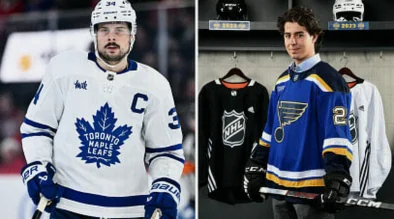
Mitch Marner chose Vegas after the Maple Leafs traded him there on July 1, 2025, when he was nearing unrestricted free agency. He then signed for eight years and $96 million, carrying a $12 million average annual value. Marner had made nine playoff appearances in Toronto without reaching the Eastern Conference Final. In his first postseason with Vegas, he reached the Stanley Cup Final and led all playoff scorers with 29 points, including 10 goals and 19 assists, in 22 games.
Marner said the attraction begins with a fan base and an organization that expects to compete every season. He also cited the convenience of living close to the rink, the presence of teammates in the same communities and a climate that allows families to spend much of the year outdoors in shorts and T-shirts.
Colorado captain Gabriel Landeskog has felt the Golden Knights’ impact as sharply as anyone. The Avalanche lost to Vegas in the 2021 second round, Colorado won the Cup in 2022, and Vegas answered with its championship in 2023. Last season, Colorado finished first overall in the NHL and went 9-1 through the opening two playoff rounds before Vegas swept the Avalanche in the conference final.
Landeskog said rivals can dislike the matchup without denying the Golden Knights’ value to the sport. “They have made this league a better place,” he said. “They are trying to win every year.” For him, that commitment is the standard players expect from an NHL organization — and it is why the Stanley Cup road remains tougher whenever it runs through Las Vegas.