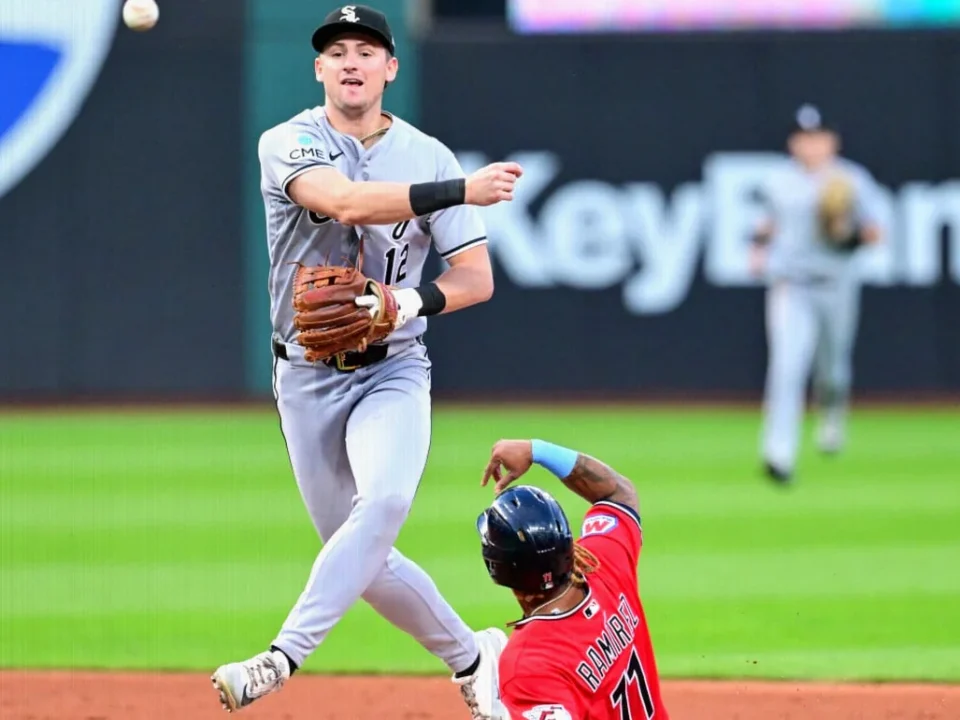
Progressive Field gets an October first on Saturday: Cleveland and Chicago have been playing each other since 1901, but never in a real postseason series. The Guardians and White Sox arrive with modest win totals and lean payrolls, yet this American League Division Series has all the ingredients of a bruising five-game fight.
Game 1 begins at 1 p.m. ET Saturday, noon in Chicago, with TBS, truTV, UniMas and HBO Max carrying the opener. Cleveland will host a matchup shaped by familiar division tension, young stars and two offenses that get the job done in very different ways.
At a glance
- The best-of-five ALDS opens Saturday at Progressive Field.
- Chicago and Cleveland split a 13-game regular-season rivalry marked by seven one-run games.
- Four meetings ended on walk-offs: three by the Guardians and one by the White Sox.
- Chicago brings the power; Cleveland brings strikeout arms and a contact-driven attack.
- Both clubs are powered largely by young players and own the two smallest payrolls among postseason teams.
The franchises go all the way back to the American League’s first game, played April 24, 1901. Chicago, then at South Side Park, beat the Cleveland Blues 8-2 and went on to claim the league’s inaugural pennant.
They have not crossed paths in October since. The only prior playoff version exists on the screen in “Major League II,” which is close enough to count in the clubhouse conversation but not in the record book.
The 2026 season series supplied plenty of evidence that these clubs belong on the same field. Chicago and Cleveland played 13 times, with seven decided by one run. Their Sept. 14-16 set at Progressive Field swung the division race.
The White Sox won the first game of that series and moved 1 1/2 games ahead. Cleveland answered when Brayan Rocchio lined a two-run walk-off double beyond the reach of left fielder Sam Antonacci, then Petey Halpin changed the finale with a three-run homer in the sixth.
The Guardians had entered September 3 1/2 games behind Chicago. They left that series in first place and did not surrender the division lead again.
Chicago’s route to October has been built on thunder. Munetaka Murakami delivered 35 homers and a .478 slugging percentage in his first MLB season, while Miguel Vargas broke out with 33 home runs.
Colson Montgomery added an American League-best 31 homers from shortstop, giving the White Sox a dangerous middle of the order capable of turning a quiet game with one swing. There may be a few prayers coming from their famous Vatican supporter, but this lineup has provided its own answers.
There is a price for that power. Montgomery struck out 227 times, an MLB single-season record, and Chicago finished fifth in the majors in strikeouts. That volatility gives Cleveland’s pitching staff a clear lane into the series.
Rookie Cy Young finalist Parker Messick and Gavin Williams headline that challenge. Williams led the AL with 248 strikeouts across 184 1/3 innings, and closer Cade Smith gives Cleveland another high-end arm at the back of games.
The Guardians do not try to win the same way. Their offense improved after the break but finished with a .380 slugging percentage, well short of Chicago’s punch. This is power baseball against Guardians baseball: make contact, stay in the game and trust the pitching.
The payroll picture makes the series even sharper. Cleveland and Chicago carry the two lowest payrolls in the postseason field, with both rosters leaning heavily on players still early in their big league careers.
Chicago’s turnaround is particularly startling. The White Sox lost a modern-era record 121 games in 2024, then reached the playoffs two seasons later after dropping 324 games from 2023 through 2025. Most of the current core was not around for the worst of that stretch.
Vargas was a 24-year-old acquired in a midseason trade during 2024 and has since grown into a centerpiece. Center fielder Tristan Peters, 26, came from Tampa Bay in a cash transaction and produced an All-Star season.
Antonacci became a dependable regular only two years after Chicago selected him in the fifth round. The Garrett Crochet trade supplied second baseman Chase Meidroth, right fielder Braden Montgomery and catcher Kyle Teel; Meidroth finished fourth among MLB second basemen in fWAR.
Murakami arrived from Nippon Professional Baseball as an established hitter and should receive Rookie of the Year consideration. Sean Burke and Grant Taylor have become important young arms at opposite ends of the pitching staff.
The White Sox had the youngest group of position players among playoff clubs, averaging 25.8 years old. Cleveland’s pitching staff ranked second-youngest at 27.6, behind only Milwaukee at 27.0.
Messick, Williams and Smith have all made their MLB debuts since 2023. Cleveland’s lineup also received major boosts from rookies Chase DeLauter and Travis Bazzana, with Bazzana reaching the All-Star team only two years after going first overall in the Draft.
Angel Martínez, a 24-year-old outfielder, enjoyed a breakthrough year. Those young pieces have given José Ramírez more support than he had on several previous Cleveland postseason clubs.
The reward is bigger than a Division Series win. Chicago could reach the 2026 ALCS after one of the fastest recoveries the sport has seen. Cleveland could get there with baseball’s smallest payroll and with memories of its 2016 World Series loss to the Cubs still close to the franchise.
The Guardians have not won a championship since 1948, the longest active title drought among non-relocated teams in the four major North American professional sports. Seven popes have come and gone since Cleveland’s last crown.
Seeding complaints can wait. This one has history, edge, young talent and enough late-game scar tissue to make Progressive Field feel loud from the first pitch.