Inter’s season has produced a second consecutive profit, giving the club a firmer financial base as it pursues a new stadium project and investment across its football infrastructure. Shareholders approved the accounts for the 2025-26 financial year, which closed with net profit of €22.7 million and revenue of €518 million.
A second year in profit
The €518 million turnover represents Inter’s second-highest revenue figure. The club’s record remains the €567 million reported for 2024-25, but the latest accounts underline the scale of the recovery undertaken in recent seasons.
Just as significant is the movement in group equity. Having stood at minus €12 million at the end of 2024-25, it has returned to positive territory at €10.4 million. Financial charges were also lower than in the previous set of accounts.
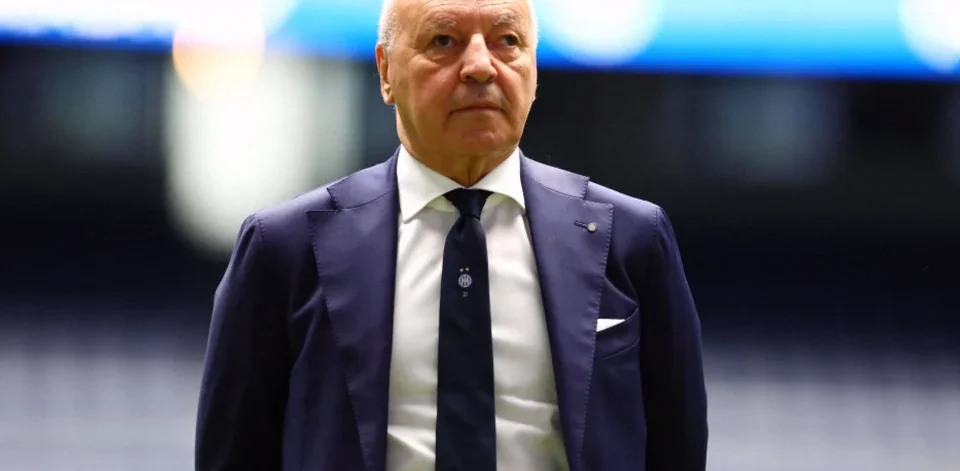
President Giuseppe Marotta described the figures as confirmation of a substantially stronger economic and balance-sheet position. He said revenue had again moved beyond €500 million, while the return to positive capital was an important step after a long period outside that territory.
- Inter completed 2024-25 with record revenue of €567 million, although group equity at that stage remained negative at €12 million.
- The arrival of Oaktree gave further momentum to the club’s work towards a sustainable long-term financial structure.
- The 2025-26 financial year ended with revenue of €518 million, net profit of €22.7 million and positive group equity of €10.4 million.
- Shareholders then approved the accounts, marking Inter’s second profitable year in succession.
Marotta said the club would continue to seek a balance between financial sustainability and sporting competitiveness. “We are convinced that we are on the right path,” he said, while stressing that the work would not stop with the latest positive result.
Sporting standards remain part of the equation
The financial improvement does not alter Inter’s expectations on the pitch. Reflecting on last season’s European campaign, Marotta said the team had not shown its full potential and that the club must keep raising its standards with responsibility, commitment and determination.
That assessment places the accounts in the wider context of a club seeking to make its resources count over a full season: stability off the field is intended to support stronger competitive standards, rather than become an end in itself.
San Siro project and training facilities
The largest element of Inter’s longer-term plan remains the new Milan stadium. Marotta said the acquisition of the Meazza stadium and the wider San Siro Grande Funzione Urbana was completed in November. The club will soon present the outcome of the design work for the new venue.
Inter sees the development as more than a stadium scheme. The intention is to reshape the district into a sports and entertainment destination open to the city, with a modern ground intended to match the ambitions of the club and its supporters.
For Marotta, ownership of the stadium is also central to narrowing the commercial distance to Europe’s leading clubs. He called it a strategic platform through which Inter can grow revenue.
- The Inter Training Center at Appiano Gentile will receive upgrades to its existing facilities.
- New areas will be built to accommodate the Under-23 side.
- The Konami Women & Talent Center is being expanded to provide more effective and welcoming working spaces for staff and players.
Inter’s latest accounts therefore tell a story beyond one set of numbers. The club has moved its equity back into positive territory, sustained revenue above €500 million and set out the next stages of a plan built around facilities, a new stadium and the demand to translate consolidation into stronger European performances.