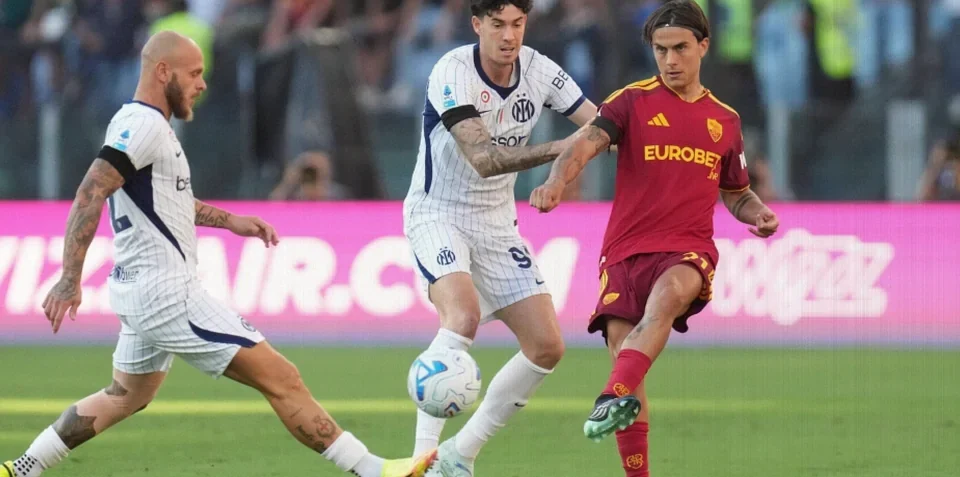
Inter have made a strong enough start to keep the championship horizon bright, yet the first weeks have also exposed a concern that cannot be ignored. Cristian Chivu’s side have taken 13 points from five Serie A matches, with four wins and only one draw, but they have already conceded eight goals. For a club built to compete at every level, that is a figure which asks questions of a defence still searching for last season’s authority.
The coach and the club
Chivu has not hidden from an attacking idea of football. His Inter are prepared to answer setbacks by scoring again rather than simply closing the game down, a mentality increasingly familiar in a Serie A moving towards a more European rhythm. The team have repeatedly recovered after falling behind, and their league return is even better than it was at the same stage of the previous campaign.
Still, conceding 1.6 goals per league game is an uncomfortable companion for a side with ambitions beyond a place in the top four. Inter have kept only one clean sheet so far, achieved away to Cagliari. Elsewhere, Monza scored once on the opening weekend, Roma found the net twice, Napoli also scored two, and Udinese struck three times.
- Serie A matches played: 5
- Serie A points: 13
- League victories: 4
- League draws: 1
- Goals conceded in Serie A: 8
- Clean sheets: 1
The broader picture is harsher when Europe is included. Inter have allowed 10 goals across six matches in all competitions, after adding the Champions League trip to the Bernabeu against Real Madrid. Two goals against a Real side managed by Mourinho can be placed in context; some of the goals conceded in domestic football are more difficult to accept.
The numbers recall the opening of 2022-23, when Simone Inzaghi’s Inter also let in eight goals during the first five rounds before finishing third behind Napoli and Lazio. The present sequence has another unwelcome significance: Inter had not conceded at least twice in three successive Serie A fixtures since October 2024.
A defence waiting for its level
The issue is not easily explained by a wholesale change of personnel or system. The familiar 3-5-2 remains in place, while most of the defensive group is unchanged from last season apart from minor adjustments. The more likely explanation is that several players have not yet reached their best physical and competitive condition.
Manuel Akanji is still working through the effects of a World Cup in which he played a leading role. Alessandro Bastoni has looked some distance from his highest level. Yann Bisseck’s forward bursts can create an extra man in the opposition half, but they can also leave Inter exposed when possession changes hands, while his concentration has been questioned in those moments.
John Stones was injured in his first start, Benjamin Pavard has featured only sparingly, and Carlos Augusto has been the one consistent presence in a department that needs to rediscover its balance. The names remain substantial; the cohesion has not yet followed.
There is no need for alarm while Inter continue to collect points and show the resilience to come back in matches. But Chivu’s next task is clear. If he can restore the defensive certainty that defined the previous season without dulling the team’s attacking purpose, Inter’s promising opening can become the foundation of a far more complete championship campaign.