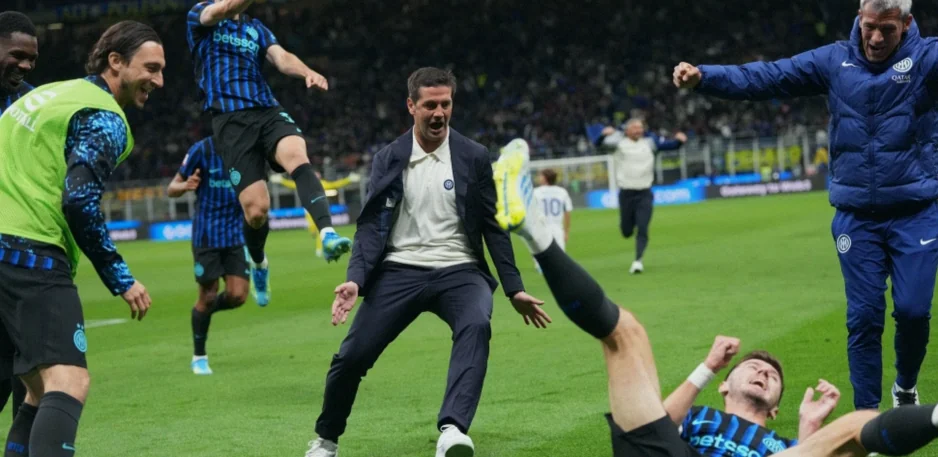
Inter’s draw at the Olimpico against Roma extended a pattern that has become central to Cristian Chivu’s reign: this side can make a game unnecessarily hard, then find a way back from the edge. The coach’s own warning after the match was clear — “We have to act, not react” — but his team’s season has repeatedly been defined by its response to trouble.
Since Chivu took charge, Inter have fallen two goals behind on seven occasions. They have not lost any of those matches, winning five and drawing two. It is an extraordinary return, though one that also points to a recurring problem in their openings and their defensive concentration.
Quick facts
- Inter have recovered from two-goal deficits seven times under Chivu.
- The record from those matches is five wins and two draws.
- Four of the comebacks came last season, with three already recorded this term.
- Lautaro Martinez has been decisive in several of the latest recoveries, including the draws turned around against Napoli and Roma.
- Inter scored six against Pisa, four away to Como and five against Udinese after conceding twice.
The first of these reversals came on 23 January, in Serie A matchday 22, when Pisa arrived at San Siro. What looked like a straightforward fixture became uncomfortable quickly as the former Inter forward Moreo scored twice in little more than 20 minutes, with Yann Sommer involved in the difficult start.
Chivu reacted before the interval, ending his rotation plan and sending Federico Dimarco on for Luis Henrique in the 34th minute. Inter struck three times in eight minutes before half-time through Piotr Zielinski from the penalty spot, Lautaro and Pio Esposito.
The second half became a procession in a different direction. Dimarco, Ange-Yoan Bonny and Henrikh Mkhitaryan added late goals for a 6-2 victory, a scoreline that concealed the alarm of the opening half-hour.
Como’s warning, twice answered
The meetings with Como provided the most dramatic evidence of Inter’s refusal to accept a lost cause. In the league match at the Sinigaglia, Cesc Fabregas’ team created chance after chance and tested Sommer repeatedly before Alex Valle opened the scoring.
Nico Paz added a second near the interval, but Marcus Thuram replied within seconds to prevent Como from reaching half-time in complete control. Thuram then scored again early in the second period, before Denzel Dumfries produced two more goals to turn a 2-0 deficit into a 4-2 Inter lead.
Lucas Da Cunha converted a late penalty for Como, but the 4-3 result belonged to Inter’s second-half surge.
Nine days later, the sides met again at San Siro in the Coppa Italia semi-final second leg after a goalless first meeting. Como again made the stronger start. Martin Baturina scored after around half an hour and Da Cunha made it 2-0 three minutes into the second half.
Hakan Calhanoglu began the recovery midway through the half. In the 86th minute, assisted by Petar Sucic, the Turkish midfielder scored again to level the tie and appear to send it towards extra time.
Instead, Calhanoglu repaid the assist one minute from the end. Sucic scored the winner for a 3-2 Inter victory, sending Chivu’s side to Rome to contest the trophy.
A champion’s response and a new season’s habit
There was also a 3-3 draw at Bologna on the final day of the previous league campaign, when Inter had already secured the title. Dimarco’s free-kick put Inter ahead, but Bologna, with Vincenzo Italiano on the bench, overturned the situation through Federico Bernardeschi, a Michele Pobega double and a Zielinski own goal early in the second half.
Pio Esposito reduced the gap before Andy Diouf scored late to make it 3-3. Even with the championship already settled, Inter again found a route back from a two-goal hole.
This season’s first major recovery came in a direct confrontation with Massimiliano Allegri’s side, a fixture Inter had not won for some time. Matteo Politano gave the opposition the lead in the 50th minute, and Rasmus Hojlund doubled it less than three minutes later after Inter’s defence failed to react.
Lautaro answered immediately. Thuram then equalised shortly before full time, before the Inter captain completed the turnaround in stoppage time.
The last week has brought two more reminders of both Inter’s vulnerability and their resilience. Udinese struck twice in the opening 16 minutes through Abankwah and Jurgen Ekkelenkamp, exposing another slow start from Chivu’s side.
Carlos Augusto pulled one back with a left-footed effort from outside the box, while Nicolo Barella restored parity before the break. Thuram put Inter ahead early in the second half, Pio Esposito made it four and Bonny added a fifth; Ibrahima Gueye’s late goal left the final score at 5-3.
Then came Roma at the Olimpico, a match that appeared to be slipping away before the interval. Manu Koné scored early and added another near half-time, while Inter’s frustration showed in bookings for Barella and Manuel Akanji.
But Lautaro needed only around 50 seconds of the second half to cut the deficit. Roma felt the impact and gradually lost intensity, allowing the Argentine forward another opening for the equaliser.
Inter left Rome with a point rather than another victory, but the underlying message remained familiar. Chivu wants a team that takes control rather than waits for adversity, yet his Inter continue to show that, once wounded, they are very difficult to finish off.